
States we serve · Missouri
Fix and Flip Insurance in Missouri
Choosing brick or framing is a renovation decision everywhere. Here it is also an insurability decision — the state department that regulates the policy says in writing that what the house is built from can settle whether one coverage is offered on it at all.
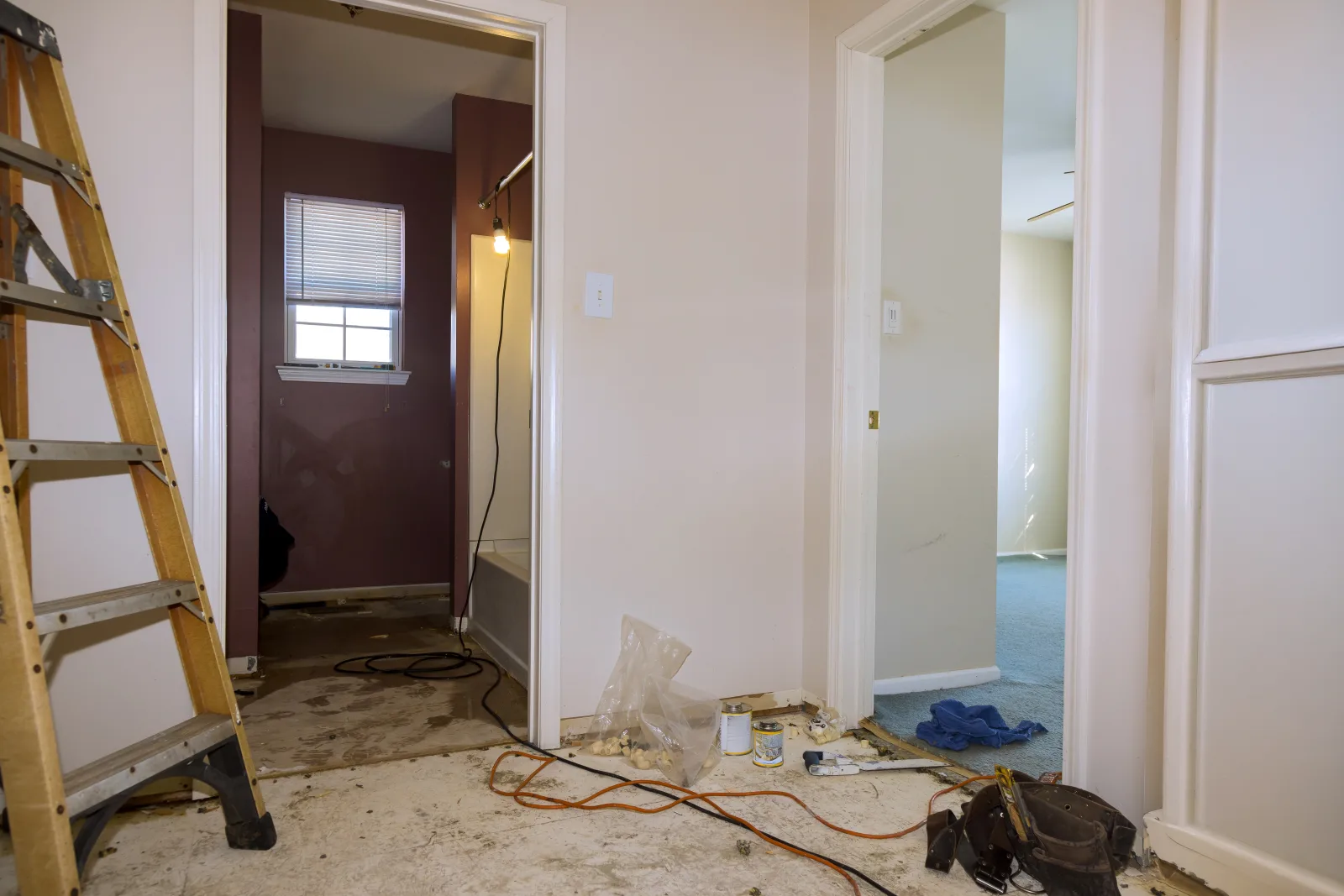

What fix and flip insurance costs in Missouri
Every figure on a renovation file is one the investor supplies — the acquisition, the budget, the rebuilding cost, the number of weeks the house stands open — so no figure appears on this page. Publishing a range would mean publishing somebody else’s project under this state’s name. What can be published is the list of things an underwriter reads before any number exists, and in this state that list opens somewhere most cost guides never look: at what the building is made of.
Masonry or wood frame, and whether one coverage can be bought at all
Construction type is an ordinary rating input in every state. Here it is also an availability input, and the regulator publishes that finding rather than leaving it to the market. A rehab that rebuilds a brick or stone wall in the same material keeps the building in the class the department is describing; a rehab that reframes it does not. Neither choice is wrong, and neither is a rating adjustment you discover at renewal — it is a decision made with a demolition hammer in hand, months before anyone asks for a quote. The full statement, in the department’s own words, sits in the regulatory section below.
The scope of work an underwriter reads twice — once for the form, once for the material
The description of the work decides which policy answers. Surfaces, fixtures and cabinets on a building whose shell and systems stay where they are usually sits on a dwelling policy carrying a cosmetic repair endorsement; a job that opens walls, moves something load-bearing or takes the wiring and the plumbing back to the studs is a construction risk and belongs on builders risk. The second reading is the one particular to this state: the same paragraph tells the underwriter whether the finished building will be the same construction class as the one that was bought.
Rebuilding cost, which one deductible on this file is a share of
A construction placement is written around what it costs to put the finished building back, not around what was paid at closing and not around what the half-finished shell would fetch today. Those are three different figures and the policy answers to one of them. That relationship carries further here than in most states, because the earthquake deductible is expressed as a share of rebuilding cost rather than as a flat amount — so the number the limit is built on is also the number the retention is measured against, and contents carry a second retention of their own.
Duration, counted in severe-storm weeks rather than in months
Time is priced because exposure accumulates, and the exposure that accumulates here is weather. Severe storms cross this state, and the perils they bring are the ones the standard residential form does answer — which means a long job is not merely a long job, it is more chances for a covered cause of loss to arrive while the roof deck is open and the building is empty. The weeks after the crew leaves count in the same column: a finished house waiting on a buyer is still an unoccupied building.
Three answers the file closes on: occupancy, credentials, prior losses
Nobody is living in the house, which is the normal condition of a rehab and the condition an ordinary dwelling form is least written for. Who is doing the work, which in this state cannot be answered with a statewide license number because there is not one to give. And what the loss record already says, which is the single input that cannot be improved between now and the submission. A general contractor carrying their own general liability changes the shape of the first two answers; it does not answer for the structure itself.
Cost is the question this page gets asked most, and it has its own page: the Missouri cost guide walks the drivers a carrier weighs on a renovation here, in the order this state makes them matter. Missouri fix and flip insurance cost guide.
Missouri regulations and licensing for a fix and flip
The regulatory picture here divides cleanly. One state department has published findings that reach directly into what a renovation can buy. On the construction side there is no state builder credential at all, and the permit, the code and the inspection are municipal or county business. Both halves are load-bearing on a project, and the first one is the one nobody expects.
What the department says the building material decides
In Missouri, how the house is built decides whether earthquake coverage can be bought at all. The Department of Commerce and Insurance states that the material used to build the home can determine premiums or whether the home is even insurable, that premiums may be lower for wood-frame homes because they withstand tremors better than masonry such as brick and stone, and that some insurers will not offer earthquake insurance for masonry homes. A rehabber buying a brick house in the New Madrid-exposed part of the state is therefore making a coverage decision at the point of purchase, not at the point of resale.
Nothing in that passage is about rating in the ordinary sense. It is about whether an instrument is offered, and the trigger is a physical property of the building. The department publishes it on its earthquake insurance page, which exists because of this state’s exposure to the New Madrid seismic zone. For a rehabber the sequencing is unusual: the decision that determines availability is made at acquisition and during demolition, while the discovery that it mattered arrives when the endorsement is quoted — or is not.
The department that regulates the policy also keeps the earthquake page
The Missouri Department of Commerce and Insurance (DCI) supervises insurers and producers in this state, and it is the office behind every finding on this page that concerns an insurance contract — the covered-peril examples, the two exclusions, the residual mechanism and the construction statement above. What it does not do is say whether the renovation itself is lawful. That question belongs to a building official several paragraphs down, and the two authorities never meet on a project.
An enumeration rather than a search: what the state’s own board list contains
This is an affirmed absence, established by reading a complete agency list rather than by failing to find something. The Missouri Division of Professional Registration’s own list of the boards and offices it administers contains an Office of Statewide Electrical Contractors and a Real Estate Commission, but no general contractor, residential contractor, home builder or remodeler board. General contracting is credentialed by cities and counties in Missouri, not by the state.
The consequence for an investor is procedural rather than legal. There is no statewide number to ask a general contractor for, so verification means the registration the jurisdiction requires where the house sits, plus a current certificate of insurance somebody has actually read. Being listed on a contractor’s certificate is paperwork; it is not cover on the structure, and a structural rehab placement is written to the owner of the project rather than to the crew.
The optional statewide license, and the credential that is not optional
The absence above does not quite reach the trades, and the electrical story is the interesting one. This state does run an Office of Statewide Electrical Contractors, and its own guidance says the statewide electrical contractor license is optional rather than mandatory — a contractor working only where they already hold a local license, or where none is required, need not carry it. The operative credential on a rehab is therefore the one below it.
electrical work is licensed by the city or county the property sits in rather than by Missouri, so the credential a contractor needs is set where the house is.
plumbing work is licensed by the city or county the property sits in rather than by Missouri, so the credential a contractor needs is set where the house is.
heating and cooling work is licensed by the city or county the property sits in rather than by Missouri, so the credential a contractor needs is set where the house is.
Read together, those three lines say something practical about a gut rehab: the crew is assembled and verified one jurisdiction at a time, and a set of credentials that satisfied the last project does not automatically satisfy the next one across a municipal line. That is an administrative cost of doing volume here, and it belongs in the schedule rather than in the surprise column.
A fire policy without liability, and cash value on what is inside
When nothing in the standard market will take the building, the department points to the Missouri Property Insurance Placement Facility, and it describes what that placement actually is: a fire policy without liability, with contents settled at actual cash value. Both halves of that description matter on a renovation. A policy with no liability section leaves everyone who walks onto an open site unanswered, so general liability has to be placed separately rather than assumed; and depreciated settlement on contents reads very differently when the contents are materials bought at today’s prices and staged in the garage. It is available when the market has closed, and it is not the structure a project should be planned around.
Who may inspect a statewide license holder’s work
Construction permitting in Missouri is a local function. The Office of Statewide Electrical Contractors, in its own guidance to political subdivisions, states that a city or county may implement an electrical code based on the National Electrical Code, may issue electrical contracting permits, may enforce its own codes, and may inspect the work of a statewide license holder. A rehab therefore takes its permits and its inspections from the municipality or county, and the code that governs the job is the one that jurisdiction has adopted.
Two things follow for the insurance. The policy term is written around a calendar the local building official controls, and a slow plan review in one jurisdiction can push a project past a term that was quoted against another — extending a construction term is routine if the request comes before it lapses and a fresh placement on a half-finished building if it comes after. And the inspection record that exists at the end of the job is a municipal record, because there is no state file behind a residential rehab for anybody to request later.
At the closing table, where this page stops
We could not confirm a statewide seller disclosure form for Missouri from a primary source, so this page does not state whether one applies — ask your closing attorney or title agent before you list.
Common fix and flip risks in Missouri
The department describes what the form answers for and names two absences, and the absences are where a renovation file gets decided. It describes a residential property policy as helping to repair the home and personal property when damaged by such perils as fire, lightning, windstorm or hail — so the wind and hail thrown off by the severe storms that cross this state are answered by the form itself, not by a separate instrument. Elsewhere it defines the word peril on its own, as a condition that can cause a loss, and offers fire, windstorm and theft as three examples of one; that is a definition rather than a schedule, and it is worth not reading as the list. Each of the named causes is likelier on an open site than on a finished house, and several are the causes an ordinary dwelling form narrows first once a building has stood empty past the period the policy names.
Flood is not in that form. The department states that the perils of flood and earthquake are covered when the coverage is added to the policy, and it points consumers to the National Flood Insurance Program for the first of the two. That is a count problem before it is a price problem: a project with rising-water exposure needs a second policy bound, and the property policy cannot be asked to grow into it after the water has arrived.
Earthquake is the second absence and it is handled separately, in writing, because of this state’s exposure to the New Madrid seismic zone. A dwelling form does not answer for earthquake damage at all; that coverage has to be bought as an endorsement or as a stand-alone policy. It also arrives with a retention unlike anything else on the declarations page — the deductible is set as a share of rebuilding cost rather than as a flat amount, and contents carry a separate deductible of their own. On a building whose rebuilding cost is still being created by the work in progress, that is a moving figure attached to a fixed rule.
And underneath all of it is the condition of the building rather than the geography of the state: temporary openings, materials stacked where a truck can reach them, trades arriving on their own schedules, and nobody in the house after dark. Two instruments divide that between them — general liability answers for the people who come onto the site, and a construction property form answers for the structure and the work already installed inside it.
Common Missouri fix and flip claims we see
Patterns, not incidents, and no figures are attached to any of them for the reason given at the top of this page. Each one maps onto a finding above.
The endorsement that was never offered on a masonry building
The loss that is decided before the shaking starts. A brick or stone house is bought, rehabbed and insured, the earthquake endorsement is raised late or not at all, and the answer that comes back is not a price but a refusal — because some insurers will not offer that coverage on masonry. Nothing about the file is wrong; the decision that closed the option was the one made about the wall, and it was made months earlier.
Windstorm into a building the crew had opened
Windstorm is on the department’s own list of what the standard form answers, so the argument is rarely about whether the peril is covered. It is about the opening. A roof deck between tear-off and dry-in, a window bay waiting on a delivery, a wall left sheeted but not closed — the damage lands on what was underneath rather than on what was removed, and the conversation turns on how the site was left rather than on how hard it blew.
A retention read as a percentage after the ground moved
The endorsement was bought, the loss is covered, and the figure that comes back is not the one the investor had in mind. An earthquake deductible expressed as a share of rebuilding cost behaves differently from a flat retention on a building whose rebuilding cost the renovation has just increased, and the separate deductible on contents means the materials and the structure are settled through two arithmetic gates rather than one.
Theft the department names as covered, tested by the empty weeks
Copper, appliances, new condensers and staged materials, taken from a building nobody sleeps in. Theft appears among the department’s three examples of the word peril rather than among the causes it names for the form, which is one reason the loss is so often argued somewhere else — on the vacancy provisions rather than on the peril. The exposure peaks twice, once when the materials land and once when the finished house is sitting on the market, and the second peak is the one a cosmetic rehab placement has to be written to survive.
Why Missouri real estate investors choose Fix and Flip Guard Insurance
Appointments with 10++ markets across 48 licensed states, through one independent agency. What that buys on a file in this state is a submission that already answers the construction question — the material, the scope that will or will not change it, and the endorsement that has to be sounded out before the wall goes back up rather than after.
The argument this page is built on runs backwards from how renovation insurance is usually sold. A quote is normally the last step, taken once the plan is settled. Here the regulator has stated that a physical property of the finished building can decide whether an instrument is offered on it, which puts a coverage question inside the demolition plan. An investor who asks it while the material choice is still open is working with a live option; an investor who asks it at binding is working with whatever the building already is.
Whether your job is a structural or gut rehab or a finishes-and-fixtures project decides the placement: the first is a fix and flip insurance placement led by builders risk, the second a house flipping insurance placement led by an endorsed dwelling form.
The brand runs on one distinction and this state tests it in both directions. The scope of work decides which side of that line a project sits on, and here the same scope of work also decides what the building will be made of when the work is done.
Major Missouri fix and flip markets
The data layer behind this page carries city names and it carries statewide findings, and it attaches neither to the other. So each market below is paired with a different mechanism from the entry — the one a project working there tends to run into first — and no two entries share one. The last is not a city at all.
- St. Louis. The market where a declined building most often becomes a real question, and where the answer is worth reading closely. The Missouri Property Insurance Placement Facility is described by the department as a fire policy without liability, with contents at actual cash value — which means a project that lands there is running an open site with no liability section and depreciated settlement on staged materials. The underwriting consequence is that the fallback changes the shape of the program, not just its price.
- Kansas City. The market that most often asks for a state license number for the person running the job. There is none to produce: the Division of Professional Registration’s complete board enumeration contains no general contractor, residential contractor, home builder or remodeler board. What an underwriter is assessing here is the verification method rather than a credential — and a method has to be rebuilt each time a project crosses into a jurisdiction whose requirements differ.
- Springfield. The market that runs into the covered side of the peril list rather than the excluded side. Fire, lightning, windstorm or hail are the perils the department names for the form itself, so the wind and hail thrown off by the severe storms crossing this state are the form’s problem and not a second placement’s. The consequence is timing rather than structure: the exposure is priced into how long the building stands open, because the policy already answers for the cause.
- Columbia. The market where the permit desk is the schedule. Construction permitting here is a local function, and the Office of Statewide Electrical Contractors tells political subdivisions that a city or county may adopt an electrical code based on the National Electrical Code, issue permits, enforce its own codes and inspect the work. The underwriting consequence is term length: the policy has to survive a plan-review calendar that is set locally and cannot be looked up in one place.
- Joplin. The market where the rising-water conversation is the one that decides how many policies the project runs. Flood is not in the standard form and is placed instead through the National Flood Insurance Program, which is a separate contract bound before the loss or nothing at all. The consequence lands at bind, not at the claim: an instrument that was discussed and never placed answers for nothing.
- The New Madrid-exposed part of the state. Not a market but a condition that sits underneath several of them, and the reason the department maintains a dedicated earthquake page. Here the building’s material can decide whether the coverage is offered, and the coverage that is offered carries a deductible expressed as a share of rebuilding cost with a second deductible on contents. The underwriting consequence is unique on this page: it is the only one where the answer can be that the instrument is unavailable rather than expensive.
Related reading
Missouri fix and flip insurance FAQs
We are rebuilding a masonry wall. Can the material we choose change what coverage is available?
It can, and the department says so directly. The Missouri Department of Commerce and Insurance states that the material used to build the home can determine premiums or whether the home is even insurable, that premiums may be lower for wood-frame homes because they withstand tremors better than masonry such as brick and stone, and that some insurers will not offer earthquake insurance for masonry homes. A material decision is therefore a coverage decision.
Which Missouri agency issues a general contractor license?
None does, and that is a finding rather than a gap in our research. The Missouri Division of Professional Registration publishes the boards and offices it administers, and that list contains an Office of Statewide Electrical Contractors and a Real Estate Commission but no general contractor, residential contractor, home builder or remodeler board. General contracting is credentialed by cities and counties here, so the verification that matters is local.
If the standard market passes on the house, what does the Missouri Property Insurance Placement Facility put on paper?
The department describes it as a fire policy without liability, with actual cash value on contents. Read that twice before planning around it: no liability section, and contents settled at depreciated value rather than at replacement. It is a mechanism the state stood up for property that cannot be placed elsewhere, and on a renovation the specialty market is the earlier call.
The earthquake quote shows a percentage where I expected a dollar figure. Is that how it works here?
Yes. The department states that earthquake coverage carries its own deductibles, set as a share of rebuilding cost rather than as a flat amount, and that contents carry a separate deductible of their own. On a rehab that lands twice: the share is measured against the rebuilding cost of the finished house, which the work is still creating, and the contents figure sits outside it.
My electrician holds the statewide license. Can the city still inspect his work?
It can. The Office of Statewide Electrical Contractors tells political subdivisions that a city or county may implement an electrical code based on the National Electrical Code, may issue electrical contracting permits, may enforce its own codes, and may inspect the work of a statewide license holder. Holding the statewide credential does not move the inspection up to the state.
Fire, lightning, windstorm or hail are the perils the department names. What is not on that list?
Flood and earthquake. The department states that both perils are covered when the coverage is added to the policy, points consumers to the National Flood Insurance Program for flood, and states separately that a dwelling form does not answer for earthquake damage — that coverage arrives as an endorsement or as a stand-alone policy. Two exposures, and two instruments beyond the property policy.
Do my plumber and my heating contractor answer to a state board in Missouri?
The Division of Professional Registration list of every board and office it administers contains no plumbing board and no heating, air conditioning, refrigeration or mechanical board. Both trades are credentialed by Missouri cities and counties instead, which means the crew on a rehab is verified against the jurisdiction the house sits in rather than against a statewide register you can search once.
Get a Missouri fix and flip insurance quote
Send us the address and the scope of work.