
Coverage line
Builders Risk Insurance
The policy written for a building while the work is happening — the structure, the materials bought for it, and the money you have already put into it.
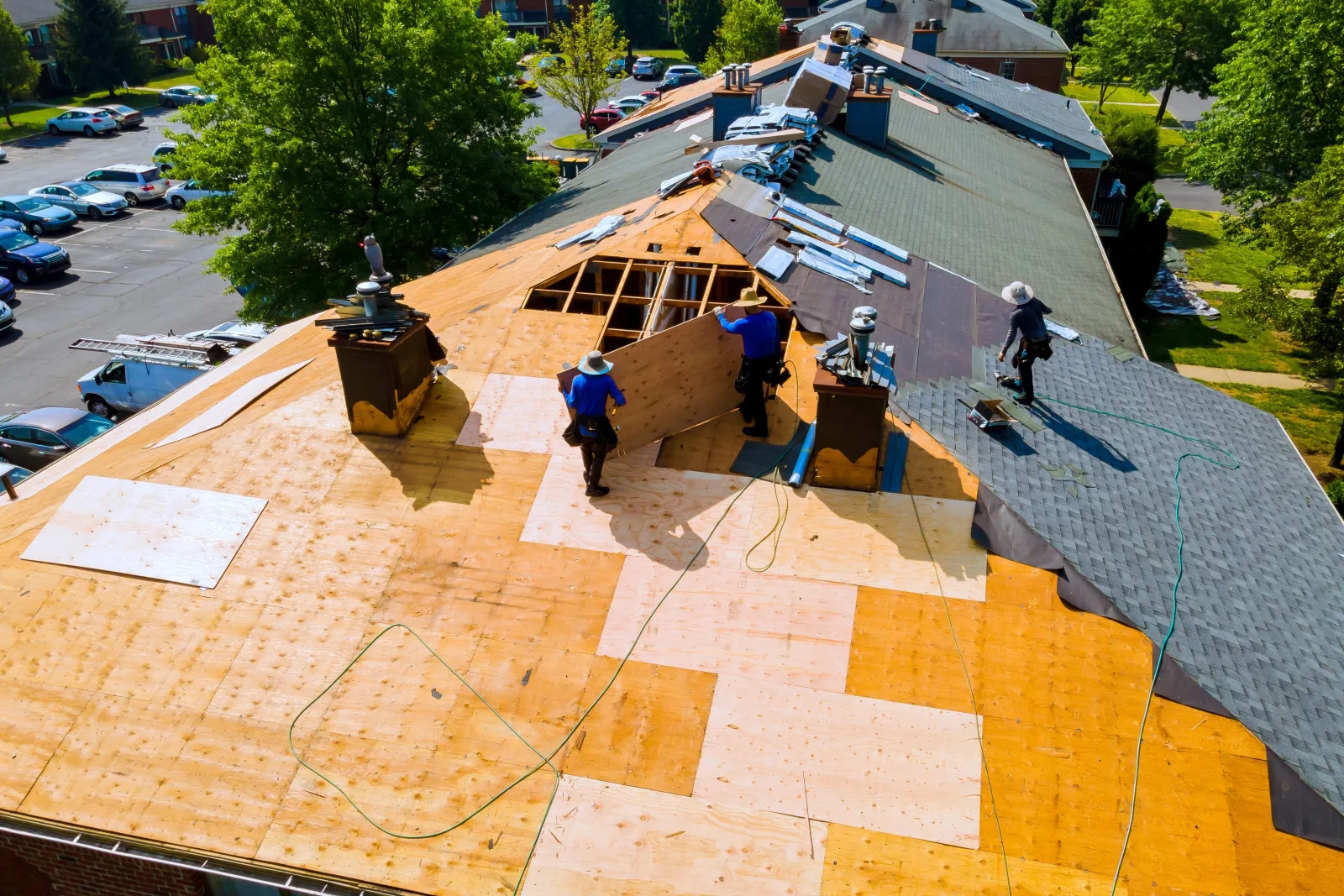

Builders risk is the coverage that answers for a building you own while it is being worked on. It is sometimes called course of construction, and on a fix and flip it is doing a job no ordinary property policy is written to do: insuring a house that is deliberately torn open, full of material that has not been installed yet, and empty most of the time.
The reason it exists is that the value of a project is not the same thing as the value of a house. Halfway through a gut rehab the building is worth less than it was at closing and you have spent money getting it there. Builders risk is written around that number — what the property will be worth when the work is finished — rather than around what a finished house is worth today.
Where a dwelling form quietly stops answering
Most investors buy a house on a dwelling form because that is what the closing needed. A dwelling form assumes a finished building that someone lives in, and it carries conditions that reflect that assumption. Three of them matter on a rehab.
The first is the vacancy clause. Property forms narrow what they will pay for once a building has been empty beyond a period the policy names, and the causes of loss they narrow first — vandalism, water damage, glass — are the ones most likely to happen to an empty house. The second is that many dwelling forms limit or exclude loss arising out of alteration and construction while the work is in progress. The third is the simplest and the most common: the carrier did not know. A policy written on a house described as owner-occupied and finished, on a house that is neither, is a policy with a material misrepresentation sitting inside it, and the moment that surfaces is usually a claim.
None of this makes the dwelling form defective. It is answering the question it was written for. A rehab is a different question.
The line that decides which policy you need
The line between a dwelling policy carrying a cosmetic repair endorsement and a builders risk placement is the scope of work. It is not the budget, and underwriters do not draw it at a dollar figure.
Cosmetic rehab — paint, flooring, cabinets, fixtures, a kitchen or bath swap where the structure is untouched and the systems stay put — can usually stay on a dwelling form with the right endorsement. The building is still a building throughout; you are changing its surfaces.
Once the work is structural, that stops being true. Opening walls, moving or removing anything load-bearing, replacing a roof deck, cutting in an addition, taking a house down to the studs, replacing the electrical, plumbing or mechanical systems — at that point the building is a construction project and builders risk is the form built for it. A useful test: if the house could not pass a final inspection today because part of it is not there, you are past that line.
The other side of that seam is covered on our dwelling policy with a cosmetic repair endorsement page.
What the coverage is written to protect
A builders risk placement typically covers the building under renovation, and typically extends to the materials and supplies you have bought for it. That extension usually reaches material in three places: at the site, in transit to it, and in temporary storage off site. The word doing the work in all of that is typically.
There is no single builders risk form the way there is for a finished house. Much of this class is written on proprietary inland-marine or surplus-lines wording that differs from carrier to carrier, and two placements described the same way in a quote can behave differently at a claim. That is why every statement on this page is hedged: the only authority on what your policy covers is your own declarations page and the forms listed on it. Read the forms list, and ask which of these extensions are actually on it.
Tools and equipment on the site
Tools are a separate question from the structure and are commonly handled alongside the builders risk program rather than inside it — either by endorsement or through a companion contractors-equipment floater. Some placements reach materials but not tools. Do not assume a builders risk form includes what is in the back of the van or left in the garage overnight, and do not assume it does not. Ask, and get the answer in the policy rather than in an email.
Theft, and the part everyone asks about first
The first question most investors ask is about theft, and they are right to. An empty house with new appliances staged in the kitchen, copper in the walls, a furnace freshly installed and a lockbox on the door is a known target, and material is taken from projects far more often than projects burn down.
Theft is a covered cause of loss on most builders risk placements, but it is also where the conditions cluster: what counts as theft rather than mysterious disappearance, whether there must be visible evidence of forced entry, what site security the carrier assumed when it quoted, and whether material not yet installed is covered on the same basis as material that is. Fire, wind, water from a burst line and vandalism behave much as they would on any property policy; theft is the one that behaves differently on a jobsite.
Setting the limit: what number the policy is built around
The limit on a builders risk placement should represent the completed value of the project — what it will cost to have the finished building standing — not what you paid for the house and not what you expect it to sell for.
Those three numbers are routinely confused, and two of them are wrong for this purpose. The purchase price understates it, because it does not include the work you are about to pay for. ARV overstates it, because after-repair value includes land and market, and a policy does not rebuild the lot or the neighborhood. Insure the purchase price and you are underinsured from the first draw; insure ARV and you are paying for limit that cannot be claimed. Completed value is the number in between, and it is the one to give the underwriter.
Carrying costs while a claim is being put right
Soft costs are the money a project bleeds when it is stopped — the loan interest that accrues anyway, the taxes and utilities you carry through the delay, permit fees that have to be paid again, and the additional interest on a hard money note that was written to a schedule the fire did not care about. They are real losses and they are not automatically covered.
Soft cost coverage is commonly available as an optional addition to a builders risk placement, usually tied to a delay caused by a covered loss rather than to a delay of any kind. A contractor who walks off site is a scheduling problem, not an insured one. It is worth asking about on any project where the holding period is financed, because that is exactly where a two-month delay does its damage.
When the policy stops, which is earlier than people expect
Builders risk is written for a term, and it also ends on events. The usual triggers are occupancy, completion of the work, and the sale closing — whichever arrives first. Each of them can catch a flipper out.
Finishing the work can end the coverage while the house is still yours and still on the market. Letting someone move in — including yourself, including a caretaker — can end it as an occupancy trigger even though nothing about the building changed. And a project that stalls can run past the term while the house sits exactly as exposed as it was on day one. Extensions are usually available and are usually granted, on the condition that you ask before the term expires. The date is worth tracking as deliberately as the draw schedule.
The empty stretches: between phases, and after the listing
Two windows account for a disproportionate share of losses on a rehab, and both are windows where nothing is happening.
The first is between phases — after demolition and before the trades arrive, or waiting on a permit. The house is open, unattended and often unsecured. The second is after the work is done and the property is listed: finished, empty, full of new appliances, and shown to people you do not know. That second window is also the one most likely to fall outside the policy term, because the work is complete. If the exit will take a while, say so when the coverage is placed.
What your lender is going to ask for
If the project is financed, the coverage requirement is not really yours to negotiate. Hard money and private lenders on renovation deals commonly require builders risk in place at closing, at a limit tied to the completed value, with the lender named on the policy as mortgagee or loss payee.
That naming is the mechanism, and it does two things. It gives the lender its own right to claim proceeds up to its interest, so the money from a loss goes toward the building rather than anywhere else. And it gives the lender notice — it will hear from the carrier if the policy cancels or is not renewed, which is usually how a lapse gets discovered. Expect to produce evidence of coverage before funding, and expect the limit and the named-insured details to be checked against the loan documents rather than glanced at.
Where this coverage ends and something else begins
Builders risk is property coverage. It answers for damage to the building and the materials. It does not answer for people.
If an inspector, a buyer, an appraiser or a neighbor is hurt walking through an open site, that is premises liability, and it needs general liability written for the owner of the property. It also does not cover faulty workmanship as such, does not respond to a contract dispute with a trade, and does not become a warranty on the finished house after the sale. The liability side is covered on our general liability page.
Why Fix and Flip Guard Insurance
We are an independent agency, which means we are shopping this to the markets that write renovation risk rather than fitting your project to one carrier’s appetite. Our specialty panel includes 10++ markets we hold appointments with, and we are licensed in 48 states.
What that is worth here is judgment about scope. Whether a rehab is cosmetic or structural decides which market sees the submission, and describing the work accurately the first time avoids the two outcomes that cost investors money: a policy that was never going to respond, and a claim denied over something disclosed badly at the binder.
Learn more
- Dwelling policy with a cosmetic repair endorsement
- General liability insurance
- All coverages
- States we serve
- Get a quote on a project
Insurance is regulated state by state. Your own state department of insurance is the authority on licensing and on how to file a complaint — for example the Indiana Department of Insurance or the Texas Department of Insurance.
Questions we get on renovation placements
Can I put builders risk on a house I already own outright?
Yes. Builders risk follows the work, not the financing. Owning the house free and clear removes the lender from the conversation but changes nothing about the exposure — the structure is still open, the materials are still on site, and the form that answers for a finished house is still the wrong one while the work is underway.
Does the policy cover the work my contractor does badly?
Generally no. Property forms respond to sudden physical loss, not to workmanship. If a wall is framed wrong you have a contract dispute and possibly a claim against the contractor, not a property claim. What the policy is there for is the fire, the storm or the theft that damages the work while it stands.
The house is furnished for staging. Is that covered?
Not automatically. Staging furniture is contents rather than structure, and a form written around the building and the materials going into it will not necessarily reach it. It is worth raising specifically, because staging usually arrives at the point in a project when the house is finished, empty overnight and at its most attractive to take from.
What happens if I run past the policy term because the permit was slow?
This is common and it is usually fixable, but only in advance. Most builders risk terms can be extended if you ask before the term runs out; asking after it lapses is a new placement on a partially finished house, which is a harder risk to place and sometimes a more expensive one. Watch the date the way you watch the draw schedule.
I am doing the work myself. Does that change anything?
It changes what an underwriter wants to know. Owner-managed rehabs get asked about the scope of work, the permits pulled and who is doing the licensed trades. None of that is disqualifying, and being straightforward about it up front is what keeps a claim from turning into an argument about what the carrier was told.
Does builders risk cover the lot, the driveway or the detached garage?
Sometimes, and it depends on how the placement is written. Structures away from the main building, paving, landscaping and fencing are often addressed separately or excluded outright. If a detached garage is part of the scope of work, name it when you are getting the quote rather than assuming the building limit stretched to cover it.
I already have a policy from the seller. Can I just keep it?
No. A policy follows the insured, not the address, and it ends at closing for the person who owned it. Whatever was in place for the seller does not transfer to you, and the gap between closing and your own coverage starting is one of the few uninsured windows in a project that is entirely avoidable.
Tell us what the scope of work is
Send us the address and the scope of work.