

Insurance for renovation and resale projects

Fix and Flip Insurance — House Flipping Insurance for the Work, Not the Finished House

House flipping insurance is not one policy. A standard dwelling form is written for a finished, occupied house and can exclude losses once the walls are open — so the cover a project needs depends on whether the work is cosmetic or structural. House flippers on either side of that line start from the same question: what does the scope of work say?

Get a quote 888-346-2414

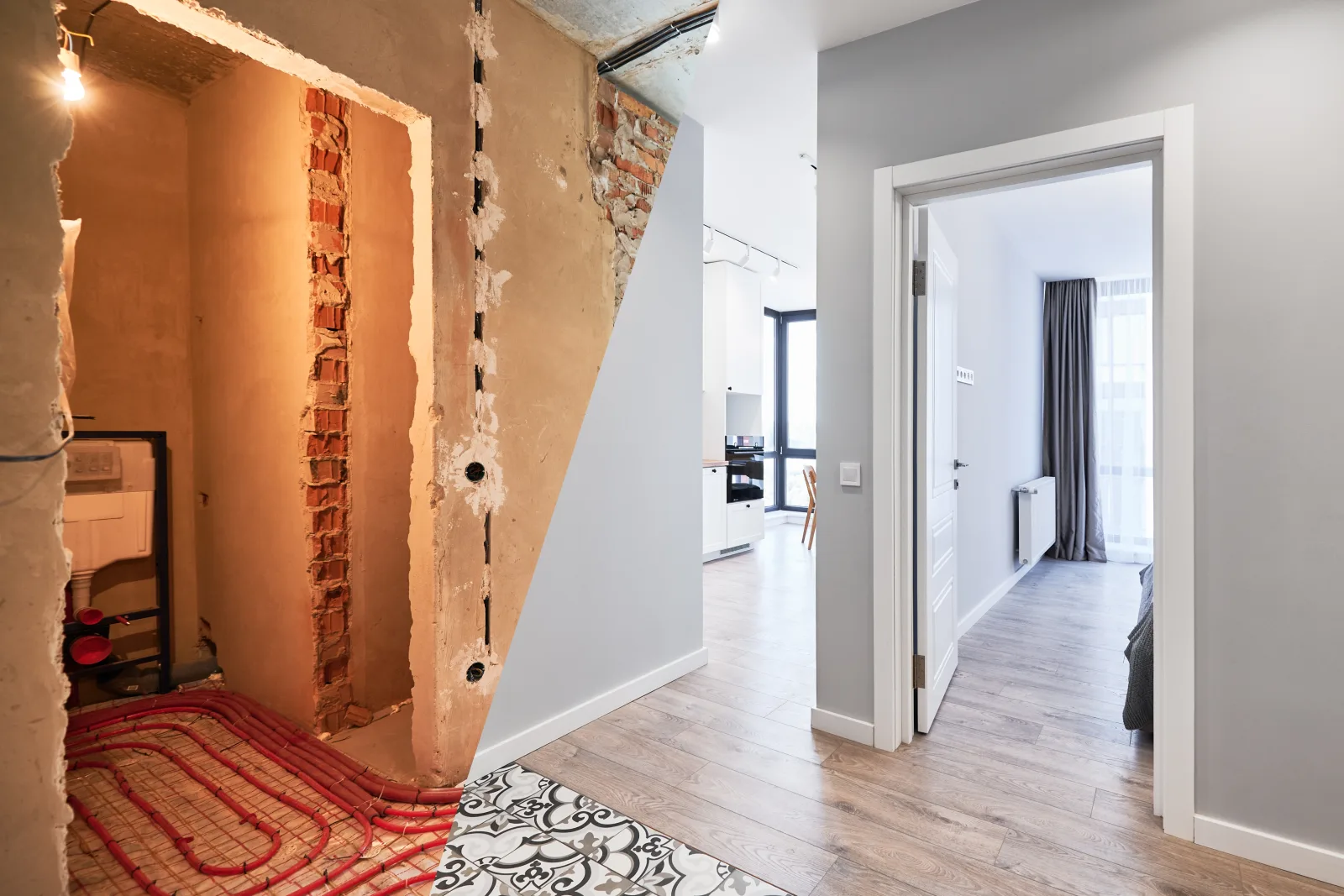
A split before-and-after view of one room, stripped brick, chased conduit and loose heating pipe on one side of the diagonal and finished paint, tile and trim on the other
48
States licensed
10+
Specialty markets
3
Coverage paths
CPCU
Credentialed founder

Two kinds of project, two different policies

Builders Risk answers for the structure while the work is happening; a Dwelling policy with a Cosmetic Repair Endorsement answers where the work stays cosmetic; and General Liability answers when somebody is hurt at the house. One project, three separate questions.

Fix and Flip Insurance

Structural and gut rehab

  • Walls, systems or framing opened up
  • Builders risk as the lead policy
  • Cover sized to the scope of work

When a job takes the building back to its structure, a standard dwelling form is the wrong instrument — most of them exclude loss during construction. This is the placement built for a house with the walls open, and it is written against the work rather than against a finished house.

Learn more →

House Flipping Insurance

Cosmetic and light rehab

  • Finishes, fixtures and surfaces
  • A dwelling form with an endorsement
  • The stretch the house sits empty

A refresh that never opens the structure is a different placement. The building stays on a dwelling form, endorsed so cosmetic work and an empty house do not quietly remove the cover you are paying for.

Learn more →

The coverages a project leans on

Builders Risk Insurance

The policy written for a building while the work is happening. It answers for the structure itself, the materials bought for it, and the money already sunk into the job — the things a finished-house policy stops answering for the moment the walls are open.

Dwelling Policy with a Cosmetic Repair Endorsement

For a project that stays cosmetic — paint, flooring, fixtures, kitchens and baths — where the building is never taken back to its structure. A dwelling form, endorsed so the work itself does not quietly remove the cover you are paying for.

General Liability Insurance

Answers when somebody is hurt at the house during the project — a delivery driver, a neighbor, a buyer walking through. It covers the site, the access to it, and the duty an owner owes the people who come onto it.

All coverages

Guides and resources

The most recent guide from each of the three sections.

All guides and resources →

Questions investors ask before the work starts

Does my dwelling policy cover a house I am flipping?

Often not once the work starts. A standard dwelling form is written for a house that is finished and occupied, and most carry provisions that narrow or suspend coverage while the building is under renovation or sitting empty. The policy is not wrong — it is answering a different question than the one an active rehab asks.

When do house flippers need builders risk instead of a dwelling policy?

It comes down to the scope of work. A cosmetic rehab — paint, flooring, fixtures, a kitchen swap with the structure untouched — can usually stay on a dwelling form with the right endorsement. Once the work is structural, a gut rehab that opens walls, moves load or replaces systems, builders risk is the form built for it, because it insures the work in progress rather than a finished building.

Does builders risk cover my tools on site?

Tools and equipment are a separate question from the structure, and the answer depends on how the policy is written. Some builders risk placements extend to materials and equipment at the site, some cover materials but not tools, and some cover neither without being asked to. It is worth settling explicitly rather than assuming, because tools on an unoccupied jobsite are among the most commonly taken things on a project.

What happens if the house sits vacant between phases?

Vacancy is its own exposure and most property forms address it directly through a vacancy clause. A building that is empty past whatever period the policy names can see coverage narrowed for certain causes of loss — often the ones most likely to happen to an empty house. A gap between closing and the start of work, or a pause waiting on a permit, is where this usually bites.

Does the policy end when I list the property?

Listing is not the same event as selling, and coverage is usually needed through the holding period until the sale closes. A policy written to the construction schedule can expire while the house is still on the market — finished, empty and unsold is a real and uninsured position if the term was set to the end of the work rather than to the exit.

My contractor has insurance. Why do I need my own?

A contractor policy answers for the contractor. It covers their operations and their liability, not the building you own or the money you have put into it, and it can lapse, exclude the work being done, or simply not respond to a loss to the structure. Certificates are worth collecting and are not a substitute for a policy in your own name.

Who answers if someone is hurt walking through the site?

That is premises liability, and it sits with the owner of the property rather than with the trades working on it. An active rehab draws people who are not tradespeople — a buyer, an inspector, an appraiser, a neighbor — onto a site with open floors and missing rails. General liability is the coverage written for that exposure.

Who we are and how we help

Fix and Flip Guard Insurance is a brand of Wexford Insurance, LLC (NPN 19887690), a licensed specialty agency in Greenwood, IN. We place coverage for investors who buy houses to renovate and resell.

Our specialty panel includes 10++ markets we hold appointments with. We do not publish which markets quote a given project; appetite moves, and the honest answer for any specific house is the one a licensed agent gives after reading it.

Most of the projects we look at were bought on a form written for a finished house. The question we ask first is what the work actually is, because that decides which policy answers when something goes wrong.

— Nate Jones, CPCU, Founder

Wexford Insurance, LLC is a licensed insurance producer, National Producer Number 19887690. You can verify the license independently at NIPR.

Tell us about the project

Send us the address and the scope of work.

Get a Free Quote 888-346-2414