
States we serve · Arkansas
Fix and Flip Insurance in Arkansas
Most states hand a reseller a form and tell them to fill it in. The Arkansas Real Estate Commission was asked whether state law requires that at all, and it answered the question in public. What follows from that answer decides what your file has to prove, and when.
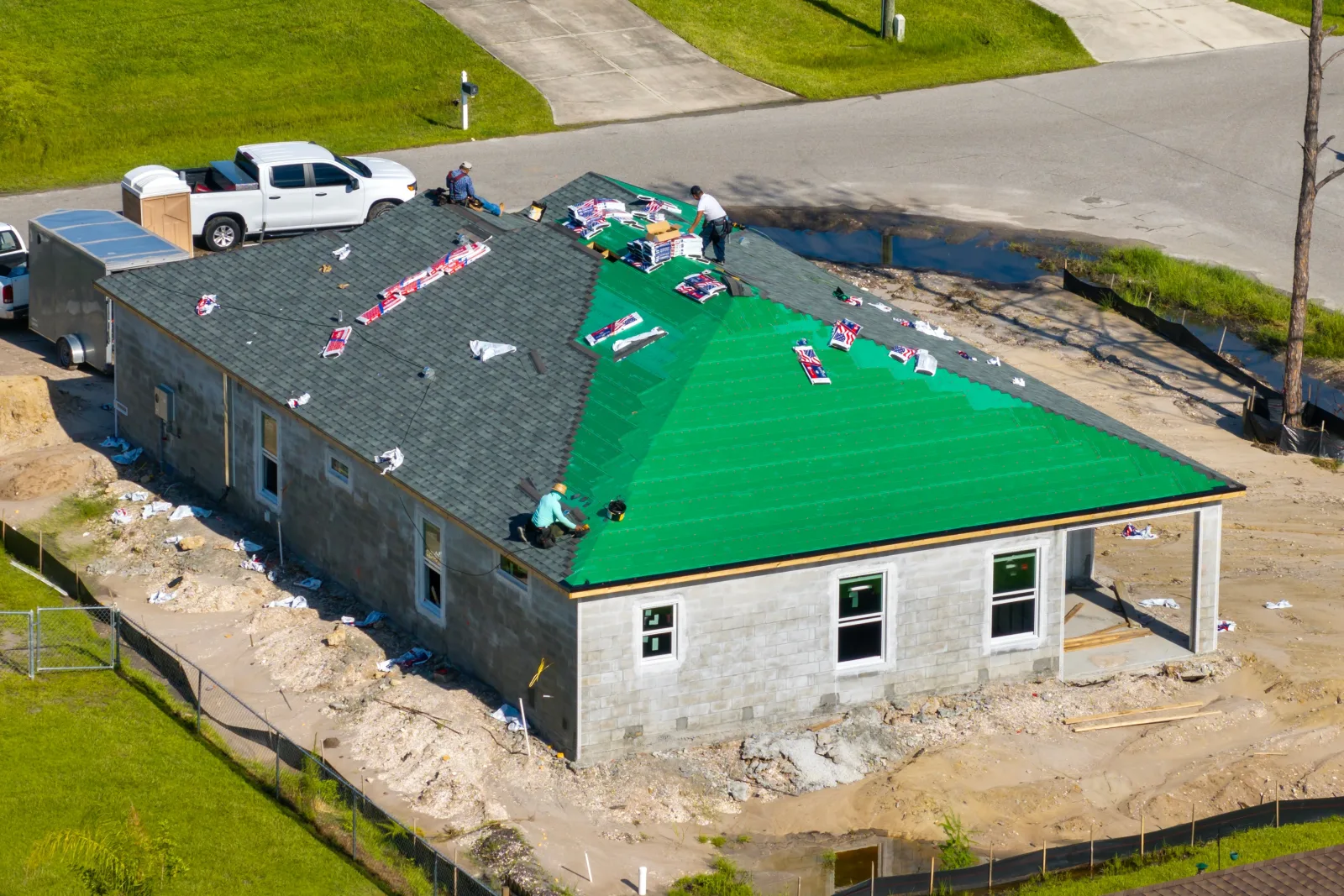

What fix and flip insurance costs in Arkansas
No figure appears on this page, and the omission is deliberate rather than commercial. A renovation is underwritten against one building and one scope of work, so a number printed here would be a number about somebody else’s job — a different structure, a different depth of work, a different holding period. What is set out instead is what actually moves a quote in this state, roughly in the order the questions get asked. The first of them is unusual, because in Arkansas it starts at the end of the project rather than the beginning.
What the resale has to stand on, when the state supplies no form
In most states a reseller signs a statutory condition form and the contents of that form are, in effect, the record. Here there is no such form, which does not lighten the load so much as move it: the condition of the house at closing is described through the contract the parties adopt and through the questions the agents are obliged to ask. The documents that answer those questions are the ones your project produced — the permit file, the inspection sign-offs, the invoices from licensed trades, the written scope of work. Underwriting reads the same stack. A submission that can say precisely what is being opened, what is being replaced and what is being left alone gets priced as the construction risk it is; a submission that arrives as an address with a budget attached gets treated as an unknown, and unknowns are expensive. So the resale posture in this state pushes documentation to the front of the job, and documentation is the cheapest input on the whole file.
The point where paint and fixtures turn into structure and systems
The next question is which form the work belongs on, and depth of work answers it rather than budget. Money spent on surfaces — flooring, cabinets, paint, fixtures — while the bones of the building are left untouched normally places on a dwelling policy carrying a cosmetic repair endorsement. The moment a wall opens, a load path moves, a roof deck comes off, or the wiring and pipes are stripped out and rerun, the building becomes a construction risk for the duration and the placement is builders risk. Arkansas puts a second edge on that line, because the credential the state expects the person running the work to hold is written around remodeling specifically. The scope decides the policy and the license class at the same moment, and describing it loosely gets both of them wrong at once.
What the policy limit is measured against, and who can move it
A construction placement is built around the building as it will exist when the work is finished, which is neither the price you paid nor the condition it is in while the crew is inside it. That much is true everywhere. What is specific here is that the finish line can be moved by somebody other than you: the statewide code is a floor, local jurisdictions enforce it and may only make it more stringent, and a stricter local requirement discovered at plan review adds work that the limit then has to carry. The number is yours to supply — your acquisition, your budget, your finished value — but it is worth setting it against the code the reviewing jurisdiction is actually applying rather than against the plan you bought the house with.
Holding time, and the causes of loss that sit outside the form
Duration is priced because exposure accumulates, and the accumulation here has a particular shape. Three of the things most likely to damage an Arkansas building in the middle of a renovation are not carried by the standard residential property form at all: flooding is its own placement, earthquake is usually its own purchase, and the department that regulates the market warns that water damage, debris or tree removal and sewer backups are not universally covered either. A project that runs long is a project sitting in that gap for longer. Count the weeks after the crew leaves as well — the building is still empty while it is being shown.
Which counter the parcel reports to, when the code itself does not change
Location matters here in an unusual way, because the code does not vary with it. One code set is adopted for the whole state and it reaches rural and unincorporated ground, so a house well outside any city limits is still inside the code. What changes with the address is the office applying it, the queue that office is working through, and whether that jurisdiction has adopted anything more stringent on top. Those are schedule inputs, and schedule is a priced input on a construction term: a policy written to a plan review that turns out to be twice as long as expected is a policy that lapses on a half-finished building.
Nobody living there, and a crew credential that can be verified at state level
Three answers close the file out. The first is occupancy, which on a flip is nobody, and that single fact is what makes the vacancy language in an ordinary dwelling form worth reading line by line before it is relied on. The second is who performs the work and what they hold — and unlike a number of states, this one keeps a state register to check them against, for the remodeler and for each licensed trade. The third is loss history, which moves the pricing on a renovation further than anything else on the submission and is the only answer that was settled before you asked the question. A general contractor carrying their own general liability changes how the liability side of the file is built, but it never substitutes for cover on the structure itself.
Cost is the question this page gets asked most, and it has its own page: the Arkansas cost guide walks the drivers a carrier weighs on a renovation here, in the order this state makes them matter. Arkansas fix and flip insurance cost guide.
Arkansas regulations and licensing for a fix and flip
The regulatory picture for a rehab here is unusually legible, which is worth saying plainly because most states are not. One question that elsewhere is answered by a form is answered here by a published position from the commission that regulates the agents. One code covers the whole state including the parts of it with no municipal government. And the person running the work holds a state credential written for exactly the kind of job a flip is.
Asked whether a seller must disclose the condition, the Commission answers no
The Arkansas Real Estate Commission answers the disclosure question head-on. Asked whether a state law requires every property owner to disclose all aspects of the condition of the property when selling it, the Commission’s published answer is no. An Arkansas reseller’s obligation therefore runs through the licensee’s duty to ascertain and disclose material facts and through whatever contract form the parties adopt, not through a statutory seller disclosure form.
Read that as a finding, not as a hole in the research. The Arkansas Real Estate Commission put the question to itself in the plainest possible terms — does a state law require every property owner to disclose all aspects of the condition of the property when selling it — and answered it. For an investor that answer cuts both ways. There is no state form waiting at the closing table with boxes you have to tick about work you performed yourself. There is also no form to hide behind: nothing on it limits what you can be asked, and the obligation that does exist is carried by the licensee rather than discharged by a signature.
What replaces a statutory form: a duty on the licensee and whatever the contract says
Two instruments do the work the missing form would have done. The first is the duty the Commission places on the licensee to ascertain and disclose material facts, which is why the questions on a rehabbed house arrive through the agents. The second is the contract form the parties adopt, which is negotiated rather than prescribed. Neither of them is an insurance document, and that is the point: the evidence they both draw on is the project record. A rehab file that carries permits, inspection sign-offs and licensed-trade invoices can answer a material-fact question in writing. One that carries a folder of photographs cannot, and the difference shows up at the least convenient moment — after the keys have moved and a defect has surfaced behind something you paid to close up.
The Residential Remodeler license, and where Limited stops
Arkansas licenses the residential side of construction at state level, so the crew credential on a rehab is a state question here and not only a municipal one. The Contractors Licensing Board sits under the Arkansas Department of Labor and Licensing, its Residential Committee was created to license the builders of new homes, and it issues a separate Residential Remodeler license authorizing the holder to perform residential remodeling work, offered as a Limited or an Unlimited license split at a statutory contract-value threshold.
The consequence for an investor is a check that takes a minute and a conversation that does not. The Arkansas Contractors Licensing Board (Arkansas Department of Labor and Licensing) holds a register, so there is a number to verify rather than a municipal registration to chase. The class matters as much as the existence of the license, because the Limited and Unlimited split turns on contract value and a scope that grows mid-project can walk past the line the license was issued under. Ask which class is held before the first payment, and re-ask it the day the scope changes. And read the certificate that arrives with the crew for what it is: cover somebody else bought for their own exposure. Appearing on it as an additional interest does not put the building onto a policy of yours, which is the job a structural rehab placement is there to do.
The plumbing credential comes from the health department, not the labor one
The trades hold their own credentials and they do not all sit in the same building. Electrical work runs through the Board of Electrical Examiners, Arkansas Department of Labor and Licensing, which administers the state’s electrician licensing across master, journeyman, residential and industrial maintenance classes. Heating and cooling belongs to the State HVAC/R Board, Arkansas Department of Labor and Licensing, which tests and licenses HVACR contractors. Plumbing and gas leaves that department entirely: the Arkansas Department of Health, Protective Health Codes (Plumbing and Natural Gas) issues the master, journeyman, apprentice, inspector and gas fitter credentials. On a gut rehab those three trades are usually the critical path, so the verification a careful file performs is spread across two agencies rather than one — and it is the kind of thing that gets skipped precisely because nobody expects the second address.
The Fire Prevention Code reaches unincorporated ground, and local rules may only tighten it
The Arkansas building code is adopted by the State Fire Marshal’s office as part of the Arkansas Fire Prevention Code, a three-volume set whose Volume III is the Residential Code and which the Fire Marshal’s page describes as based on the International Fire, Building and Residential Codes. That code applies statewide, even in rural and unincorporated areas, so a rehab outside city limits is not outside the code.
Two things follow for a renovation. A project on land with no city government is not a project outside the code, so the assumption that rural work is unregulated work is the expensive kind of wrong. And because a jurisdiction may only move in one direction from the state floor, the question to ask the reviewing office is not whether it has amendments but which way they run. Both answers land on the policy term: the construction placement is written around a schedule the local building official controls. Extending that term is administrative while the policy is still running and something much harder once it has expired over a partly built house.
The insurance regulator, and the consumer cautions it puts in writing
The Arkansas Insurance Department (AID) licenses the insurers and the producers working here, and it is the office that hears a grievance once the argument has become one about the coverage rather than one about the construction. It is also the author of the peril guidance in the next section: the cautions about what a standard residential property form leaves uncarried are its own published consumer material rather than our commentary, which is why they are quoted and attributed instead of summarized. Nothing about the building itself sits with it, though — not the permit, not the code edition, not the credential the crew holds. Those belong to the agencies above, and none of them will ever appear on a policy.
The state’s residual mechanism answers for earthquake, and only for earthquake
The residual arrangement here is narrower than the one most investors picture, and knowing its shape saves a wasted phone call. It is a Market Assistance Program (MAP) for residential earthquake insurance, developed as a result of the Arkansas Earthquake Authority Act of 1999, available to consumers who cannot find that cover through traditional sources. Read what that does and does not do. It addresses a single peril, one that sits outside the standard form to begin with, and it is not a general backstop for a building the market has declined outright. A renovation that struggles to find any market at all is usually struggling on the description rather than on the building, and the specialty writers behind a finish-work project respond to a scope they can read line by line in a way that no bare address will ever draw out of them.
Common fix and flip risks in Arkansas
The peril picture in this state is best read from the edges inward, because the edges are where the department has chosen to publish. A storm loss on an Arkansas building is presented under the standard residential property form, and the regulator’s cautions sit around that form rather than inside it.
Flooding is not one of the things that form answers for. It is excluded outright, so it becomes a placement of its own: either the National Flood Insurance Program or a private flood policy. The department adds a point an investor should hold on to — an Arkansan may buy private flood cover without living in a floodplain. Most standard dwelling forms do not answer for earthquake damage either, and like flood it usually has to be purchased separately. That is two of the perils a building can suffer here sitting outside the policy most owners assume covers everything.
The department’s third caution is the one that catches renovations, because it is about the ordinary aftermath rather than the headline event: not all policies cover water damage, debris or tree removal, or sewer backups. Those are precisely the costs a storm generates on a half-finished site — a building opened up, material staged where weather can reach it, and a lower level whose drainage has been disturbed by the work itself.
Layered over the natural perils is the ordinary exposure of an active site: an open structure, material waiting on an installer, a lot that strangers walk onto in daylight, and nobody in the building after dark. Two instruments divide that between them — general liability for the people, and a construction property form for the structure and the work already installed inside it. A policy written for a finished, occupied house was never asked to answer either half.
Common Arkansas fix and flip claims we see
What follows is a pattern set rather than a case file, and it carries no figures, for the reason set out in the first section. Every one of them sits against a caution the regulator has already put in writing.
Clearing what the storm left behind, and who pays for the clearing
A tree comes down across a site mid-renovation. The damage to the structure is the part everyone thinks about; the cost that surprises people is getting the tree and the wreckage off the lot before the crew can return to work. Debris and tree removal is named in the department’s own warning as something not all policies carry, and on a project the removal is not merely a tidying expense — it is the thing standing between a stalled schedule and a restarted one, which makes it a term problem as much as a cost problem.
The backup that arrives through the plumbing rather than through the roof
A lower level takes water and nothing came through the envelope. Sewer backup is the third of the named cautions and it lands hardest on renovations, because the finish work that has just gone in is the finish work that gets ruined, and because a rehab has often disturbed drainage that had been quietly working for decades. The claim conversation turns on where the water came from and on whether the policy was ever endorsed for that route in at all.
Water damage found late in a building nobody had walked through
An empty building does not report its own problems. A supply line that weeps rather than bursts can run for a fortnight in a house with no one in it, and the loss that gets presented is not the fitting but every surface below it. The department’s caution that not all policies cover water damage is doing real work here: the distinction between a sudden escape and a slow one is the distinction between a paid claim and a declined one, and the vacancy the project depends on is what allows the slow version to go unnoticed.
Ground movement on a project where earthquake was never placed
Earthquake sits outside the standard form and is usually a separate purchase, which means it is a decision rather than a default. On a renovation the decision is easy to skip, because the peril feels remote and the placement is one more line on a closing checklist. The state maintains a mechanism specifically for consumers who cannot find that cover through traditional sources, and the existence of that mechanism is the clearest signal available that the cover is neither automatic nor always easy to buy.
Water at an address where the cover was available and nobody bought it
The most avoidable loss on this list. Flood is excluded from the property form and has to be arranged separately, and the department has gone out of its way to say that private flood cover is available to an Arkansan who does not live in a floodplain. A project that skipped the placement because the address had never been called a flood address is a project with an uncovered total loss on a building that was, until that week, nearly finished.
Why Arkansas real estate investors choose Fix and Flip Guard Insurance
Whether your job is a structural or gut rehab or a finishes-and-fixtures project decides the placement: the first is a fix and flip insurance placement led by builders risk, the second a house flipping insurance placement led by an endorsed dwelling form.
The capacity behind a submission is an independent agency holding appointments with 10++ specialty markets and licensed in 48 states. What that is worth on an Arkansas file specifically is the number of placements a single project can end up needing here — a property or construction form, flood on its own paper, and earthquake on its own again if the project wants it — and the sequencing that keeps them from contradicting each other.
The organizing argument on this page is the Commission’s answer, and it is worth stating what we take from it. A state that declines to prescribe a condition form has not made the resale easier; it has moved the burden of proof onto the record the seller can produce. That record is built during the job, by the same permits, inspections and licensed trades an underwriter asks about at submission, which means the file that gets the better placement is the file that will also answer the buyer. We build the placement around the documents rather than around the address, because in this state the documents are the disclosure.
One distinction decides the placement, and Arkansas sharpens it, because the license class the state issues is drawn along nearly the same line. Getting that seam right decides whether the policy answers, and here it also decides which credential the person running the work has to be holding.
Major Arkansas fix and flip markets
Every market below appears in the Arkansas entry behind this page. The mechanisms attached to them are statewide ones, so what changes from one to the next is which mechanism a file turns on first — and that is settled building by building rather than city by city.
- Little Rock. The resale-record market. With no statutory condition form in the state, what a finished project can prove about itself is carried entirely by its own documents, and the same stack is what an underwriter reads at submission. A file built to answer a material-fact question is a file that gets a construction placement priced to the work rather than to the uncertainty.
- Fayetteville. The license-class market. The Residential Remodeler credential comes as a Limited or an Unlimited license split at a statutory contract-value threshold, so a scope that grows during the job can outrun the class the contractor holds. That is a credentialing exposure the certificate of insurance on file will not reveal, and it is checked against the contract value, not against the finished photographs.
- Springdale. The stringency market. The statewide code is a floor that local jurisdictions may only tighten, so the additional work a stricter local amendment requires lands inside the finished value the limit is written to. The underwriting question here is whether the limit was set against the plan that was bought or against the code that will actually be enforced.
- Fort Smith. The two-agency market. Plumbing and gas credentials issue from the Arkansas Department of Health while electrical and HVACR issue from the Arkansas Department of Labor and Licensing, so verifying a gut-rehab crew means two registers rather than one. The exposure is a trade running on an unverified credential on the part of the job least able to absorb a rework order.
- Jonesboro. The separate-placement market. Earthquake sits outside the standard form and has its own residual mechanism in this state, which is the clearest available signal that the cover is neither automatic nor always easy to source. A project that wants the peril covered is running a second placement, and the time to discover that is at binding rather than at loss.
Related reading
Arkansas fix and flip insurance FAQs
My agent says Arkansas has no state disclosure form. Does that mean I can stay silent about what the rehab uncovered?
No. The Arkansas Real Estate Commission was asked whether a state law requires an owner to disclose all aspects of a property’s condition when selling, and its published answer is no. What that removes is a statutory form, not the obligation itself. The duty runs through the licensee’s duty to ascertain and disclose material facts and through whatever contract form you and the buyer adopt.
The buyer’s agent keeps asking about work behind the drywall. Whose duty is that, if the state imposes none on me?
It sits with the licensee. The Commission’s position is that a licensee must ascertain and disclose material facts, so the questions arrive through the agents rather than through a state form you fill in. For a rehabber the practical answer is the same either way: the permits, inspection sign-offs and written scope of work your project generated are what those answers get drawn from.
Nobody will quote earthquake cover on the house. Does Arkansas run anything for that?
Yes, and it is unusually narrow. The state operates a Market Assistance Program for residential earthquake insurance, developed as a result of the Arkansas Earthquake Authority Act of 1999, for consumers who cannot find that cover through traditional sources. It is a single-peril mechanism, not a general insurer of last resort, and earthquake is a separate purchase here in the first place.
A storm dropped a tree across the drive and backed water into the lower level. Is the cleanup part of the loss?
Check the form before assuming it. The Arkansas Insurance Department warns that not all policies cover water damage, debris or tree removal, or sewer backups — three of the costs a storm actually generates on a renovation site. They sit at the edge of the standard residential property form rather than at its center, so they are worth confirming while the policy is being placed.
My remodeler’s license says Limited. Is there a point in the budget where that stops being enough?
Yes. The Arkansas Contractors Licensing Board issues a Residential Remodeler license authorizing residential remodeling work, offered as either a Limited or an Unlimited license, and the two are split at a statutory contract-value threshold. A scope that grows past that line during the job is a licensing question before it is a coverage question, so confirm the class against the contract value at signing.
Why is my plumber credentialed by a health agency and my electrician by a labor one?
Because Arkansas splits them. Plumbing and gas licensing sits with the Arkansas Department of Health under Protective Health Codes, while electrical runs through the Board of Electrical Examiners and heating and cooling through the State HVAC/R Board, both under the Arkansas Department of Labor and Licensing. On a gut rehab that means crew credentials get verified at two separate agencies.
The house sits outside any city limits. Is there still a code the work has to meet?
There is. The Arkansas building code is adopted by the State Fire Marshal’s office as part of the Arkansas Fire Prevention Code, and that code applies statewide, including rural and unincorporated areas. Volume III is the Residential Code, based on the International Residential Code with Arkansas changes. Local jurisdictions enforce it and may only make it more stringent, never looser.
The address was never treated as a flood address. Can flood cover even be bought on it?
It can. The standard residential property form does not answer for flooding, so the cover is arranged separately — the National Flood Insurance Program is one route and a private flood policy is the other. The Arkansas Insurance Department states that an Arkansan may buy private flood cover without living in a floodplain. On a renovation that is a decision for the week you bind, not for the week the water arrives.
Get a Arkansas fix and flip insurance quote
Send us the address and the scope of work.