
How Much Does Fix and Flip Insurance Cost? What Moves It
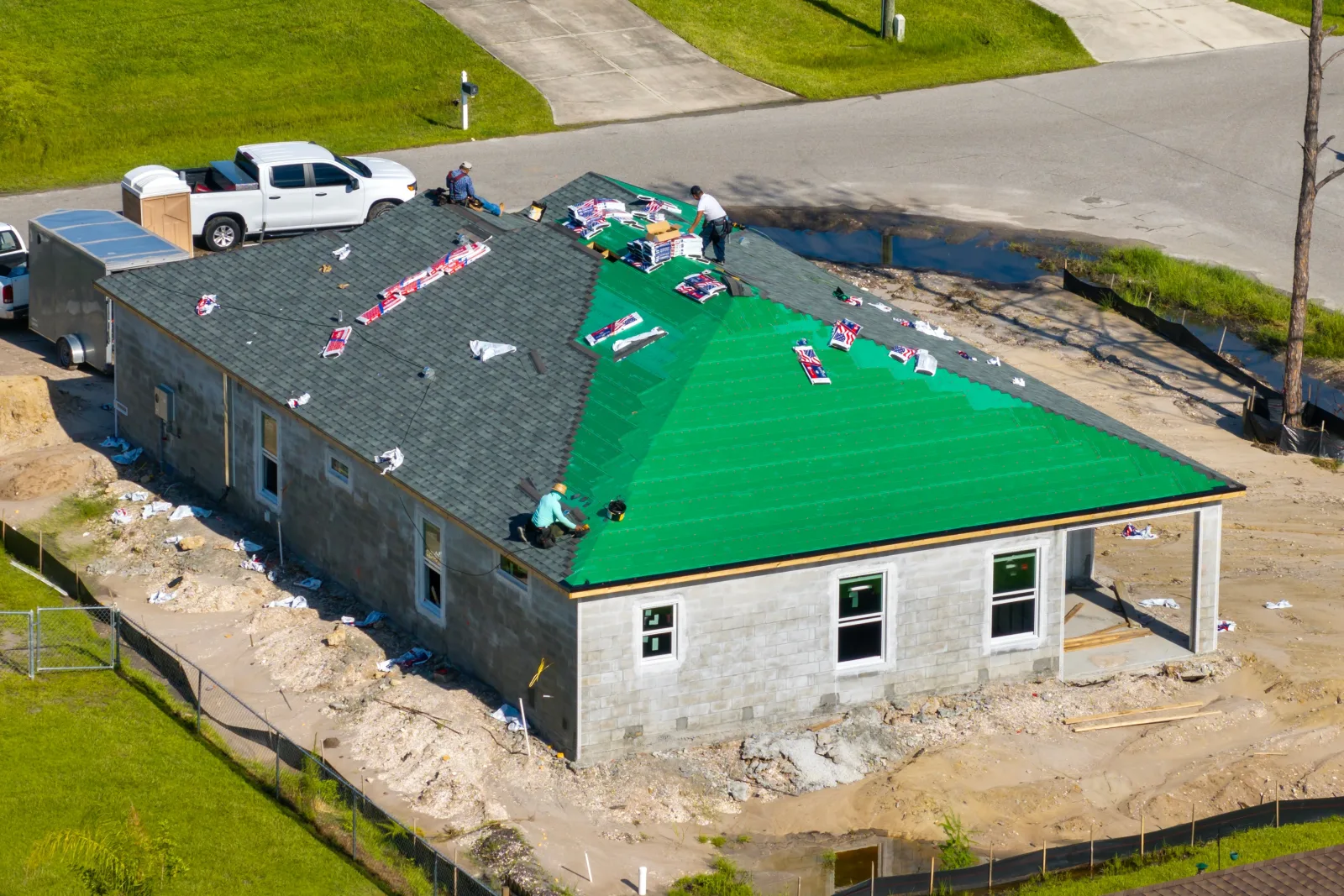
Nobody publishes a premium for this, and that is not evasion. A renovation is priced from the specific job, and the first thing an underwriter establishes is not how much the house is worth but what is being done to it — because that answer decides which policy form the project belongs on, and the two forms are not built from the same number.
The fork that comes before the number
Ask what a renovation costs to insure and the honest first move is to ask what the renovation is. If the finished house has the same bones as the one you bought — new paint, new flooring, new cabinets, new fixtures, nothing structural moved — the placement is normally an endorsed dwelling policy. If the bones change — a wall comes out, a roof deck comes off, the wiring and the pipes go back to bare framing — then for the length of the job you own a building site rather than a house, and building sites are insured on builders risk.
That is not a filing distinction. The two forms are calculated from different things, so the fork decides the shape of the answer before any of the inputs below get a chance to move it. It is also why this agency runs two separate service pages — fix and flip insurance for the structural side and house flipping insurance for the cosmetic side — rather than one page pretending the two jobs are the same purchase.
What the limit is written to
A construction placement is built around what the property will be worth when the work is finished. That is not what you paid at closing, and it is not what the house would fetch halfway through. Purchase price, completed value and after-repair value are three different figures, all of them yours, and only one of them is the number the policy is written to.
Getting this wrong is expensive in a specific way: a limit set to the acquisition price on a house that will be worth considerably more finished leaves the gap uninsured exactly when the structure is most exposed. The underwriter is reading the relationship between your figures rather than any one of them alone, which is why a submission with a real budget attached moves faster than one without.
There is a second reason to get the basis right, and it shows up at claim rather than at binding. A property form settles either on what it costs to put the building back or on what the building was worth after depreciation, and on a half-finished structure those two answers can be a long way apart. Which basis you are on is a term of the contract, not a detail of the quote, and it is a fair thing to ask about before signing rather than after a loss.
How a renovation file is weighted, before any state is named
This is the baseline arrangement, drawn before any state enters the picture. Its top row is the choice of policy form, because that choice fixes what the cost is calculated from and no row under it can be read without knowing it. Beneath the form sits the basis the limit is written to, then how long the structure stays open, then whether anyone is living in it, then the scope and the people holding the tools, then the peril class the address belongs to, then what the loss record already carries, and finally the retention and the covers placed alongside the property limit. Every state guide in this series takes the same set of inputs and shuffles it, so how far a row has moved from the position it holds here is the point that guide is making.
- Which policy form the job lands on It sets the cost basis before anything else does, because the two forms are not priced from the same thing.
- What the limit is written to Completed value, purchase price and after-repair value are three different numbers, and only one is the policy limit.
- How long the structure stands open Exposure accumulates with time, and a job that outlives its own term is a second transaction.
- Whether anyone lives there An empty house is a different exposure from an occupied one, and the form says so in its own conditions.
- Scope of work, and who holds the tools What is being opened, and whether the people opening it are licensed and carry their own liability.
- The peril class of the address Which causes of loss the address is exposed to, and which of them leave the property policy entirely.
- What is already on the loss record The one input that cannot be rewritten at submission, and it moves pricing materially.
- Deductible and the covers beside it What you retain yourself, and which optional covers are placed alongside the property limit.
How long the structure stands open
Duration is priced because exposure accumulates. A project that runs long is a project that is empty longer, open to more weather, and more likely to outlive its own policy term — and a term that expires over an unfinished house is not a renewal conversation, it is a placement problem.
The stretch after the crew leaves counts too. The house is still empty while it sits on the market, and a listing period is part of the window you are buying. Investors routinely price the construction schedule accurately and then forget the months on the other side of it.
Nobody is living there, and the form knows it
Vacancy is not a footnote. It is a condition inside the form, and it is the single most common reason a policy bought for a finished house stops answering for a house under renovation. The provisions differ by form and by carrier, but the direction is consistent: an empty building is a different risk, and a contract written for an occupied one reserves the right to say so.
This is also where a lot of investors discover that the seller’s existing policy, assumed at closing, was never going to work. It was written for somebody who lived there.
Vacancy interacts with duration, which is why the two sit next to each other on the stack rather than at opposite ends of it. A short job on an empty house is an ordinary renovation exposure. A long job on an empty house — permits slow, a trade unavailable, a scope change mid-project — is the same building accumulating the same exposure for longer, with nobody walking through it to notice a pipe letting go or a door standing open. Underwriters read the pair together, and so should you.
Scope of work, and who is holding the tools
Two questions, and they are read together. What is actually being opened, and who is doing the opening — a licensed general contractor carrying their own general liability, a set of trades you are coordinating yourself, or you and a crew.
Scope also drags in obligations that have nothing to do with insurance until they do. Housing built before the federal lead-paint ban carries the renovation, repair and painting rule, which requires that anyone paid to disturb painted surfaces there be a certified firm working through trained renovators. That is a distinct program from lead abatement, which the same regulator certifies separately and regulates differently — a distinction worth knowing before a bid describes one and delivers the other. Where employees are exposed to lead in construction work, a separate occupational standard applies on top. None of these price your policy directly. All of them shape the scope, the schedule and the choice of contractor, which do.
Real-World Scenario: An investor buys a tired ranch intending a cosmetic refresh and puts the seller’s dwelling policy in place at closing. Three weeks in, a plumber opens a wall and finds the branch lines shot; the job quietly becomes a systems replacement with the walls open. Nobody tells the carrier, because nobody thinks of it as an insurance event. A storm takes part of the roof off in the fourth week. The adjuster reads a policy written for a finished, occupied house, and the file turns on whether the building it describes is the building that was standing. The loss was real, the coverage was arguable, and the whole argument was created by a scope change nobody reported.
The peril class of the address
Location is not a rounding factor, and it is not a league table either. What matters is which causes of loss the address is exposed to and which of them leave the property policy altogether.
Flood is the clearest case: it is not part of standard property coverage anywhere, and the National Flood Insurance Program says so directly on its own front page. It is a separate placement, and on a renovation it is a separate placement with its own timing. Earth movement is normally its own contract too. And in named-storm territory, wind and hail are frequently stripped out of the property policy and placed with a state residual mechanism — which means two policies, sometimes an inspection step, and a different file structure rather than simply a different rate.
That is why the state pages exist. A project in Texas, one in Florida and one in Colorado are not the same risk with different postcodes, and none of the three is “the expensive one” — they are exposed to different things and the placements are built differently. The full list of states we are licensed in is the place to start on a specific address, and the state cost guides go a layer deeper: the Texas guide reorders this entire stack around what Texas makes decisive.
What is already on the record
Prior losses change pricing materially and they are the one input on this page you cannot rewrite at submission. Two files identical in every other respect will not come back the same if one of them carries a recent claim.
The useful implication is forward-looking rather than confessional: how a project is run, reported and closed out is what the next file inherits. An investor doing several houses a year is building a record whether or not they think of it that way, and the record is read on the next submission and the one after that.
It is also worth separating two things that get conflated. A loss is not the same as a claim, and a claim is not the same as a pattern. One weather event on one house reads differently from a run of water losses across a portfolio, because the second says something about how projects are being managed and the first mostly says something about the weather.
Deductible, and what sits beside the property limit
The deductible is a live decision, not a default. Retaining more moves the premium and moves your exposure, and on a renovation there is a second wrinkle — separate deductibles for named perils are common in some markets, so the number on the declarations page may not be the number that applies to the loss you actually have.
Beside the property limit sit the optional covers that turn a policy into a placement: soft costs, a tools and equipment floater, and general liability alongside rather than inside the property form. Each is a separate decision with its own cost, and each is worth pricing deliberately rather than discovering was absent.
What a submission needs before anyone can answer
Bring the address, the acquisition figures and the budget, an honest scope of work, the intended schedule including the time on market, who is doing the work and what they carry, and anything on the loss record. Bring the permit position too — building codes are adopted and enforced locally, and the federal government tracks that adoption state by state precisely because it varies.
A submission with those in it comes back with a real number. A submission without them comes back with questions, which is the slower route to the same place. If you would rather talk it through, we are happy to, and the quote form is built around this list rather than around a postcode.
The bottom line
Nobody can price a renovation from the address alone, because the scope of work decides which policy answers and the policy decides what the number is even built from — so the fastest route to a real figure is a complete description of the job, not a search for an average.
Frequently asked questions
Why will nobody on this site quote me a range before I describe the job?
Because a range would be describing somebody else’s project. Two houses on the same street, bought for the same money, price differently depending on whether the work stops at surfaces or opens the walls — and those two jobs are not even written on the same policy form. A range that averages across both is arithmetic about a population you are not in. The drivers on this page are concrete enough to tell you which direction your own file moves without pretending to a number.
Is a cosmetic refresh always cheaper to insure than a gut rehab?
Usually, but not reliably, and the reason is worth understanding. A cosmetic job is a smaller construction exposure, so the construction side of the file is lighter. But the same house may sit somewhere with a heavy peril profile, may stand empty for longer because the investor is slower to list it, or may carry an owner with a claim on the record. Any one of those can outweigh the scope difference. Scope sets the starting point; it does not settle the answer.
If the work finishes early, is any of the premium returned?
That depends on the form and on how it was written, and it is a question to ask before binding rather than after. Some construction placements are written for a term and earn out over it; some can be canceled with a return of the unearned portion. The practical planning point is the opposite case anyway: projects run long far more often than they finish early, and the cost of discovering your term ended while the house was still open is much larger than the saving on an early finish.
Does running the job myself instead of hiring a general contractor change what I pay?
It changes what the underwriter is looking at. A licensed general contractor carrying their own general liability puts a second insured party and a second policy between you and a large class of loss. Coordinating trades yourself removes that layer, so more of the exposure sits on your file. It is a legitimate way to run a project and plenty of investors do it — it simply reads differently at submission, and it is the sort of thing worth stating plainly rather than leaving to be discovered at claim time.
The house is older than the federal lead-paint ban. Does that reach the insurance?
It reaches the job, and the job reaches the insurance. The federal renovation, repair and painting rule requires that anyone paid to disturb painted surfaces in housing built before that ban be a certified firm working through trained renovators, using lead-safe work practices. That is a scope-of-work question and a choice-of-contractor question, which are two of the inputs an underwriter reads directly. It also affects the schedule, and schedule is its own driver.
Is a renovation policy priced for the whole project or by the month?
Construction placements are normally written for a term rather than billed monthly, and the term is chosen to cover the work plus the stretch afterwards while the house sits on the market. That is why duration appears on the list above as its own input rather than as a footnote to scope: you are buying a window, and the honest question at submission is how long the window really needs to be, not how short you can make it look.
About the author

Nate Jones, CPCU, is the founder of Wexford Insurance and Fix and Flip Guard Insurance, a specialty agency placing fix-and-flip real estate investment coverage in 48 states across 10+ carrier markets. He places renovation risk in every state the agency is licensed in, which means he reads the same short list of inputs on a coastal gut rehab and on a cosmetic refresh a long way inland, and watches them land in a different order every time. Reach him through the Fix and Flip Guard Insurance quote form or call 888-346-2414.