
How Much Does Fix and Flip Insurance Cost in Texas?
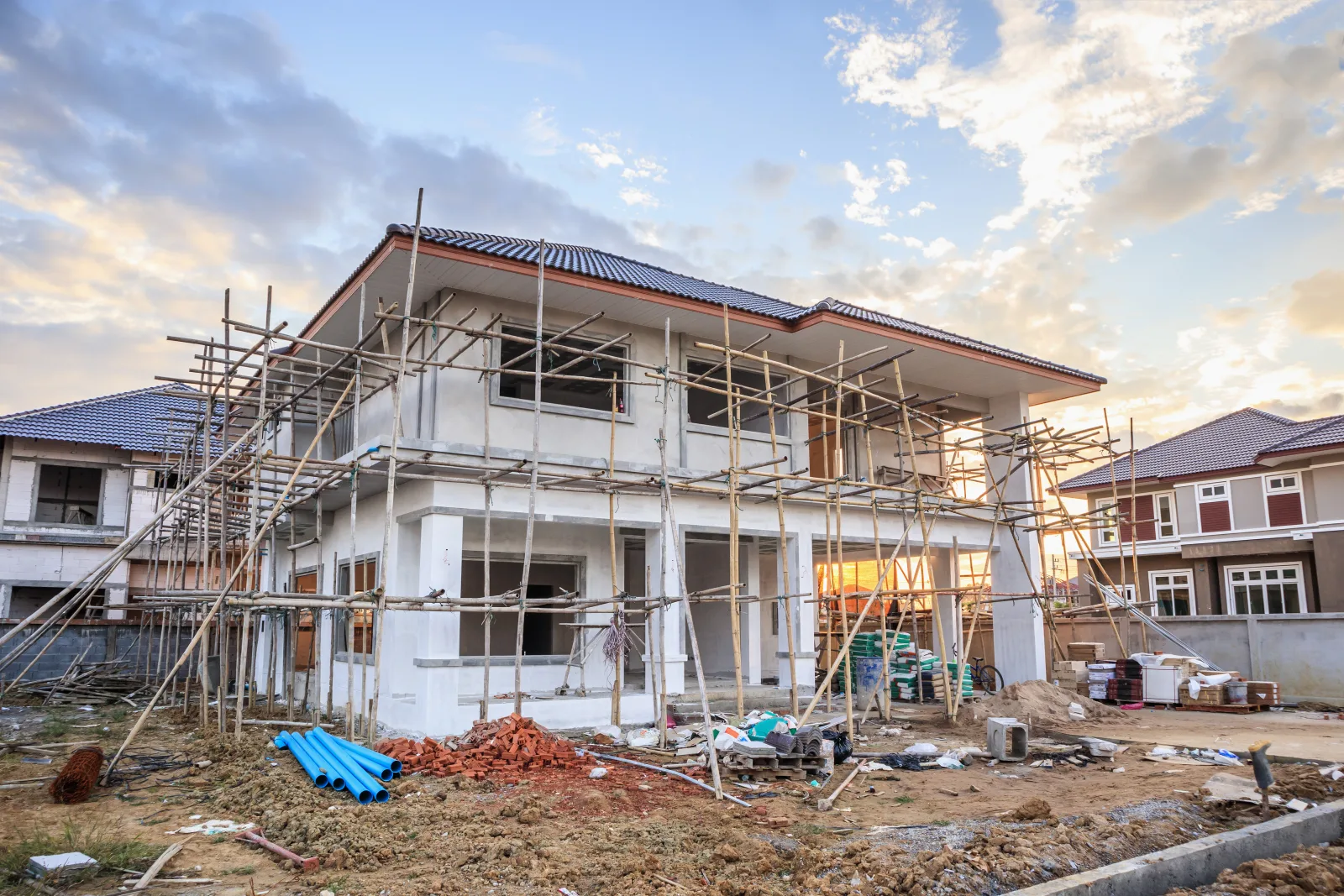
Texas does not publish a renovation premium and neither does this page, but the more useful Texas answer is that the address changes the shape of the file before it changes the rate. On one side of the state’s windstorm line a rehab is a single placement and a local permit. On the other it is two policies, an inspection and a certificate, in that order.
Why there is no Texas number on this page
A renovation is priced from the specific job, and in Texas it is priced from the specific job at a specific address in a way that is unusually structural. Two identical houses, identical scopes, identical budgets, one in the far west of the state and one within sight of the water, do not produce two rates on one form — they produce two different placements. Averaging across them would not be conservative, it would be meaningless.
What follows is what actually moves the file, in roughly the order a Texas underwriter reaches it. The national version of this list starts somewhere else entirely, which is the honest way to say that Texas is not the default case.
The coast rewrites the file before it rates it
The Texas Department of Insurance says it plainly in its own consumer guide: if the house is on the Texas coast or in Harris County on Galveston Bay, a home policy might not cover wind and hail damage. That coverage is bought instead from the Texas Windstorm Insurance Association, which describes itself as a not-for-profit writing windstorm and hail for owners who cannot get it in the regular market.
For a renovation, the consequence is not a surcharge. It is a second placement with its own application, its own deductible and its own claim process, sitting alongside the property policy that still carries fire, theft, vandalism, impact and sudden water discharge. And there is a sequencing detail the same TDI guide records that catches people out: depending on where the house is, flood coverage may need to be in place before wind and hail will be sold at all.
That last point deserves a moment, because it inverts the order most investors work in. Flood is normally the thing you get to last, after the property policy is bound and the job is under way. On a coastal Texas project it can be a precondition for the wind cover, which is itself a precondition for the lender. A file assembled in the usual order simply stalls, and it stalls at the end, when the house is finished and the holding costs are running.
How a Texas renovation file is weighted, in Texas order
Where the house stands relative to the windstorm line is the first thing this figure settles for Texas, because on the seaward side wind and hail leave the property policy for the state association and one file becomes two placements. The inspection and certificate step that gates that coverage follows immediately behind it. Inland the same peril stays inside the form, so roof condition and the retention structure carry the weight instead. Home rule comes next, since the city or county counter you stand at sets how long the job runs, and after it the licensing pattern of a state that credentials individual trades and no general contractor. Rows a reader of these guides will recognize — form, limit basis, an empty house, the loss record — are held back toward the bottom because the address answers two questions before the scope answers any.
- Which side of the windstorm line the house sits on Wind and hail leave the property policy for the state association on the coast, so the file becomes two placements.
- The inspection and certificate step Coastal work is inspected against the state building standards before wind coverage attaches — a sequence, not a cost.
- Hail inland, and where it sits in the form Inland, hail stays inside the property policy, so the weight lands on roof condition and the deductible structure.
- Home rule, and whose counter you are standing at Permits and inspections come from the city or county, so the calendar and the length of the job are set locally.
- Trades the state licenses, and the builder it does not Texas licenses electricians, plumbers and air conditioning contractors statewide and no general contractor at all.
- Which policy form the job lands on The cosmetic and structural sides of the work are not written on the same form or priced from the same thing.
- What the limit is written to The finished value, not the closing figure — and roof and envelope work is a large share of that gap here.
- The empty house, and what is already on the record How long it stands unoccupied through a Texas season, and whether there are prior losses on the file.
The certificate step, which costs time before it costs money
Coastal Texas adds something no inland project has to plan around. Renovation work has to be inspected against the building standards the department enforces, and when it complies the department issues a certificate of compliance, form WPI-8, to the windstorm association. Wind coverage attaches on the strength of that certificate.
Read as a cost driver, this is a schedule item first. It has to be built into the sequence of the job rather than discovered at the end of it, because a finished coastal rehab with no certificate is a finished coastal rehab that cannot buy the coverage its lender is going to ask for. The identical job an hour inland has none of this.
Inland, hail is inside the policy — and that moves the weight
Away from the coast the picture inverts. TDI’s list of what a standard policy covers includes windstorm, hurricane and hail, with the coastal carve-out named explicitly as the exception. So inland the peril has not disappeared; it has moved inside the form, where it lands on two things an underwriter looks at hard.
The first is the roof — its age, its covering and its condition, on a house whose roof may well be part of the scope of work. The second is the deductible structure, because a deductible applying to wind and hail alone is a common feature of these policies and is often not the number printed at the top of the declarations page. Both are worth settling at quote rather than at claim.
There is a timing argument here that is specific to flipping rather than to owning. If the roof is being replaced as part of the scope, the building the underwriter is asked to cover changes materially partway through the term — and it changes in the direction the carrier likes. Saying so at submission, with the scope and the intended sequence attached, is a better conversation than letting the file be rated on the roof that is coming off.
Flood, meanwhile, is outside the property policy everywhere in Texas and is its own placement through the federal program or a private market. Earth movement sits outside the form as well.
Home rule, and the counter your calendar is set at
Texas adopts a statewide residential energy standard through the State Energy Conservation Office, and then hands the enforcement back. The comptroller’s own page is unambiguous: Texas is a home-rule state, local jurisdictions may adopt amendments to the codes, and local jurisdictions do the implementing and enforcing.
For a flip that means the permit, the inspections and the pace all come from the city or county where the house sits. A project in Austin and a project in San Antonio can run the same scope on different calendars, and duration is a priced input on every renovation placement — a slower counter is a longer window to buy. It is also the reason a portfolio spread across Houston, Dallas-Fort Worth and El Paso does not have one schedule.
Real-World Scenario: An investor who has done several inland rehabs buys a coastal house on the same playbook. The scope is a full re-roof and a systems replacement, the crew is booked, and insurance is treated as a closing formality the way it always has been. The property policy binds without difficulty. The wind cover does not — the work is under way, the inspection that produces the certificate has not been scheduled, and the coverage cannot attach until it has. The house stands finished and unsold with the storm season running, the lender’s requirement unmet, and a sequence problem that would have cost nothing at all if it had been read a month earlier.
A state that licenses the trades and not the builder
Texas regulates the insurance closely and the construction lightly, and the asymmetry is real rather than rhetorical. No Texas agency licenses general or residential contractors — the state’s residential construction regulator was abolished without a successor — and the Department of Licensing and Regulation’s own list of the programs it licenses carries electricians and air conditioning contractors and nothing resembling a builder. Plumbers are licensed separately by the state board of plumbing examiners.
So the credential question on a Texas rehab is local, and the underwriting question is not. What is being asked at submission is who is actually on the site, whether they carry their own general liability, and which of the licensed trades are doing the licensed work. An investor coordinating trades directly is running a legitimate structure and a different one, and saying so at submission costs nothing.
The absence of a state builder license also removes a shortcut that works elsewhere. In states that license residential contractors, an underwriter can read a license number as a proxy for experience and for standing. In Texas there is no such number to read, so the proxies that remain are the ones you supply: the scope document, the schedule, the certificates of insurance from the trades, and the record of what you have finished before. A thin submission in Texas is thinner than the same submission somewhere with a state register behind it.
Where the form question finally lands
Only now does the fork that opens the national list arrive. A refresh that leaves the structure and the systems where it found them is written on an endorsed dwelling policy, which is what the cosmetic side of the practice places. A job that takes apart the framing or the roof deck is a building site for its duration, and building sites go on builders risk — the structural side.
In Texas that decision arrives fifth rather than first, and it is worth understanding why: the two location questions above change what you are buying, while the form question changes how what you are buying is priced. Both matter. They simply do not arrive in the order the national guide describes.
What the limit is written to, and what the house does while empty
A construction placement is written to the finished value, not to the closing figure — and in a state where roof and envelope work is often the largest single line in a rehab budget, the distance between those two numbers is not small.
Then there is the stretch where nobody is in the building. Vacancy is a condition inside the form rather than a footnote to it, and it runs from the day the seller leaves until the day the buyer arrives, listing period included. Texas seasons do their own work on an empty house: an open job through spring is an open job through the hail season, and one through winter is one whose plumbing has to have been winterized properly or not at all.
What a Texas submission needs to come back priced
The address, first and specifically, because it decides which of the two files above you are in. Then the acquisition and budget figures, an honest scope of work, the schedule including the time on the market, who is doing the work and what they carry, the permit position with the local building official, and anything on the loss record.
For the market view rather than the pricing view — the metros, the regulator, the residual market and the disclosure obligation on the way out — the Texas fix and flip insurance page is the place to go, and the other states we are licensed in are indexed there too. When you are ready for a real number rather than an average, send us the project, or read about who is answering.
This guide covers what drives the cost of a Texas rehab. The state page covers who licenses the trades, who issues the permit and how a project there is placed: fix and flip insurance in Texas.
The bottom line
In Texas the address does not adjust the price so much as rebuild the file — a coastal project buys wind separately, waits on a certificate and may need flood before wind will attach, while the identical job inland is one placement and a local permit, and that structural difference is what an underwriter is reading long before a rate is discussed.
Frequently asked questions
Does a coastal Texas flip cost more to insure, or does it just involve more paperwork?
Both, and the paperwork is the part investors underestimate. Moving wind and hail to the state windstorm association means a second policy with its own application, and coastal renovation work has to be inspected and certified before that coverage will attach. So the coastal file is structurally larger — more documents, more steps, more sequence — before anyone compares rates. Budget the calendar as carefully as the premium.
Two policies on one coastal house. Am I paying twice for the same thing?
No. They answer for different causes of loss. The property policy carries fire, theft, vandalism, impact and sudden water discharge; the windstorm association policy carries the wind and hail that has been taken out of it. There is no overlap to argue about, which is the point of the split. What it does mean is two sets of terms, two deductibles and two claim processes, and it is worth reading both before the work starts rather than after a storm.
My last project was inland and this one is on the coast. Why is the file built so differently?
Because Texas draws a real line and the state insurance regulator enforces building standards on one side of it. Inland, hail and windstorm sit inside the property policy and a renovation is a single placement plus a local permit. On the coast and in Harris County on Galveston Bay, the same job commonly buys wind separately, has to pass an inspection to get the certificate that lets that coverage attach, and may need flood coverage in place first. Same scope of work, different file.
Inland hail stays inside the policy. Does that make an inland Texas rehab the cheap option?
It makes it a simpler placement, which is not the same thing. When hail is inside the form, the exposure has not gone anywhere — it has moved into the roof question and the deductible structure. An underwriter inland is reading roof age and condition closely, and a separate deductible applying to wind and hail alone is common. A simpler file is easier to place and faster to bind; whether it prices lower depends on the roof, the scope and the record.
The city wants a permit the next county over does not. Does any of that reach the insurance?
Indirectly, and through the calendar. Texas sets a statewide residential energy standard but is a home-rule state, so local jurisdictions may amend the codes and local jurisdictions do the enforcing. That means the permit, the inspections and the pace of the job come from the building official where the house sits. Duration is a priced input on any renovation placement, so a jurisdiction that runs slow is a jurisdiction that lengthens the window you are buying.
Texas does not license general contractors. Does that mean nobody asks who is doing the work?
The state does not ask. The underwriter does. No Texas agency licenses general or residential contractors — the state’s residential construction regulator was abolished without a successor — so there is no statewide credential to produce. What remains is the question of who is actually on site, whether they carry their own general liability, and which of the licensed trades are involved, because electricians, plumbers and air conditioning contractors are licensed statewide even when the person coordinating them is not.
About the author

Nate Jones, CPCU, is the founder of Wexford Insurance and Fix and Flip Guard Insurance, a specialty agency placing fix-and-flip real estate investment coverage in 48 states across 10+ carrier markets. He places renovation risk on both sides of the Texas windstorm line, which is where the difference between a coastal file and an inland one stops being theoretical and starts being two policies, an inspection and a sequence that has to happen in the right order. Reach him through the Fix and Flip Guard Insurance quote form or call 888-346-2414.