
States we serve · Illinois
Fix and Flip Insurance in Illinois
On a rehab here the roofer has to hold a state license and the general contractor standing over him does not. Everything else about the crew — the electrician, the heating installer, the permit itself — is settled at a municipal counter, and the plumber answers to a state department nobody expects.
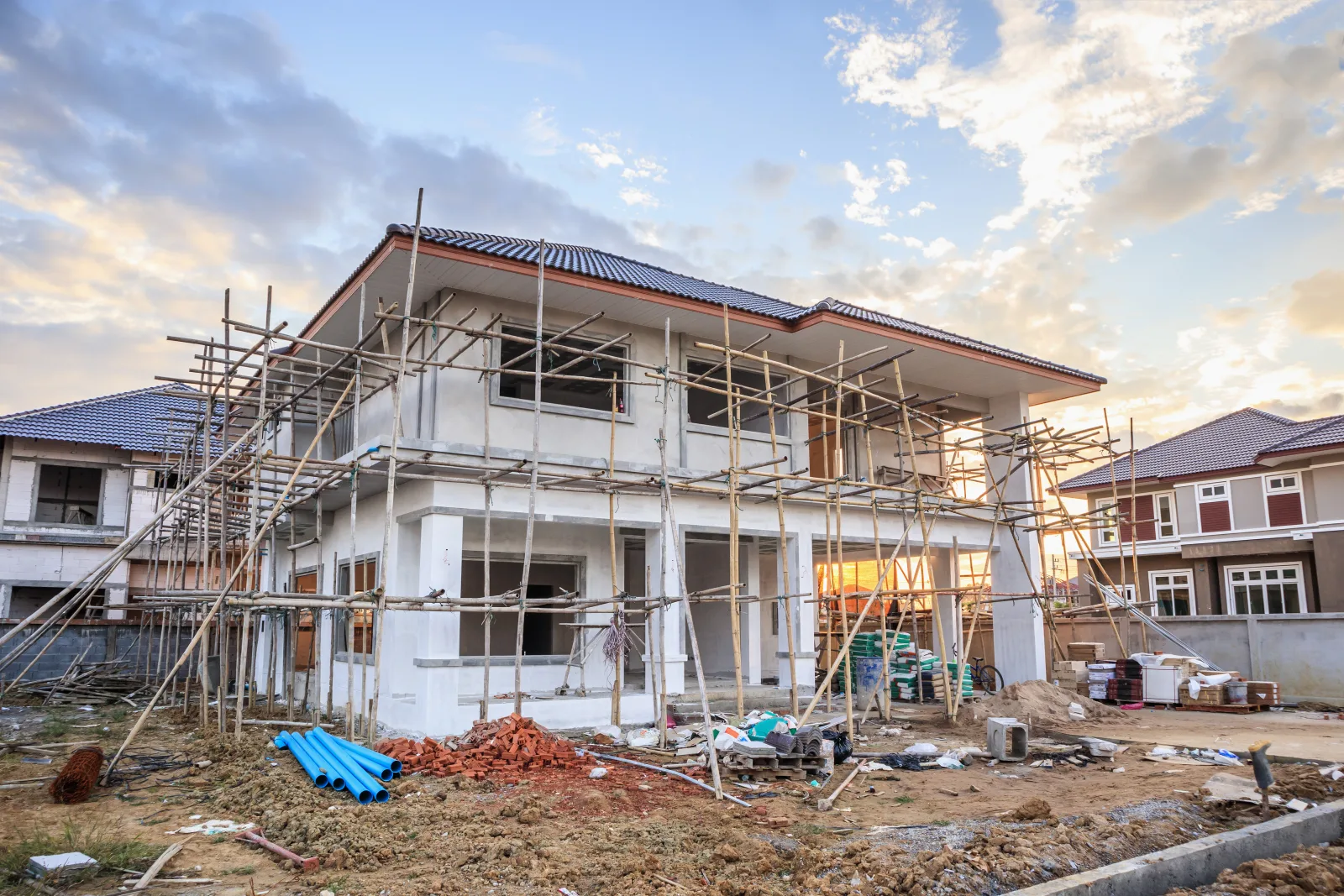

What fix and flip insurance costs in Illinois
A number printed on this page would be a guess wearing the clothes of information. Renovation pricing is assembled out of the file in front of the underwriter — what the crew is opening, what the finished house is worth, how long it stands empty, where it stands, and who is on site — and not one of those five things can be read off a state name. So what follows is the set of inputs an Illinois submission actually turns on, in roughly the order they get asked, and the arithmetic stays yours.
The credential mix on the crew, trade by trade
On most state pages this factor sits near the bottom. Here it goes first, because Illinois answers the question differently for every trade on the job. A re-roof has to go to a contractor licensed by the state, with a license number printed on the contract. The plumbing has to go to someone licensed by a state department. The electrician and the heating installer are credentialed by the municipality, or by whatever that municipality decided. And the general contractor coordinating all four holds no state credential whatsoever. An underwriter reading a rehab submission is trying to work out competence and control, and in this state the evidence for that arrives from several authorities at once.
Cosmetic work and structural work are quoted on different paper
Before anything gets priced, the scope decides which product the project belongs on. Surfaces, finishes and fixtures on a house whose structure, roof and systems stay where they are usually sits on a dwelling policy carrying a cosmetic repair endorsement. A job that opens walls, takes the roof back to deck, moves something structural or replaces the wiring and the pipe is a construction risk and belongs on builders risk. Describing that seam accurately at submission is free; discovering it at a loss is not.
What the house will be worth when the last inspection clears
A construction placement is built around the finished value, which is neither the price on the closing statement nor the value of the half-finished thing standing there today. Three distinct amounts, and the limit tracks exactly one of them. The numbers belong to you — acquisition, budget, the value you are underwriting the exit against — and the reader on the carrier side is weighing the relationship between them rather than any single one. A limit set to the purchase price on a gut job is a limit that stops answering somewhere around the drywall.
The weather an open building has to sit through before it sells
Duration is priced because exposure accumulates rather than averages. A long project is a project standing empty through more weather, more deliveries and more chances for the term to expire underneath it. The calendar in this state has a shape worth planning around: severe-storm season reaches an open roof deck, and a winter with the water live and the heat off is a burst-pipe file waiting to be opened. The stretch after the crew leaves counts as well — the house is still empty while it sits on the market, and that is often the longest single phase.
Which address the house has, and which exclusions travel with it
Location changes the structure of the placement here rather than nudging a rate. Rising water is never inside the dwelling form and has to be arranged separately wherever the house sits. Earth movement is outside it as well, and this state carries a second, distinct ground peril in mine subsidence. Below-grade work brings the sewer-backup and sump-pump question with it. None of those is a rounding factor; each one either adds a placement, adds an endorsement, or leaves a hole the file will find later.
Nobody home at night, and what the prior-loss record already says
Two questions finish the submission. Is anyone living in the house — almost never, on a flip, and that answer is what makes the vacancy clause inside a standard dwelling form worth reading line by line before anybody relies on it. And what is already on your record, because prior losses move pricing materially and are the single input you cannot rewrite at the point of submission. A clean file with a well-described scope of work and a crew whose credentials can be checked is worth more than any amount of negotiating after the quote arrives.
Cost is the question this page gets asked most, and it has its own page: the Illinois cost guide walks the drivers a carrier weighs on a renovation here, in the order this state makes them matter. Illinois fix and flip insurance cost guide.
Illinois regulations and licensing for a fix and flip
The licensing regime comes first on this page because it is the thing that distinguishes a rehab file here from the same rehab three states over. There is no single answer to “is my contractor licensed” in this state. There is a state-licensed trade, a state-licensed department, a municipal layer holding the rest, and an affirmed absence sitting on top of all of it.
A licensed roofer working under an unlicensed general contractor
Illinois does not license general contractors at the state level, but it does license the one trade a flip almost always touches. Roofing contractors are licensed by the Illinois Department of Financial and Professional Regulation, and the Attorney General’s contractor guidance states that a roofer must be licensed by IDFPR to engage in business in Illinois and must display the license number on all bids and contracts, on vehicles, and at the place of business. A re-roof on an Illinois rehab therefore has to go to a state-licensed roofing contractor with a license number on the paperwork, even though the general contractor running the same job needs no state credential at all.
That inversion is the whole regime in one sentence, and it is worth reading twice. The display requirement is the useful part for an investor: a license number belongs on the bid and on the contract, which means the credential can be verified from the paperwork already in your file rather than from a phone call. An exterior scope that includes a re-roof therefore produces the one contractor document in this state that proves something on its face. Ask for it, keep it with the licensing record and put it in the submission.
What the Home Repair and Remodeling Act asks of a contractor instead
The Illinois Attorney General’s home repair and construction guidance states that general contractors are not required to be licensed or certified, and that they may need to obtain a permit from the municipality in which they provide contracting services. The Home Repair and Remodeling Act still requires a contractor to carry public liability and property damage insurance.
Read that as a finding, not as a research gap. No state agency licenses general or residential contractors here — the Attorney General’s guidance affirms the absence directly, and the state licensing body’s own alphabetical list of the professions it regulates carries roofing and home inspection without any general contractor, residential contractor, home builder or remodeler program in it. So the absence is checked and confirmed rather than unexamined. What replaces the license number is the insurance requirement above, plus whatever registration the municipality where the house sits chooses to impose. And a contractor buys insurance for the contractor’s exposure. Appearing as an additional name on a certificate somebody else purchased does not shift that exposure onto you or stretch it across the building, so it stands in for neither your own general liability nor cover on the structure.
Plumbing routes to a state department; electrical and heating stop at the municipal counter
The trade layer is split, and the split is not where most investors guess it is. Plumbing belongs to the Illinois Department of Public Health, which regulates plumbers and the plumbing trade and requires anyone who plans, inspects, installs, alters, extends, repairs or maintains a plumbing system in the state to be licensed. Under the Illinois Plumbing License Law that department licenses plumbers, plumbing contractors, apprentices, irrigation contractors and retired plumbers. Electrical and heating do not work that way: the state licensing body regulates neither, and credentials for both are a municipal question instead. On a gut rehab that means the systems trades your job depends on produce three different kinds of evidence — a state license, a municipal credential, and another municipal credential that may not even be issued by the same office.
Three statewide codes over a permit desk in the city, village or county
The Capital Development Board states that the best and most accurate answers to building code questions must come from the city, village, or county code official, so permits and inspections are issued locally. A statewide layer still applies on top of whatever the local jurisdiction adopts: the Illinois Energy Conservation Code, the Illinois Plumbing Code and the Illinois Accessibility Code. CDB also states that a local building code must regulate structural design at least as stringently as the International Building Code for new buildings or the International Existing Building Code for existing buildings, which is the code a rehab of an existing house is measured against.
Two things in that follow straight through to the placement. The first is that a rehab of an existing house is measured against the existing buildings code rather than the new construction one, which is a different conversation with the plan reviewer and often a different scope. The second is scheduling: the policy term is written around a review calendar the local official controls, and a slow queue can push a project past the term it was quoted on. A term that is still running can usually be lengthened for the asking; a term that has already expired turns into a fresh submission on a building standing halfway apart, and that is a very different conversation to have with an underwriter.
The department that wrote the peril list this page runs on
The Illinois Department of Insurance (IDOI) regulates insurers and producers in the state and is where a complaint about a policy or the person who sold it belongs. It is also the source of the peril framework the risk section below is built on: the department defines a peril as the event that causes the damage, and names fire, tornado, theft and vandalism among them. Whether the renovation itself is permitted and lawful is a different office altogether — the code official named in the permit subsection above.
The last placement on the list, and why a rehab lands there
When nothing in the ordinary market will take the house, the state runs a residual mechanism for it. The Illinois FAIR Plan Association describes itself as a residual market mechanism whose purpose is to make basic property insurance available to qualified applicants who have not been able to obtain property insurance otherwise. Know it is there; aim not to use it. A rehab that gets declined has usually been described thinly rather than been genuinely uninsurable, and the specialty market that writes structural rehabs reads a documented scope of work very differently from a bare address. Exhaust that market first.
What the sale obliges you to tell the buyer, and what the record does not name
A statewide seller-disclosure obligation on residential real property is verified for this state, and it is set out in statute rather than on a report published by a state agency. That is the honest shape of the record and this page will not improve on it by inventing a form number or an office to attribute it to — the duty is confirmed, and the document behind it is defined by the Act rather than issued by a department. The practical consequence for a rehabber does not change either way. What you will be describing is the condition of the house after your work, so permit records, inspection sign-offs, the roofing license number and a written scope of work stop being project admin the day you list and start being the evidence under a statement you are signing. Ask your closing attorney or title agent which document your transaction uses before the house goes on the market.
Common fix and flip risks in Illinois
The peril profile decides how many policies a project carries, so it is worth working through what the standard residential property form here answers for and what it hands to somebody else.
Inside the form: the department’s own examples of a peril are fire, tornado, theft and vandalism, and the standard dwelling form is what responds to wind, hail and the rest of the severe-storm family reaching a rehab in this state. A building mid-renovation is more exposed to all four of those examples than the same building finished and lived in. Two of the four — theft and vandalism — are also the first causes a standard dwelling policy begins restricting once the building has gone unoccupied past whatever period that policy names.
Outside the form, and this is the longer list. Rising water is not covered: the department states plainly that a standard residential property policy does not answer for flood. That leaves rising water on a placement of its own — a private flood policy, or one written under the National Flood Insurance Program. Earthquake is not covered either, which puts earth movement on a separate seismic placement. Sewer backup and sump-pump overflow sit outside the base form as well and are bought back by endorsement — a live question on any project that is finishing a basement. Ordinance or law is a typical exclusion too, which is exactly the kind of gap a code-driven upgrade discovers at the loss.
And then the peril this state adds that most do not: mine subsidence, which pays when an underground mine shifts and damages the property. It is neither the earthquake exclusion nor ordinary settlement, it is not assumed onto a placement, and it is a question to settle at binding rather than at a crack.
Underneath the natural perils runs the ordinary business of an active site — an open structure, material staged where it can be carried off, trades in and out all day, and nobody in the building after dark. Splitting that between two instruments is the whole design of a rehab placement: general liability takes the people, and a construction property form takes the building and the work inside it.
Common Illinois fix and flip claims we see
Patterns, not incidents, and deliberately without figures attached for the reason set out at the top. Each maps onto the peril profile above.
A tornado warning over a house with the roof deck open
Tornado is one of the department’s named examples of a peril, and the window between tear-off and dry-in is when a rehab is least able to take one. The damage that matters is rarely the covering; it is the framing, the insulation and the finish work underneath that took the water. The claim turns on how the site was left rather than on how hard it blew, which makes dry-in sequencing a coverage decision and not only a scheduling one.
The sump pump the base form was never going to answer for
A basement being brought back into finished space is the most common place this shows up. The pump fails or the line backs up, and the water reaches drywall, flooring and trim installed the week before. The base form does not carry it; the endorsement does, and only if it was elected when the placement was built. This is a loss that is fully insurable and very often uninsured.
Mine subsidence, which is neither earthquake nor settlement
Ground movement arrives as cracked masonry, a door that no longer closes or a floor that has gone out of level, and the first argument is always about what moved the ground. Earthquake is excluded from the property form and lives on a seismic placement. Ordinary settlement is a maintenance conversation. Mine subsidence is its own named thing in this state, and whether it was bought is decided long before anyone measures the crack.
Vandalism at a house that has stood empty since closing
Copper, new equipment, appliances and staged material, taken from a building nobody sleeps in. The exposure peaks twice — once when material lands on site and once when the house is finished, staged and waiting for an offer. That second peak is the underinsured one, because the job feels over by then; it is the stretch a cosmetic rehab placement has to be written to survive, and the stretch most likely to run into a vacancy provision written for an occupied home.
Why Illinois real estate investors choose Fix and Flip Guard Insurance
We are an independent agency with 10++ appointed markets and licenses in 48 states. On a file in this state that capacity is spent on one specific problem: assembling a submission whose credential evidence arrives from several different authorities and still reads as a controlled job.
The licensing regime is the argument. A state that licenses roofing and not general contracting is telling an underwriter something real about where the verifiable competence on a job sits, and a submission that leans on that — the roofing license number off the contract, the state plumbing credential, the municipal registrations for the rest, the liability certificate the Home Repair and Remodeling Act already requires — answers the “who is doing the work” question with documents instead of adjectives. Most rehab submissions answer it with a name and a promise. That difference is the difference between a quote and a decline on a borderline building.
Whether your job is a structural or gut rehab or a finishes-and-fixtures project decides the placement: the first is a fix and flip insurance placement led by builders risk, the second a house flipping insurance placement led by an endorsed dwelling form.
Underneath that sits the distinction the whole brand is built on. Which side of it you are on is decided by the scope of work rather than the budget — and in this state the scope also decides how many licensing authorities you have to satisfy, because the moment a re-roof or a repipe enters the job, a state credential enters with it.
Major Illinois fix and flip markets
Five markets, each carrying a different layer of the regime described above. Every one is a market this data layer holds for the state, and nothing has been added to reach a count.
- Chicago. The municipal-credential market. Because electrical and heating are licensed locally rather than by the state, the biggest jurisdiction is also the one whose own requirements decide what two of the three systems trades on a rehab have to hold. There is no statewide number to check for either trade, so the credential evidence in a submission is municipal paperwork, and an underwriter reading it is reading a jurisdiction as much as a crew.
- Rockford. The re-roof market. On an exterior scope the roofing license is the one contractor credential in this state that proves itself on the document — the number belongs on the bid, on the contract, on the vehicle and at the place of business. That makes the contractor selection verifiable before binding rather than after, which is the opposite of how the general contracting question resolves here and the only trade where it works this way.
- Peoria. The mine subsidence market. This is the peril the state carries that most do not, paying when an underground mine shifts and damages the property, and it is neither the excluded earthquake peril nor a settlement argument. It has to be a deliberate line on the placement, so the underwriting conversation is about whether the coverage was elected at all — a question no other entry on this page raises.
- Springfield. The statewide-code market. Three codes apply above whatever the local jurisdiction adopts — energy conservation, plumbing and accessibility — and the local structural rules must be at least as stringent as the existing buildings code the rehab of an older house is measured against. The scope written for the plan reviewer is therefore longer than the scope written for the buyer, and the policy term has to survive the review that follows.
- Champaign-Urbana. The below-grade market. Sewer backup and sump-pump overflow are outside the base dwelling form and come back only by endorsement, which makes a finished basement the part of a rehab most likely to be uninsured for the water that actually reaches it. The exposure is inside the property placement rather than off on a second policy, so it is an election made at binding and not a separate purchase.
Related reading
Illinois fix and flip insurance FAQs
My rehab needs a new roof. Does the roofer have to hold something the general contractor does not?
Yes. Roofing contractors are licensed by the Illinois Department of Financial and Professional Regulation, and a roofer has to be licensed by IDFPR to engage in business in the state and display the license number on all bids and contracts, on vehicles and at the place of business. The general contractor running that same job needs no state credential at all.
Nobody can produce a state contractor number for the person running my job. Is that a problem in Illinois?
It is not a gap in the paperwork — it is the rule. The Attorney General’s home repair and construction guidance states that general contractors are not required to be licensed or certified. What they may need is a permit from the municipality where they are providing the services, so the verification that matters is local registration plus a current certificate of insurance you have read.
Which paperwork does the Home Repair and Remodeling Act actually oblige a contractor to carry?
Public liability and property damage insurance. With no state license standing behind a general contractor here, that requirement is the one durable statewide credential on the job, and it is the document to ask for before demolition rather than after a loss. Read the limits and the dates on it — a certificate that lapsed mid-project answers for nothing.
Plumbing and electrical are both getting replaced. Do those two trades answer to the same office?
No, and that split is the practical shape of the regime. Plumbing runs through the Illinois Department of Public Health, which licenses plumbers, plumbing contractors, apprentices, irrigation contractors and retired plumbers under the Illinois Plumbing License Law. Electrical and heating credentials are set by the municipality instead, so those two are a city-by-city question rather than a statewide one.
Sewer backup and a sump pump overflow — are those inside the policy or bought separately?
Bought separately. Both sit outside the base dwelling form and are added back by endorsement, which matters on a rehab because below-grade finish work is exactly what they reach. The endorsement has to be elected when the placement is built. Discovering it was never on the policy while standing in wet drywall is the expensive version of that conversation.
Is mine subsidence something I have to ask for, or is it already on the policy?
Ask. Mine subsidence is a peril Illinois carries that most states do not, and it pays when an underground mine shifts and damages the property. Treat it as its own line item on the placement rather than assuming the dwelling form absorbed it, and settle the question before the work starts rather than when a crack opens across new finish work.
Earthquake is excluded and so is flood. Are those two separate purchases or one?
Two. The Illinois Department of Insurance states that standard residential property policies cover neither, which leaves rising water on a placement of its own — a private flood policy, or one written under the National Flood Insurance Program — and earth movement on a separate seismic placement. Neither is an endorsement to the dwelling form, and a project can need both, one or neither depending on the address.
There is a disclosure duty at resale but nobody can name the form. What does that mean for me?
It means the duty is real and the document is not published by a state agency, so the obligation is set out in statute rather than on an agency form you can download. Plan for it the same way either: the condition you will be describing is the condition after your work, so keep permit records, inspection sign-offs and a written scope of work.
Get a Illinois fix and flip insurance quote
Send us the address and the scope of work.