
States we serve · Iowa
Fix and Flip Insurance in Iowa
Most states hand the wire to the city. This one keeps it. The license behind the electrician, the code the work is measured against and, on a rewire, the permit and the inspection themselves can all belong to a state department — which changes who has to sign off before the drywall goes up, and when.
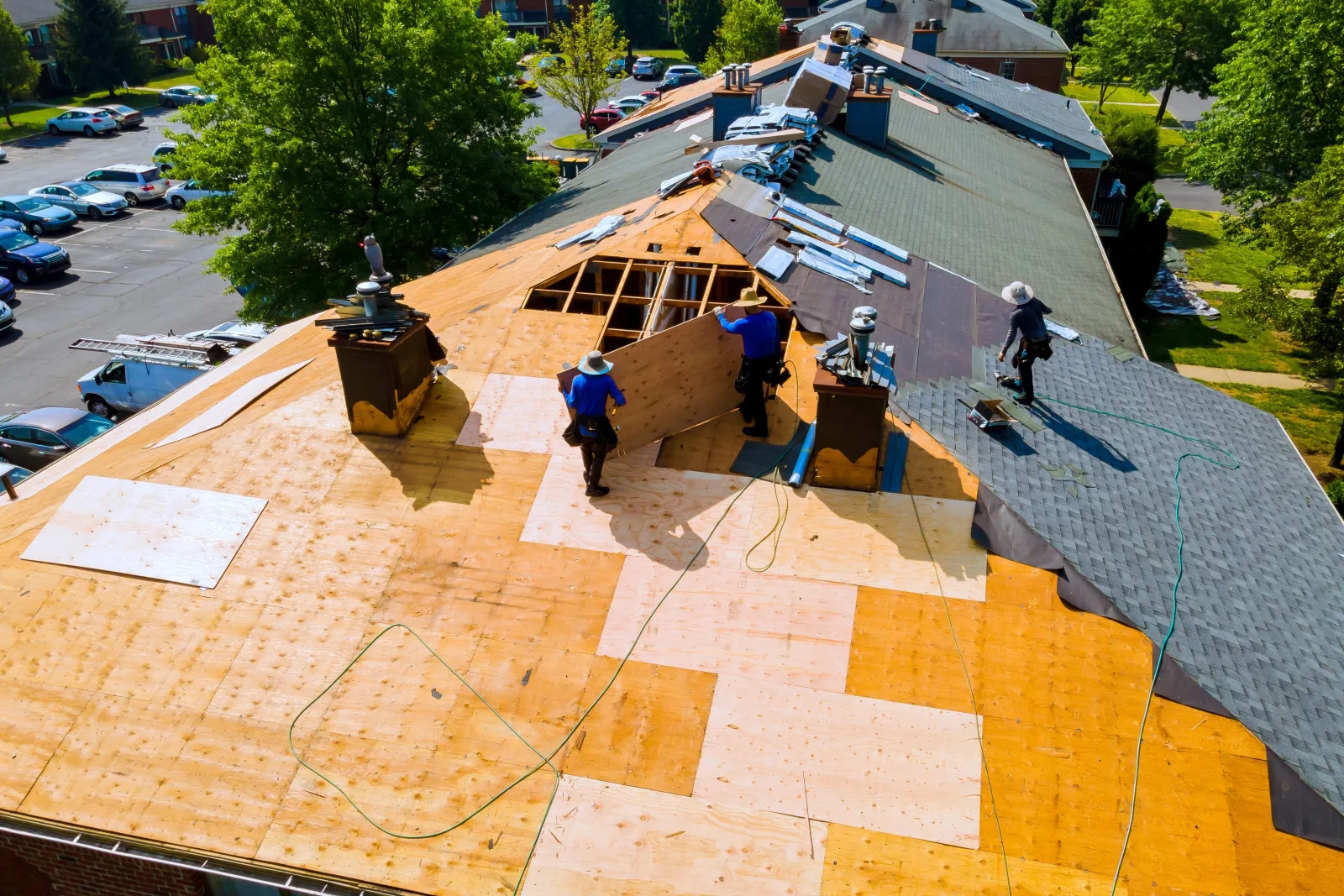

What fix and flip insurance costs in Iowa
A figure on this page would have to come from somewhere, and there is nowhere honest for it to come from. Two houses on the same block, bought in the same month, get quoted differently the moment one of them is having its wire pulled out and the other is not — and the gap between them is not a rate adjustment, it is a different policy on different paper. So what follows is the list an underwriter actually reads, in the order this state makes them read it. Every quantity in it already belongs to you: the scope, the budget, the finished value, the weeks. What we can add is which of those the rules here make expensive to get wrong.
The electrical scope, and whether the permit for it comes from the state
This is the first question on a file here, and in most states it is not a question at all. How much of the electrical system is coming out decides three things at once: which policy form the job belongs on, which credential the person doing it has to hold, and — unusually — which office issues the permit and sends the inspector. A job that leaves the panel and the branch circuits alone sits in familiar territory. A job that takes the wire back to the box has walked into a state permitting and inspection system, and the schedule that system keeps is not the schedule the city keeps. Underwriters do not price the permit. They price the calendar it sits on, and the term you asked for has to reach past it.
Whether the job stops at the finishes or reaches the systems behind them
Paint, flooring, cabinets and fixtures on a building whose structure and systems stay where they are is one kind of risk, and it usually stays on a dwelling policy carrying a cosmetic repair endorsement. Opening walls, moving something load-bearing, taking a roof back to the deck or pulling the plumbing and the wire out is a construction risk and belongs on builders risk. That line is not about budget size. It is about whether the building is being finished or being rebuilt, and here the permit set is often the document that settles it, because the trades that pull a job across the seam are the trades this state has boards and permits for. Describing the work accurately at submission is the cheapest thing anybody does on a rehab.
Which of the three figures on a rehab file the limit is written to
The limit on a construction placement is set to the building as it will stand at the end, not as it stands now. An investor generally carries three figures — the closing price, the construction budget, and the expected resale — and only the third is the one the policy is written to. What an underwriter reads is the relationship among the three, not any single one of them. Set the limit to the closing price and the work itself is uninsured; set it to a hopeful resale and the project is paying for cover no loss on that site could ever reach. A rewire priced against the unamended national code, rather than against whatever a local amendment might once have allowed, tends to move the middle figure — and the limit has to move with it.
The calendar an open building has to survive at both ends of the job
Duration is priced because exposure accumulates. The regulator’s own account of what brings an owner to a property claim names weather, fire, hail and wind, and every one of those is a worse proposition against a building that is open than against one that is closed. Two queues can stretch the middle of that calendar here: a plan review that may sit with the state rather than the local department, and an electrical inspection that may do the same. The far end of the calendar is the part that gets left out of the estimate. Once the crew has gone the building is still empty, and it stays empty through the showings, the offer and the financing contingency; a term that expires at substantial completion leaves that whole stretch uncovered, and it is the stretch a finish-work placement most often underestimates.
Vacancy, the credentials an underwriter can verify here, and prior losses
The file closes on three more answers. Occupancy comes first, and on a flip it resolves the same way every time — the building is empty, which is precisely the condition an ordinary dwelling form narrows its cover against once a building has stood unoccupied long enough. Then the people: a builder standing behind the whole job with their own general liability, or a stack of separately engaged trades, or an owner running it personally. Then the loss history, which is fixed by the time anybody asks. The people question is unusual here in a specific way: the state does keep lists an underwriter can look at, and what those lists prove is narrower than it appears, which is the subject of the section below.
Cost is the question this page gets asked most, and it has its own page: the Iowa cost guide walks the drivers a carrier weighs on a renovation here, in the order this state makes them matter. Iowa fix and flip insurance cost guide.
Iowa regulations and licensing for a fix and flip
The allocation runs the opposite way to what an investor moving in from a home-rule state expects. One trade has been pulled all the way up to the state — its license, its code and its permit — while the builder running the whole job carries a state record that tests nothing about the work. Plan review is split between the two levels by project type. That inversion is what this page is built on, so the trade goes first and the builder comes after it.
Electricians answer to a state board, and so does the permit on their work
Iowa runs electrical licensing and electrical permitting at the state level, not only at the city. The Department of Inspections, Appeals, and Licensing operates a statewide electrical licensing system through the Electrical Examining Board and a separate state permitting and inspection system that a rehabber applies to for an electrical permit. DIAL also states that Iowa has reverted entirely to the unamended National Electrical Code as published, with the previous state amendments removed, and that this is the mandatory minimum enforcement threshold for all electrical installations across the state. A rewire on an Iowa flip is therefore measured against the national code as written, and the permit may come from the state rather than the municipality.
Read that as a sequencing problem before reading it as a paperwork one. The state permitting and inspection system is applied to directly, so a rehabber who books the drywall crew against a municipal inspection calendar has booked against the wrong office entirely. Nothing about that is difficult once it is known. It is expensive the first time it is discovered, because the cavity is closed, the finishes are in, and the only way back to the rough-in is through work that has already been paid for.
The national code as published, with the state’s own amendments removed
The second half of the same finding is the one that reaches the scope of work rather than the schedule. Because the state has reverted entirely to the unamended National Electrical Code as published, and that is the mandatory minimum enforcement threshold for every electrical installation across the state, there is no local softening to argue for and no amendment to point at. A house whose wiring predates the current expectation is measured against the national text as written. For a placement, that matters in one direction: it tends to enlarge the electrical line item, which enlarges the finished value, which moves the limit the policy is written to.
Water, air and refrigeration sit with a second board at the same department
The trade licensing does not stop at the wire. Electrical work runs through the Iowa Electrical Examining Board (Department of Inspections, Appeals, and Licensing), which carries the state license application, renewal, continuing education, approved training programs and the Journeyman, Master, Residential and Special Electrician classes. Everything that moves water or air runs through the Iowa Plumbing and Mechanical Systems Board (Department of Inspections, Appeals, and Licensing), which licenses at apprentice, journey, master and contractor level; a business providing plumbing, mechanical, HVAC, refrigeration, sheet metal or hydronic systems services is required to hold a license with it, and it issues a Service Technician HVAC Specialty License. Two boards, one department, and on a gut rehab both of them are on the critical path at the same time.
Registered contractors, and the sub-contractors that registration does not reach
The word the department uses is deliberate, and the distinction it draws is the whole finding. Iowa registers construction contractors; it does not license them. DIAL’s own page is titled Contractor Registration and states that Iowa law requires all individual and business construction contractors performing construction work to be registered with the Department if they earn above a statutory annual threshold from construction, and that the purpose is compliance with unemployment insurance and workers’ compensation law and collection of amounts owed to state agencies — not a competency examination. The definition of construction is broad and DIAL names carpenters, electricians, plumbers, roofers and painters as needing to register, and states that sub-contractors are not covered under the general contractor’s registration and must register separately.
Iowa REGISTERS general contractors rather than licensing them, which is a different test and gives an owner different recourse.
Two consequences follow for an investor. The first is that a registration number is not evidence of skill and should not be read as any — it evidences that the contractor is inside the state’s compliance system, which is worth confirming and is a different question from whether they can build. The second is arithmetical: because a general contractor’s registration does not extend to the trades working underneath them, a rehab with a builder, an electrician, a plumber and a roofer on it is a rehab with several registrations to check, not one. Add a current certificate of insurance for each, actually read rather than filed. A certificate naming you is evidence that somebody else bought a policy; it is not a policy of yours.
Plan review splits by project type, not by city limits
Iowa splits construction plan review between the state and approved local jurisdictions. DIAL’s Building Code Bureau requires construction documents for certain project types to be submitted to the state for plan review regardless of any local code enforcement department, while other project types go to the state only where the plans have not been submitted to a local code enforcement department the Department has approved. DIAL publishes the lists of local building and fire code enforcement jurisdictions that take plan review themselves. On the electrical side the state runs its own permit and inspection system, so a rehab’s electrical permit and inspection can come from DIAL rather than the city.
The practical reading is that the question “state or local?” has no single answer here and cannot be settled by looking at the address. It is settled by what the project is and by whether the jurisdiction it sits in appears on the department’s published list. For a policy that matters because the term is written around a review calendar somebody else controls, and extending a construction term is routine when it is asked for before the term lapses and a fresh placement on a half-built house when it is asked for after.
The division behind the policy, and the two causes it says the form leaves out
The Iowa Insurance Division (IID) regulates insurers and producers and runs the consumer side of a property policy — complaints, and the licensed agent and company lookups. It takes no view on whether a renovation is legal; that belongs to whichever office the two paragraphs above landed the job with. What it does publish, and what the risk section below is built from, is a plain account of what a residential property policy answers for and the two causes of loss that sit outside it entirely.
Basic coverage, a last resort, and what a declined project is actually being offered
There is a mechanism for property nobody in the voluntary market will take. The Iowa FAIR Plan Association states that it should be considered a last resort when seeking property insurance coverage, and that its policies provide basic coverage — less coverage than voluntary market companies. The regulator names it independently as providing basic property insurance to qualified applicants not eligible in the voluntary market. Both halves of that are worth holding onto: it exists, and what it issues is less than what a project turned away from was asking for. On a renovation the first move is not the residual market at all. Most declines here are a verdict on the submission rather than on the building, so the better move is a fuller description of the job into the specialty market that writes structural rehabs.
The disclosure duty at resale, which this page does not assert either way
We could not confirm a statewide seller disclosure form for Iowa from a primary source, so this page does not state whether one applies — ask your closing attorney or title agent before you list.
Whatever the answer turns out to be at your closing table, the document set that answers it is the same set the placement wanted anyway. Permit copies from whichever office issued them, the electrical inspection record, a written scope of work, dated change orders and photographs taken at rough-in are the evidence behind any statement about a building you rebuilt — and they are also what turns a bare address into a submission an underwriter can price.
Common fix and flip risks in Iowa
The regulator describes a residential property policy as answering for damage, loss and liability tied to the dwelling, and when it describes what actually brings an owner into the claim process it names weather, fire, hail and wind events. That is an account of why claims arise rather than a schedule of covered causes — the division publishes no named-peril list for the Iowa form. Every item on it is worse against a building that is open, unheated and empty than against the finished house the form was drafted for.
Two causes sit outside it. The regulator states that items like flood and earthquake are generally not covered by an ordinary residential property policy and are additional coverages to raise with a licensed agent. Rising water therefore needs an instrument of its own — a National Flood Insurance Program policy, or a private flood contract — and earth movement needs a separate seismic placement. Neither is an endorsement somebody can add to the property policy after the loss, and neither is a rate question. They are questions about how many policies the project is running, and they are answered at bind or not at all.
Beneath the named causes runs the everyday exposure of a working site. The building is open. Copper, panels and equipment sit where they can be lifted. Several separately registered trades come and go on schedules nobody centrally controls, and after dark there is no one there at all. Two instruments divide that between them — general liability for the people who get hurt or whose things get damaged, a construction property form for the building and the work inside it — and neither of them stands down when the last trade drives away. The listing weeks are part of the same exposure.
Common Iowa fix and flip claims we see
Four recurring losses, described without a count, a severity or a figure attached to any of them. Each one is downstream of something already established above — a permit that belongs to a state office, a code enforced without amendment, an exclusion, or a registration that stops at the general contractor.
An electrical inspection booked with the wrong office
The rough-in is done, the drywall crew has a window at the end of the week, and the inspection everybody is waiting on was requested from a municipal counter that was never going to own the job. Because the state runs its own electrical permitting and inspection system, a sequence that was correct on a project in another state is not correct on this one. The loss is rarely the reopening itself. It is the weeks it adds to a construction term that was quoted tight, and the finish work that comes out with the board.
Fire on a site running on temporary power
Fire is on the regulator’s own short list of what brings an owner to a claim, and a half-rewired building is where it is most plausible: a panel that is energized for the crew, circuits that are partly new and partly whatever was behind the plaster, and extension runs feeding tools all day. The property form answers for the fire. What it will not answer for is the argument that follows about whether the installation met the code the state enforces without amendment, which is a conversation the inspection record either settles or does not.
The flood placement that was discussed and never bound
Rising water arrives at a building that was insured properly for everything else. There is no version of this claim that is recovered by argument, because the exclusion is not ambiguous and the regulator publishes the point in plain language. It is recovered only by having bought the second instrument. That is why flood belongs on the day-one checklist beside the title work rather than on the list of things to revisit if the closing goes smoothly, and why a project that skipped it is running one policy short from the moment it funds.
A sub-contractor who was never on the registration list
The builder is registered, the paperwork looked complete, and the trade who actually did the work is not in the state’s system at all — because a general contractor’s registration does not extend to the sub-contractors under it and each of them has to register separately. Read as a claims problem, that is thin evidence at exactly the moment evidence is wanted: workmanship is not itself a covered cause of loss on a property form, the liability side answers for injury and damage rather than for installation quality, and the recovery route against the trade starts with establishing who they were.
Why Iowa real estate investors choose Fix and Flip Guard Insurance
Whether your job is a structural or gut rehab or a finishes-and-fixtures project decides the placement: the first is a fix and flip insurance placement led by builders risk, the second a house flipping insurance placement led by an endorsed dwelling form.
10++ appointments, licensure in 48 states, and no captive obligation to place a file with any of them. The part of that which earns anything on a project here is the sequencing: a rehab whose electrical scope is permitted and inspected by a state department has a submission, a bind date and a term that all have to be arranged around a queue most renovation files never touch.
Everything we place sorts into one of two shapes, and it is the work that sorts it rather than the budget. Here the electrical decision is frequently the one that does the sorting, because a rewire is both the thing that pushes a project across that line and the thing that puts a state permit on its schedule.
And the argument that belongs to this state alone is the permit itself. When the office that issues the electrical permit and sends the inspector is a state department rather than the city, three things stop being local questions at once: how long the review takes, what the work is measured against, and where the record of it ends up. A rehabber working from a municipal mental model prices all three wrong and finds out at the worst moment, which is the moment the walls are closed. We would rather have that conversation while the scope of work is still a document — before the term is chosen, before the limit is set, and before anybody has booked a crew against the wrong calendar.
Major Iowa fix and flip markets
Nothing below is a local rule. The record behind this page is statewide from end to end, so a market entry here is not a claim that the market differs — it names the single requirement a project of that kind tends to meet first, and each of the five meets a different one.
- Des Moines. Where the state permit itself is the governing fact. The Department runs a state permitting and inspection system for electrical work that a rehabber applies to directly, so on a rewire the permit and the inspector may both be state rather than municipal. The underwriting consequence is a schedule one: the construction term has to be written around a review queue the local building department does not control and cannot be asked to accelerate.
- Cedar Rapids. The scope-depth market. Because the state has reverted entirely to the unamended National Electrical Code and set it as the mandatory minimum enforcement threshold for all electrical installations, older wiring is measured against the national text with no local amendment to fall back on. That enlarges the electrical line item on exactly the housing stock investors buy — and the finished value the limit is written to moves with it.
- Davenport. The plan-review market. The Building Code Bureau takes documents for certain project types regardless of any local code enforcement department, and takes others only where they have not gone to an approved local department instead. Which queue a project sits in is settled by project type rather than by address, so term length here is quoted against a routing decision that has to be established before the submission, not assumed from the last job.
- Iowa City. The crew-evidence market. Registration is compliance rather than competence, and a general contractor’s registration does not reach the sub-contractors working under it, each of whom must register separately. What an underwriter is reading is therefore a set of separate records plus a set of separate certificates of insurance — several documents where a single license number would do elsewhere, and a file that gets thin fast when one trade is missing from it.
- Sioux City. The instrument-count market. Flood and earth movement are both outside the ordinary residential property policy, so a project exposed to either is a project running a second and possibly a third placement — a National Flood Insurance Program policy or a private flood contract, and a separate seismic placement. The decision is made at bind and cannot be revisited afterwards, which makes it the one question here that has no remedy at the loss.
Related reading
Iowa fix and flip insurance FAQs
My electrician is asking where to pull the electrical permit. Is that a city question here?
Not necessarily, and that is the unusual part. The Department of Inspections, Appeals, and Licensing runs its own state permitting and inspection system for electrical work, and a rehabber applies to it for an electrical permit. So on a rewire the permit and the inspection can come from the state rather than from the municipality. Establish which office owns the job before the wire goes in.
What does the state actually check before it registers a construction contractor?
Not competence. Registration exists so the state can confirm compliance with unemployment insurance and workers’ compensation law and collect amounts owed to state agencies, and there is no competency examination attached to it. Iowa registers construction contractors; it does not license them. Contractors earning above a statutory annual threshold from construction must register, so the credential proves participation rather than skill.
My general contractor is registered. Does that cover the electrician and the roofer working under him?
No. The Department states plainly that sub-contractors are not covered under the general contractor’s registration and must register separately. Its definition of construction is broad, and it names carpenters, electricians, plumbers, roofers and painters among the trades that have to register. On a rehab with several trades on site, that is several separate registrations to confirm rather than one.
My electrician says the state took its own amendments back out of the electrical code. Does that reach an old house?
It reaches every electrical installation in the state. The Department states that Iowa has reverted entirely to the unamended National Electrical Code as published, with the previous state amendments removed, and that this is the mandatory minimum enforcement threshold for all electrical installations statewide. A rewire is therefore measured against the national code as written, which is worth knowing before the scope of work is priced.
Does the same board that licenses my electrician also license the plumber and the HVAC installer?
No — two boards, one department. Electrical licensing runs through the Iowa Electrical Examining Board, which issues Journeyman, Master, Residential and Special Electrician classes. Plumbing, mechanical, HVAC, refrigeration, sheet metal and hydronic work runs through the Iowa Plumbing and Mechanical Systems Board, which licenses at apprentice, journey, master and contractor level and issues a Service Technician HVAC Specialty License.
Do the construction documents for my rehab go to the state for plan review, or somewhere local?
It depends on the project type. The Building Code Bureau requires documents for certain project types to be submitted to the state regardless of any local code enforcement department, while other project types go to the state only where the plans have not been submitted to a local code enforcement department the Department has approved. The Department publishes the lists of local jurisdictions that take plan review themselves.
The house has been turned down twice and somebody mentioned the FAIR Plan. What would that policy actually be?
The Iowa FAIR Plan Association describes itself as a last resort when seeking property insurance coverage, and states that its policies provide basic coverage and less coverage than voluntary market companies. The Iowa Insurance Division names it as providing basic property insurance to qualified applicants not eligible in the voluntary market. Work the specialty market first: a renovation is usually declined over how the scope of work reads.
Rising water and earth movement are both off the form. Which one is the day-one problem on a flip?
Usually rising water, because it is the one that arrives without warning at an address nobody flagged. The Iowa Insurance Division states that items like flood and earthquake are generally not covered by an ordinary residential property policy and are additional coverages to raise with a licensed agent. Flood goes on its own instrument; earth movement goes on a separate seismic placement. Neither can be added to the first policy later.
Get a Iowa fix and flip insurance quote
Send us the address and the scope of work.