
How Much Does Fix and Flip Insurance Cost in Alabama?
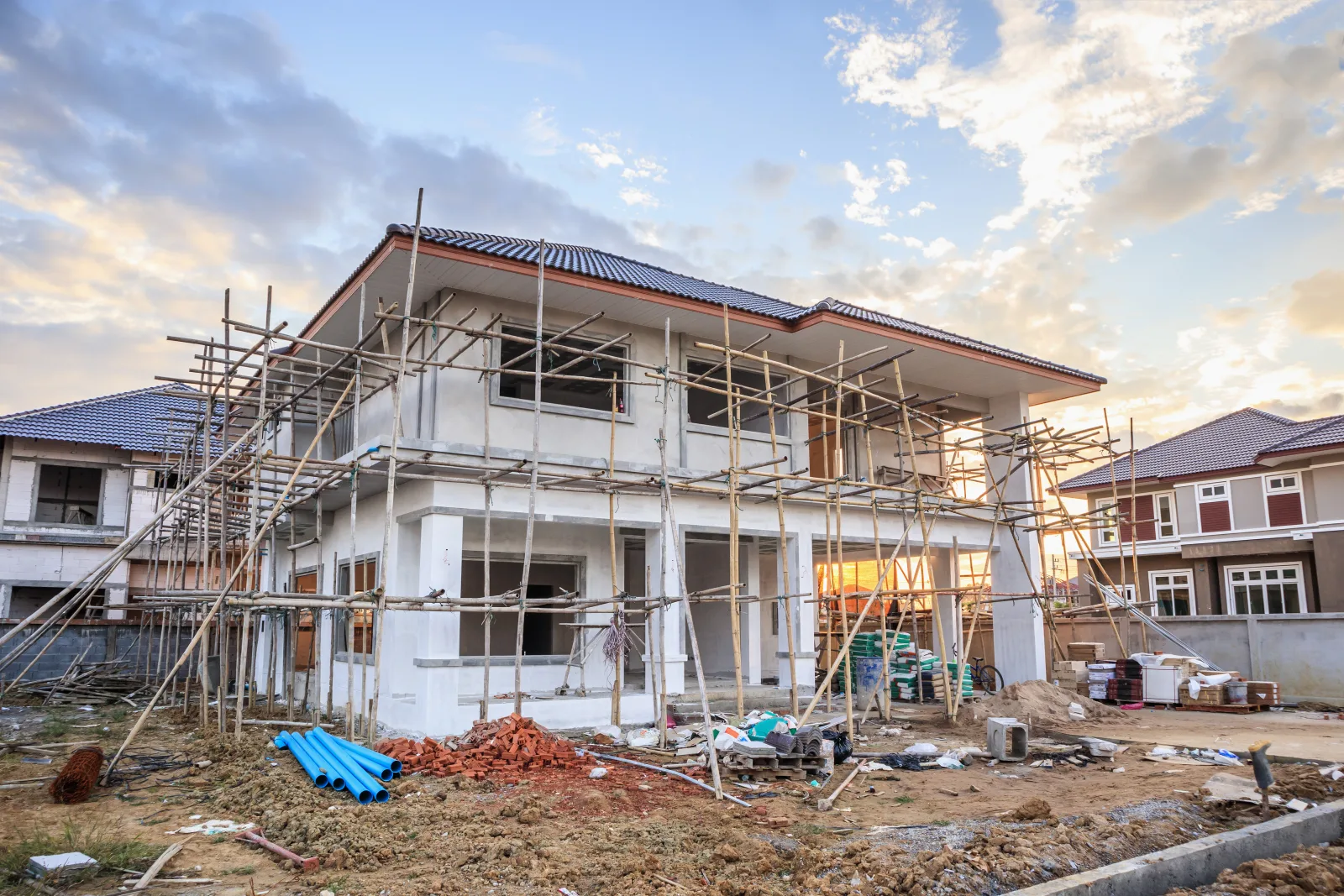
No Alabama premium appears on this page. A renovation is rated from the building, the work and the person holding the tools. What this state adds is a roof question: Alabama runs its own wind-mitigation program, and the standard that program uses attaches to the house rather than to any one policy. Everything below is ordered from there.
A roof standard the state adopted, and what the certificate is worth later
Strengthen Alabama Homes is a program of the Alabama Department of Insurance, and the mitigation standard it adopted is the FORTIFIED Home program developed by the Insurance Institute for Business and Home Safety. The program states plainly what the designation is worth: homes carrying it receive discounts on the wind portion of the premium, and admitted carriers must honor the certificate and give the discount, while surplus lines carriers are not obliged to.
Read that as an investor and the first thing to notice is who collects. The discount described there lands on the policy covering a finished, occupied house — which on a flip is the buyer’s policy, taken out after closing, not the cover sitting over an open building site while the work runs. You pay for the roof. Somebody else gets the reduction.
That is not an argument against doing it. It is an argument for knowing which column it belongs in. A designation earned during the rehab is a property of the building afterward, and it is one of the very few decisions made on a jobsite that a later owner can be shown documentation for. The certificate outlives the crew, the loan and the listing.
What makes it a scheduling problem rather than a budgeting one is timing. The standard is earned on the way the roof is built, so the decision has to be made before the roofer starts rather than after the scope is closed out. A structural rehab that was going to replace the covering anyway is standing at that fork whether or not anybody names it.
The causes that stay on the policy, and the two that leave it
Wind and hail are the perils that shape an Alabama property placement. They are the reason the department has a filing rule about them at all, and on the standard residential form they are covered causes rather than something bolted on.
Two other things are not. The department’s own flood insurance page states that standard home insurance policies do not cover flood damage, and points owners to the National Flood Insurance Program or to companies writing flood cover privately. Earth movement sits outside the standard form as well and is a placement of its own.
For a rehab, the practical consequence of that split is order of operations. Flood is not an endorsement somebody adds late in the week a loan closes; it is a separate contract with its own underwriting and its own effective date, and a project near water that discovers this at funding has a scheduling problem rather than a coverage preference. The same is true of ground movement, which is rarer to arrange and easier to forget.
None of that changes what wind does on the file. It changes how many documents there are, and a count of documents is not a rate — but it is usually the first honest answer to how much a project is buying.
Why an Alabama rehab file opens on the roof
Alabama puts the roof at the head of this file, ahead of everything else, because Alabama runs its own wind-mitigation program and the standard it adopted is earned on the way a roof is built — one decision that is simultaneously a construction choice and an insurance choice. The peril question and the single area where a wind exclusion is permitted follow it, then the credential question and the permit calendar. The rows every state shares sit lower: how long the building stands empty, what the limit was written to, and which contract the scope of work selects. Position carries the meaning; there is nothing in the column to add up.
- A roof built to the standard the state’s own program adopted The designation attaches to the house, and the discount it earns lands on the policy the next owner buys.
- Hail and wind on the policy, flood and earth movement off it The storm causes stay inside the form here; water from outside and ground movement are placed somewhere else.
- The one area where wind may be excluded, and who sells it back A filing rule permits the exclusion in a single part of the state and names the association that writes it back.
- Two state boards, and which one describes the work you scoped One board regulates residential construction and remodeling; another licenses general contracting. The scope picks.
- A state code that stops short of the house, and who picks it up The state construction division holds no residential jurisdiction, so the calendar is answered where the house sits.
- Time on the market counts, and so does the last claim you made Nobody moves in until it sells, and the loss record behind the applicant is read before anything else on this list.
- The finished roof is part of what the limit has to rebuild An upgraded roof raises what the building costs to put back, and the limit has to have been written to that figure.
- A job that takes the roof off is written on different paper Opening the envelope is a building site for the duration; leaving the finishes alone is a different contract entirely.
The one area where wind may be excluded, and where the cover is bought back
Alabama’s department publishes a rule that reads like an instruction to carriers and functions like a map. The property and casualty filing requirements state that mandatory or optional wind and hail exclusions are acceptable only in the Beach Pool area, where the insured could purchase the coverage back through the Alabama Insurance Underwriting Association.
Turn that around and it tells an investor something useful about most of the state: where the exclusion is not acceptable, a form that strips wind and hail out is not a form on offer, and the storm causes stay inside the placement being quoted. Where it is acceptable, the wind half of the file becomes a purchase of its own, made from a named source.
That source describes itself in its own terms. The Alabama Insurance Underwriting Association states that its purpose is to provide a market for owners of eligible property located in Baldwin and Mobile counties to obtain essential insurance when they are unable to obtain coverage in the private insurance market.
Notice that those two statements are not the same statement. One names the Beach Pool area; the other names two counties. They are published by two bodies on two pages, and this guide is not going to merge them into a single line on a map. A project anywhere near that boundary is worth a specific question before the offer is made, because the answer decides whether the storm cover is one purchase or two — and that is a structural difference in the file, visible long before anybody discusses general liability or any other layer.
Two state boards, and which one describes the work you scoped
Most states run one register for the person coordinating a renovation. Alabama runs two. The State of Alabama Home Builders Licensure Board states that its mission is consumer protection through regulation of the residential construction and remodeling industries. The Alabama Licensing Board for General Contractors licenses general contracting. A rehabber’s board therefore depends on which of the two descriptions fits the work being done.
That is a documentation problem before it is a compliance one. A submission that describes a crew as licensed has said nothing an underwriter can check, because the word points at two different authorities here and the reader has no way to know which one was meant. Naming the board, and naming it correctly for the scope, is the cheapest sentence in the whole file.
The systems trades are separate again, and they are separate from each other. Electrical work answers to the Alabama Board of Electrical Contractors. Plumbing and gas fitting answer to the State of Alabama Plumbers and Gas Fitters Examining Board. Heating and cooling work answers to the State of Alabama Board of Heating, Air Conditioning and Refrigeration Contractors. Three boards, three registers, three separate pieces of evidence on a job that opens the mechanical systems.
None of that is exotic. It is simply longer than the diligence a single-board state needs, and it is the kind of work that is fast to do in week one and slow to do in the week a quote is wanted.
A state building code that stops short of the house
There is no single state building department standing behind an Alabama house. The Division of Construction Management enforces the Alabama State Building Code, but the division’s own page states that the code is limited to state-owned property and to a short list of occupancies, and that DCM does not have jurisdiction over residential property. The same page records that adoption authority for the residential building code has been transferred to the Home Builders Licensure Board. Separately, the Alabama Energy and Residential Codes Board holds authority to adopt mandatory residential and commercial energy codes statewide.
The reason that reaches a cost conversation is duration. A renovation term is bought against a review and inspection calendar, and the state’s construction division has said, on the record, that the residential calendar is not its to set. So the question of who is reviewing this particular job, and how long that office’s queue runs, has to be answered where the house is rather than read off a statewide schedule.
A term extended while it is still running is an administrative step. A term that has already lapsed over an open building is a placement problem, and it arrives at the point in the project when the building is least defensible.
What an empty Alabama house and a prior claim have in common
Neither one can be improved between now and the submission, which is why they belong together on the same row.
Nobody lives in a flip. The empty stretch runs from the day the seller hands over the keys to the day a buyer takes them, and the part investors most reliably leave out of that estimate is the listing period after the work is finished. A finished house waiting on a closing is still an unoccupied building, and the vacancy language in whatever contract you bought is reading it that way.
Real-World Scenario: The roof comes off a Gulf-side house in the first week of a schedule everyone agreed was generous. The covering is replaced, the crew moves inside, and the work runs long the way work does. By the time the last inspection clears, the calendar has eaten the cushion and the term is close to its end date with the house finished and on the market. It is empty, it has been empty for months, and the two facts that an underwriter would weigh most heavily on the renewal conversation — how long it has stood unoccupied, and what the applicant’s loss record already says — are both closed questions by then. Neither was expensive to disclose in week one. Both are awkward to explain in the last fortnight of a term.
The loss record is the other half. It arrives with the applicant, it is not negotiable, and the only real preparation is to pull it before the submission goes out so that nothing in it is a surprise to the person presenting it.
A limit written to the roof you are building, not the one you removed
A construction placement answers to the completed building. That is true everywhere, and in Alabama it acquires a specific wrinkle: if the scope of work includes building the roof to a mitigation standard, then the roof a total loss would have to replace is the upgraded one, not the covering that came off in week one.
A limit drawn from the purchase price misses that by definition. So does a limit drawn from a renovation budget written before the roof decision was taken. The figures involved belong to the person who owns the project — the acquisition, the scope, the value at completion and the length of the hold are all yours — but the relationship between them is what an underwriter is reading, and a mitigation upgrade sits inside the completed value rather than beside it.
This is the row where the first driver on this page quietly reappears. A decision made for the buyer’s benefit still has to be carried by your limit while the building is open, which is the sort of thing that is obvious in retrospect and easy to leave out of a schedule.
A re-roof is not finish work, and the contract follows that
The work selects the paper. A project that stays with paint, flooring, cabinets and fixtures, leaving the structure and the systems where it found them, is the finishes-and-fixtures side of the practice and sits on a dwelling contract extended by a cosmetic repair endorsement. A project that opens the envelope, moves something load-bearing or takes the mechanical systems back to bare framing is a building site for its duration, and building sites are written on builders risk.
Taking a roof off puts a job on the second side of that line, and it does so for a reason that is easy to see from the ground: the building is open to weather and to entry in a way a finishes-only refresh never is. That is precisely the exposure the two contracts are drawn to treat differently.
Which is why this question sits last here rather than first. In a state where the roof decision is already on the table for mitigation reasons, the contract question has usually answered itself by the time anybody asks it — the scope of work made the choice several weeks earlier, and the paperwork is catching up.
Where the rest of the Alabama detail lives
Everything about this state that is not a cost argument — the department, the metro markets, the licensing boards and the storm picture — is set out on the Alabama fix and flip insurance page, with every state this agency is licensed in indexed beside it. The national ordering of these same drivers opens somewhere completely different, and the distance between the two orderings is the whole reason a state page like this one exists.
If you would rather have an answer than an ordered list, send the project through — the address, the scope of work, what is happening to the roof, and who is holding the tools — or see who picks it up.
This guide covers what drives the cost of a Alabama rehab. The state page covers who licenses the trades, who issues the permit and how a project there is placed: fix and flip insurance in Alabama.
The bottom line
In Alabama the roof is where the construction decision and the insurance decision turn out to be the same decision — the state runs its own wind-mitigation program, the standard it adopted is earned on how the roof is built, and the discount that standard produces lands on the policy the next owner buys rather than on the renovation cover you are paying for now. Which of two boards describes the work, whose queue sets the calendar and how long the house stands empty are all read after that.
Frequently asked questions
Does building the roof to the state’s mitigation standard lower what I pay to insure the renovation?
Not directly. The program states that homes carrying the designation receive discounts on the wind portion of the premium, and that admitted carriers must honor the certificate — but that is the policy on the finished, occupied house, not the cover sitting over an open building site. The investor spends the money and the buyer collects the discount, which makes it a resale argument rather than a line on your own renovation file.
The department allows a wind and hail exclusion in one area only. How do I find out whether my house is inside it?
Ask before you bind, because the two public statements are worded differently. The filing requirements name the Beach Pool area as the only place such an exclusion is acceptable. The association that writes the coverage back describes its own market as eligible property in Baldwin and Mobile counties. Those are two descriptions on two pages, and a house near that line deserves a specific answer rather than an assumed one.
Which Alabama board is my builder supposed to be licensed by?
That depends on which board’s description covers the job. The Home Builders Licensure Board states that it regulates the residential construction and remodeling industries. The Alabama Licensing Board for General Contractors licenses general contracting. Alabama splits the credential across the two rather than running one register, so a submission that simply says licensed has not answered the question an underwriter is actually asking.
Alabama has no state residential building department. Does that make permitting faster, or only harder to predict?
Harder to predict is the safer assumption. The state construction division says on its own page that it has no jurisdiction over residential property, and residential code adoption authority has been moved to another state board. Nothing in that arrangement promises a short queue anywhere. Since the term you buy has to reach the end of the review and inspection calendar, the honest input is the local answer, not a statewide one.
The roof is coming off anyway. Does that by itself decide which policy the job goes on?
It pushes hard in one direction. A contract that opens the building envelope leaves the house exposed to weather and to entry in a way a finishes-only refresh does not, and that is the distinction the two placements are drawn around. A cosmetic refresh with the structure untouched can sit on a dwelling contract extended by endorsement. Taking the roof off is a building site for its duration.
Should the limit include the roof upgrade, or only what the house was worth when I bought it?
The upgrade, because the limit answers to the building that has to be put back rather than to the acquisition. If the scope of work is building the roof to a mitigation standard, that roof is part of what a total loss would have to replace. A limit set from the purchase price, or from a budget drawn before the roof decision was made, is short by the exact amount of the upgrade.
About the author

Nate Jones, CPCU, is the founder of Wexford Insurance and Fix and Flip Guard Insurance, a specialty agency placing fix-and-flip real estate investment coverage in 48 states across 10+ carrier markets. Alabama puts a mitigation standard and a placement decision on the same sheet of paper, and that seam — what a re-roof earns for the building, which of two state boards describes the job, and how a filing rule written for carriers ends up reading like a map — is where most of his work on these files goes. Reach him through the Fix and Flip Guard Insurance quote form or call 888-346-2414.