
How Much Does Fix and Flip Insurance Cost in Missouri?
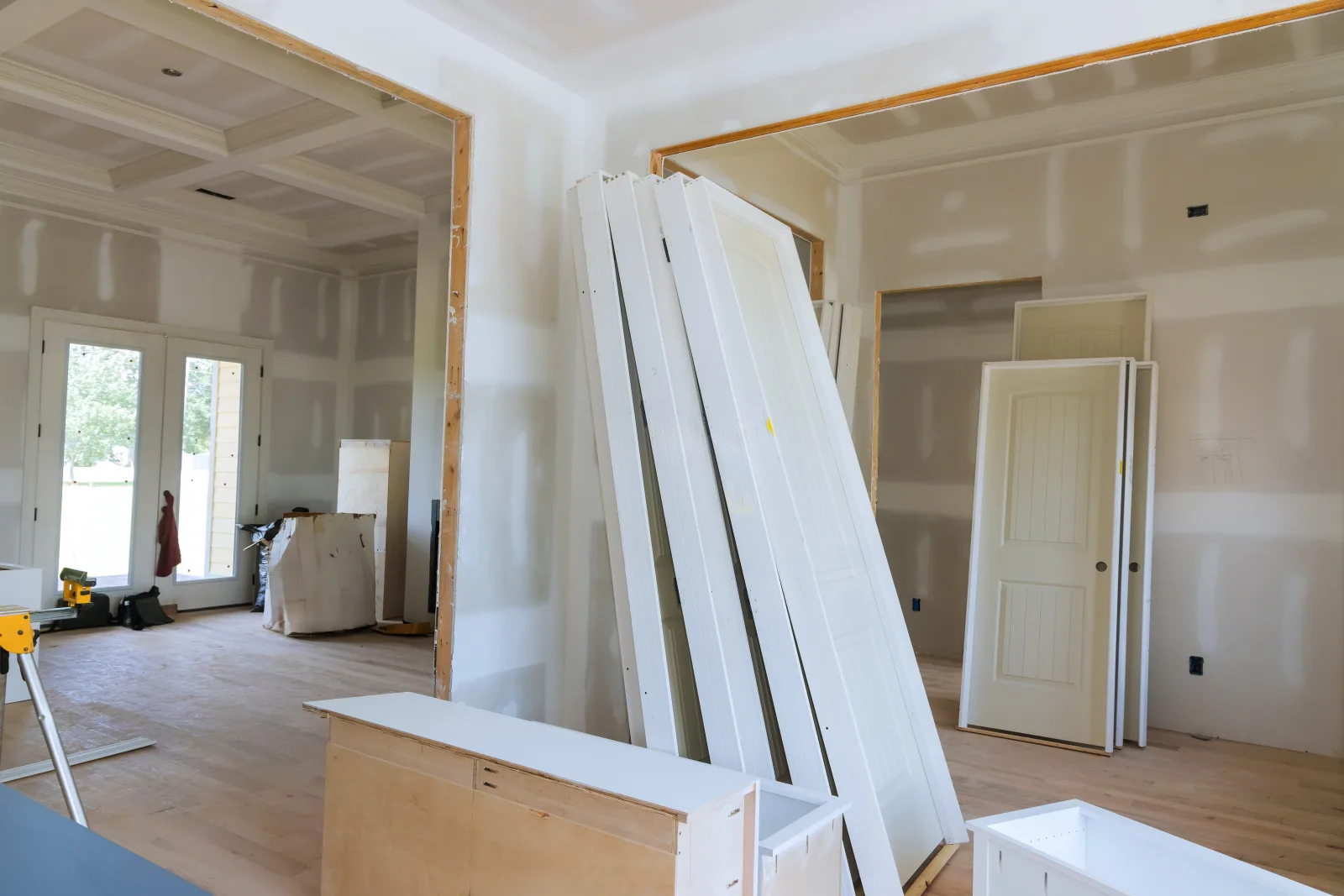
Missouri prices a renovation the way every state does, with one question standing in front of the others. The insurance department here states that what a home is built from can determine premiums — or whether it is insurable at all — for a peril it keeps a separate page about. That decision gets made during demolition, not at renewal.
Why this state’s insurance department keeps an earthquake page
Start with the peril, because the department did. The Missouri Department of Commerce and Insurance runs a standing page on earthquake cover, and the reason it exists is Missouri’s exposure to the New Madrid seismic zone. Few regulators single out one cause of loss that way, and when one does it is worth reading before anything about rates.
What that page says is short and it is not a rating note. A dwelling form does not answer for earthquake damage, so the cover has to be bought as an endorsement or as a stand-alone policy — a second decision, on a second piece of paper, with its own timing.
Alongside it the department’s consumer answers on residential property cover define a peril as a condition that can cause a loss, give fire, windstorm and theft as three examples, then state that the perils of flood and earthquake are covered when the coverage is added to the policy. So the severe storms crossing this state arrive inside the form the project is already buying. Water from outside, and ground moving underneath, do not.
For a rehab that is a counting problem before it is a pricing one. Wind and hail land on an open roof deck and the property placement answers. The other two need something bound separately, and neither grows into the file afterward.
Brick, stone or framing, and what the department says it can decide
Here is the part that has no equivalent in most of the country, and it is the reason this guide puts availability second rather than last. On its earthquake insurance page the department writes that the material used to build the home can also determine premiums or whether the home is even insurable; that premiums may be lower for wood-frame homes, which withstand tremors better than homes made of masonry such as brick and stone; and that some insurers will not offer earthquake insurance for masonry homes.
Read the modality, because the modality is the whole claim. Can determine. May be lower. Some insurers. Nobody is saying a brick house cannot be covered, and nothing on that page says masonry is uninsurable. What it says is that the material is capable of deciding the answer, and that some markets answer no.
That is a different kind of input from everything else on a cost file. A limit can be argued, a term extended, a deductible traded against a rate. Availability is not on that spectrum: either a market will write the peril on that building or it will not, and no amount of documentation changes a wall.
On a flip the timing is also inverted. A decision about brick, stone or framing gets made in the first week of demolition and lands on a purchase the investor may not attempt until the job is nearly done. The national ordering of these inputs never puts a masonry question that high, which is the plainest way of saying Missouri is not the default case.
Real-World Scenario: A brick two-story goes under contract with a scope that keeps the shell and reworks everything behind it. Earthquake cover is on somebody’s list for later, because a separate purchase usually is. Demolition runs, the systems come out, the interior gets reframed, and the exterior masonry is repointed rather than rebuilt — the cheaper and more sympathetic choice, made for reasons that had nothing to do with insurance. Late in the schedule, with a buyer circling, the endorsement finally gets raised, and two markets come back with a refusal rather than a figure. The department had published the mechanism before any of this began: the material can determine whether the home is even insurable, and some insurers will not write that peril on masonry. Nothing in the file is wrong. The input that narrowed the market went into a demolition plan drawn in week one, by somebody thinking about brick as a finish.
Missouri inputs, arranged by what the department settles first
The first three rows of this figure all belong to one peril. Missouri sits over the New Madrid seismic zone, its insurance department keeps a standing page about earthquake alone, and the standard residential property form answers neither earthquake nor flood — so the peril takes the top row. The second row is what makes the state unusual: the department writes that the material a home is built from can determine premiums or whether the home is even insurable, and that some insurers will not offer that cover on masonry, which turns a wall into a purchase decision. Third is the retention the peril carries, read off rebuilding cost rather than set as a flat sum, with contents held apart. Credentialing and permitting follow, both of them municipal here, and under them the placement facility the department names. The last three rows are the empty calendar, the amount the cover is written to, and the contract the scope selects — and the middle one of those three is the figure the third row above it is measured against.
- A seismic zone the department keeps its own page for The department keeps a page for shaking alone, and the standard form answers neither shaking nor rising water.
- Brick or framing, and whether the cover is offered at all Material can decide premiums or insurability, the department says, and some insurers will not write masonry.
- A retention taken from rebuilding cost, and a second on contents The earthquake deductible is read as a share of rebuilding cost rather than a flat sum, with contents held apart.
- The builder’s standing, established one jurisdiction at a time No state board credentials the builder, so standing is proved against the city or county holding the address.
- Permits, inspections and the code, each chosen locally A city or county may adopt the code, issue the permits and inspect the work, so the calendar belongs to them.
- The facility the department names when the market closes Its policy is fire only, without a liability section, and contents settle at actual cash value rather than new.
- The part of the calendar with nobody in it, and prior losses Nobody is inside from one closing to the next, and the loss record arrives with the applicant already written.
- A figure the work is still creating while it is quoted A construction limit answers to the finished building, and here one retention is measured off that same figure.
- A scope document that has already picked the policy Finishes or framing decides which contract answers, and in this state it also decides what the walls end up being.
A retention measured against a number the crew keeps changing
The deductible takes the third row because it is the one genuinely unusual piece of arithmetic on a Missouri declarations page. The department states that earthquake cover carries its own deductibles, set as a share of rebuilding cost rather than as a flat amount, with a separate deductible for contents.
On a finished house that is merely a different way of expressing a retention. On a house being rebuilt it behaves differently, because the figure the share is taken from is the figure the work is actively moving. A rehab that replaces the systems and reframes the interior has by definition changed what it costs to rebuild the building — and every one of those changes travels into the retained loss on the endorsement most likely to be needed.
The contents half matters more than it reads. On a renovation the contents are not furniture; they are materials bought recently and staged wherever a truck could reach, and a second retention sits over that category.
Accountancy through Veterinary, and the board that is not on the list
Now the labor side, and Missouri answers it with an absence that is documented rather than assumed. The Division of Professional Registration publishes every board and office it administers — the roster runs alphabetically from Accountancy to Veterinary. It contains an Office of Statewide Electrical Contractors. It contains a Real Estate Commission. It contains no general contractor board, no residential contractor board, no home builder board and no remodeler board.
That is an enumeration, not a failed search: nobody looked for a licensing agency and came up empty. The agency published its complete list and the builder is not on it. General contracting here is credentialed by cities and counties.
The practical consequence is that a submission cannot lead with a number. There is no statewide register for an underwriter to check. What replaces it is assembled: whatever registration the jurisdiction holding the house requires, current certificates showing each trade carries its own general liability, and a record of work the same people have finished. Verification here is per-address work rather than a lookup, and a crew that satisfied one municipality has not thereby satisfied the next.
Whichever city or county holds the address also holds the code
Permitting follows the same pattern, and there is a primary source that says so from an unexpected direction. The Office of Statewide Electrical Contractors publishes guidance for political subdivisions telling cities and counties what they may still do after the statewide electrical license law: implement an electrical code based on the National Electrical Code, issue electrical contracting permits, enforce their own codes, and inspect the work of a statewide license holder.
Every one of those is a local power, and together they describe the permitting posture of a Missouri rehab: the permits and the inspections come from the municipality or county, and the code is the one that jurisdiction adopted.
Two things follow onto the insurance file. The first is the calendar: the term has to reach past an inspection queue the owner does not control, and a slower plan review is quietly buying a longer one. Asking for more time on a live construction placement is paperwork. Starting over on a house that is already finished, empty and sitting on the market is the hardest conversation a rehabber has with an underwriter.
The second is the record. Whatever inspection history exists at the end of the job is municipal, held by the office that issued the permits, and the time to collect it is while the work is running.
The named alternative, and the three things it leaves out
When the standard market declines the building there is a named mechanism here: the Missouri Property Insurance Placement Facility, its FAIR Plan. It is worth knowing what that is, and what it is not, before it is needed.
The department describes the placement as a fire policy without liability, with contents settled at actual cash value. Three absences follow, and all three are load-bearing on a renovation. There is no liability section, so everyone who walks onto an open site is unanswered. Contents settle depreciated, which reads differently when the contents are new materials. And a fire-based property policy is not a form written around a building with the walls open and a different trade arriving every week.
So a decline is worth reading as a finding about the file rather than about the house. On a Missouri rehab the two things most often missing from a refused submission are the material question and a rebuilding cost somebody argued for, and an investor can supply both in an afternoon.
The calendar nobody is standing in, at both ends of the job
Duration gets priced because exposure accumulates, and on a flip it accumulates for longer than the schedule suggests. The house is empty from the day it is acquired, stays empty through demolition and the trades and the punch list, and stays empty again while it sits finished and listed. A dwelling form written for somebody living in the building starts narrowing what it answers for once nobody is.
Both ends of that stretch count, and the second is the one investors leave out. The weeks between the last inspection and the closing table are not after the project; they are inside it, and they belong inside whatever term is being quoted.
Beside the calendar sits the input nobody can improve. The loss record arrives with the applicant already written, and all that is left is describing it accurately and early. Everything else on this list is still a decision; that one is a fact.
The policy answers to the last day of the schedule, not the first
A construction placement is written around what it would cost to put back the building the work produces. That is a third number. It is not the acquisition, and it is not what a half-finished shell would sell for this morning, and it is the only one of the three the policy actually answers to.
In Missouri that figure does double duty, which is why it is worth getting right rather than approximately right: it is the basis the limit is argued from, and the basis the earthquake retention is a share of. A rebuilding cost pulled out of the air moves two different lines on one declarations page.
What makes the argument is documentation rather than confidence: the scope of work, the trade contracts behind it, and an explanation of the distance between what was paid and what the finished house is worth. A gap somebody explained is arithmetic; a gap nobody explained is a question, and questions cost calendar.
One page of the scope, and the two answers read off it
The fork most cost guides open on arrives last here, and it still decides a great deal. Work that stays on the surfaces — paint, flooring, cabinets, fixtures, a bathroom refit that leaves the supply lines where they are — belongs on a dwelling policy carrying a cosmetic repair endorsement, which is the lighter half of this practice. Work that opens the structure, moves something load-bearing or strips the systems back to the studs makes the house a live jobsite until the last trade leaves, and that condition has its own contract: builders risk, which is the heavier half.
The Missouri addition is that the same page answers a second question. Whatever the demolition list says about masonry — repointed, rebuilt in kind, or replaced with framing — settles what the finished building is made of, and therefore settles the availability question near the top of the column. One document, two answers that have nothing to do with each other anywhere else.
What a Missouri file has to say for itself
The material first, and in both tenses: what the walls are made of today, and what they will be made of when the crew leaves. That pair is what the availability question is actually asked about, and no other state makes it the opening line.
After it, three figures with the reasoning that connects them: what was paid, what the work costs, what the building has to be put back for. Then a description of the job that flags the parts most likely to grow. Then two sets of dates — demolition through sign-off, sign-off through a closing table. Then the people, each named beside the office that registered them. Last, the loss history, stated plainly by whoever was there.
Pricing lives on this page. The rest of the picture — the regulator, the residual mechanism, the trade credentials jurisdiction by jurisdiction — sits on the Missouri fix and flip insurance page, beside the full list of states this agency writes in. When the project can be described instead of estimated, put it in front of somebody, or find out who that is.
This guide covers what drives the cost of a Missouri rehab. The state page covers who licenses the trades, who issues the permit and how a project there is placed: fix and flip insurance in Missouri.
The bottom line
Missouri puts an availability question where other states put a rate — its insurance department writes that the material a home is built from can determine premiums or whether the home is even insurable, and that some insurers will not offer earthquake cover on masonry homes, so a choice made on a demolition plan settles what the finished house can still buy. The share-of-rebuilding-cost retention that peril carries, a complete board roster with no builder on it, and permits that belong to the city all sit underneath that.
Frequently asked questions
We are rebuilding one masonry wall and leaving the rest of the brick. Does that settle the availability question?
The department’s statement is about what the home is built from and it does not parse a partial change. What it says is that the material can determine premiums or whether the home is even insurable, and that some insurers will not offer earthquake insurance for masonry homes. So the answer is not in a published rule. It is in the specific description of the finished building, put to a market before the wall is decided rather than after.
When is the right moment to ask about earthquake cover on a brick house?
Before the demolition plan is signed off, which is earlier than most investors reach it. Earthquake is a separate purchase here, bought as an endorsement or as a stand-alone policy, and separate purchases drift toward the end of a schedule. Because some insurers will not offer that coverage on masonry, the question can come back as a refusal rather than a figure, and by then the wall is already standing again.
Our rebuilding cost keeps moving. Does that reach anything other than the limit?
It does here, and that is the local wrinkle. The earthquake deductible is set as a share of rebuilding cost rather than as a flat amount, with a separate deductible for contents, so the figure the limit is argued from is also the figure the retention is measured against. A renovation that changes what the building costs to rebuild has moved both lines at once, on one declarations page.
There is no state builder license to produce. What goes on a submission instead?
Whatever the jurisdiction holding the house requires, plus certificates. The Division of Professional Registration publishes its complete list of boards and offices, and no general contractor, residential contractor, home builder or remodeler board appears on it, so credentialing is municipal. An underwriter therefore reads local registration, current liability certificates for every trade, and a record of work the same people have finished, assembled address by address rather than looked up once.
Why would materials stacked in the garage settle under a different deductible from the house?
Because the earthquake cover carries two of them. The department states the deductible is a share of rebuilding cost rather than a flat amount, and that contents carry a separate deductible of their own. On a finished house contents means furniture. On a rehab it means recently bought materials waiting to be installed, so the structure and the materials reach settlement through two different retentions.
Our scope is cosmetic only. Does the material question still reach us?
It reaches you at acquisition rather than during the work. A refresh that leaves the shell alone does not change what the building is made of, so whatever the walls already are is what a market is asked to write. The department’s statement concerns the home’s construction and not the scope, which means on a cosmetic project the availability question is settled before the keys change hands.
About the author

Nate Jones, CPCU, is the founder of Wexford Insurance and Fix and Flip Guard Insurance, a specialty agency placing fix-and-flip real estate investment coverage in 48 states across 10+ carrier markets. A scope of work in this state has to be read for the walls before it is read for the policy: what the demolition plan does with brick or stone is what decides, months later, whether one cover can be bought on the finished house at all. That reading is the Missouri half of his practice. Reach him through the Fix and Flip Guard Insurance quote form or call 888-346-2414.