
Ordinance or Law: Why Code Upgrades Are Capped
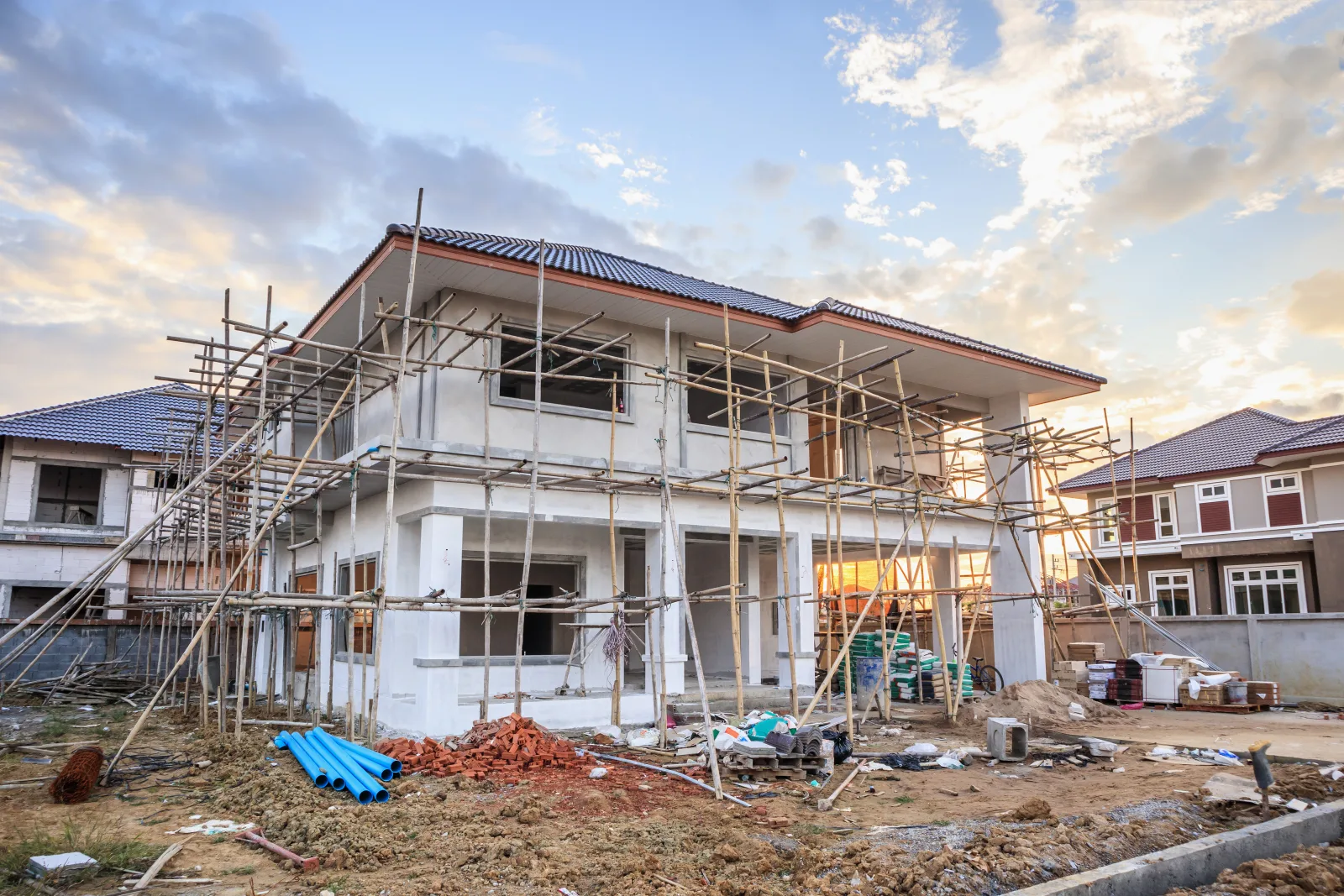
Ordinance or law cover is not a fund for bringing a house up to code. It is an exception written into an exclusion: it opens only when a covered loss opens it, it reaches only the part that loss damaged, and its size is a share of a building limit somebody chose.
The clause begins as an exclusion, and survives as a carve-out of one
Most people meet this provision in the additional coverages. That is the second place it appears; the first is the exclusions.
The residential special form that Maine’s Bureau of Insurance publishes in full — HO 00 03 05 11 — opens its Section I exclusions by defining the thing being excluded. Ordinance Or Law, it says, means any ordinance or law “Requiring or regulating the construction, demolition, remodeling, renovation or repair of property, including removal of any resulting debris”, and then adds the sentence that makes the rest of this subject possible: the exclusion does not apply to the amount of coverage that may be provided for in the Ordinance Or Law additional coverage.
Read the order rather than the content. The default answer is no, and what exists is a stated amount carved back out of that no — which is the reason the size of the carve-out does all the work.
A second regulator describes the same architecture from outside the document. Oklahoma’s insurance department states that the standard form “excludes coverage for loss caused by ordinances or laws requiring or regulating the repair of insured property” but provides a limited additional coverage for the increased costs of enforcement. Exclusion first, allowance second.
The percentage is fixed and the number underneath it is not
The published form states the amount in a single clause. You may use up to ten percent of the limit of liability that applies to Coverage A, it says, for the increased costs you incur due to the enforcement of any ordinance or law which requires or regulates the construction, demolition, remodeling, renovation or repair of the damaged part of a covered building.
Two inputs, and only one is printed in the form. The share comes from the wording; the multiplicand comes from whoever argued the building limit, and on a renovation that figure keeps moving, because the limit is being built toward a house nobody has finished yet — how that argument gets made is the subject of the piece on which contract a rehab belongs on. A share of a purchase price and a share of a finished house are not close to each other — which leaves the figure deciding how much code work this clause can absorb settled by somebody thinking about something else.
One sentence at the end of the clause, and what the neighbors say instead
The clause closes with four words most readers skip: this coverage is additional insurance.
That matters because of what the additional coverages printed immediately before and after it say. Each closes by stating that the coverage does not increase the limit of liability applying to the damaged property — drawn out of the building limit rather than added to it. The ordinance-or-law clause is written the other way.
So the allowance is not eroding the money available to rebuild the house; it sits on top of it while still taking its size from it. Those two facts get confused in both directions — that the code money comes out of the building limit, which it does not, and that the limit is therefore irrelevant to it, which is backwards.
Nothing opens it but a covered loss, and only where the loss landed
The gate is written into the operative clause rather than buried in a condition.
The allowance answers for increased costs from enforcement of an ordinance regulating work on that part of a covered building damaged by a Peril Insured Against. Three qualifiers in one phrase: a peril the policy insures against, damage to the building, and enforcement attaching to the damaged part. The form does reach the undamaged part in two defined situations — where the whole structure must come down because of damage elsewhere in it, and where enough of the undamaged part has to come out to finish repairing the damaged part — but both are measured outward from a loss that already happened.
Florida’s legislature draws the same boundary in plainer terms. Code-cost coverage there “applies only to repairs of the damaged portion of the structure unless the total damage to the structure exceeds 50 percent of the replacement cost of the structure”. Two independent drafters, one boundary: the damaged portion, unless the damage is most of the building.
The code a rehab meets on an ordinary Tuesday is outside all of this
A renovation meets code requirements continuously, and almost none of that is triggered by anything.
The permit is pulled, an inspector comes, the panel gets a ground that was not there before, the stair rise is corrected, and the egress window is sized to a standard the original builder never heard of. Nothing burned. Nothing blew off. The clause is dark for every one of those, because no Peril Insured Against has damaged the part the requirement attaches to. That work is a line in the rehab budget, and reading it as an insurance recovery is the common misreading of this provision.
The states that write a separate code for existing buildings make the point in their own documents. New Jersey wrote one for existing buildings and called it that: its Rehabilitation Subcode is, on the state’s own account, the first comprehensive set of requirements aimed at buildings that already stand, held in a stand-alone subchapter so a rehab is not routed back through the rules written for new construction — which is what the New Jersey entry records. Maryland runs a Building Rehabilitation Code Program on the same model, built on the International Existing Building Code and aimed, in the state’s words, at encouraging private investment in existing buildings by streamlining and harmonizing the code requirements for rehabilitation work, as the Maryland record sets out. Illinois comes at it the other way: its Capital Development Board states that a local code must regulate structural design at least as stringently as the International Existing Building Code for existing buildings, which the Illinois page records as the standard a standing house is measured against.
Each of those is law the project answers to on a day when nothing has gone wrong.
The replacement-cost promise subtracts these costs from itself
This surprises people who have read their loss settlement condition and stopped at the phrase they were looking for.
On the published form, that condition opens by defining its own terms downward: in it, the terms cost to repair or replace and replacement cost do not include the increased costs incurred to comply with the enforcement of any ordinance or law, except to the extent that coverage for those costs is provided in the Ordinance Or Law additional coverage. A replacement-cost promise is a promise about putting back what was there, not about putting back what would now be required.
Florida makes the same split visible as two products. The statute requires an insurer to offer a policy adjusting loss at replacement cost but not including costs necessary to meet applicable laws and ordinances, and separately to offer one that does include them. Two offers, one difference, written into a statute so nobody has to infer it.
A share that is a policy term rather than a constant
The ten percent in the published form is what that form prints, not a fact about the subject.
Florida requires that where the code-cost version is written, the additional costs may be limited to twenty-five percent or fifty percent of the dwelling limit, as selected by the policyholder — then closes the loop on silence: unless the insurer obtains a written refusal, any policy covering the dwelling is deemed to include that coverage limited to the smaller of the two shares. The election goes on a form the state approves.
You do not have to be writing there to use the finding, which is that the share is a variable somebody chose, in the same way the limit is. A policy printing nothing about it is not thereby printing the form’s default. On a light rehab riding an endorsed dwelling form, that question and the question of what the endorsement restores get answered in one conversation or in neither.
A department that told insurers to stop reading the enforcement column
There is a second way this clause quietly shrinks, and it has nothing to do with the percentage.
Oklahoma’s insurance department has written to insurers twice about it. Its bulletin instructs companies that for purposes of providing additional coverages, as an exception to the ordinance or law exclusion, “you shall consider all building codes as being strictly enforced” — and the findings printed above that instruction are worth reading. Failure to enforce a law, the department states, does not invalidate the law, and selling additional insurance against a known nonexistent risk is the sale of illusory and unfairly discriminatory coverage.
Then it repeated itself. In a 2025 notice the department told insurers that some of them “are only providing additional coverage for building code-related items when the code is actively enforced by local authorities” and said the coverage should apply regardless. The same instruction twice, nine years apart, says where the argument happens.
Real-World Scenario: The number that decided this was chosen in a week when nobody was thinking about code at all. A rehabber takes on a house built long before the current requirements, sets the building limit against the acquisition figure because the scope had not been priced yet, and never revises it. Month three, a covered cause damages a section of the roof structure. The repair is straightforward; the permit that comes with it is not, because the deck has to meet the standard now in force and the framing it lands on goes with it. The clause answers honestly — up to its share of a limit fixed before the project existed. Nobody disputes the share. The problem is the figure it is a share of.
The federal flood policy runs the same mechanic off a flat number
One more instrument shows what the percentage is doing. The federal flood policy carries its own code-compliance cover. Under Coverage D, Increased Cost of Compliance, the policy “pays you to comply with a State or local floodplain management law or ordinance affecting repair or reconstruction of a building suffering flood damage”, and the amount is flat: up to thirty thousand dollars, stated in the rule, in addition to the coverage the insured selected on the application.
Same shape, different derivation. It is still tied to a loss, and tied harder — the building has to be a repetitive loss building, or one where the cost to repair equals or exceeds half the market value, with the community enforcing a substantial damage provision. But its ceiling is set in a federal rule rather than derived from anything the owner picked, so revising a limit cannot move it. Whether a federal flood policy is in force on a half-finished house at all is its own question.
The clause is printed in four places, and they have to be read together
None of this needs a phone call. It needs four passages out of a document you already hold.
Start at the declarations page, identify the form the building is written on, and open it. Passage one is in the exclusions, where the ordinance-or-law definition sits beside the carve-out sentence pointing at the additional coverage. Passage two is that additional coverage, where the share and the covered-loss trigger live. Passage three is the closing line of the same clause, saying whether the coverage is additional insurance or is drawn out of the limit. Passage four is the loss settlement condition, where a replacement-cost promise says whether it has already subtracted these costs from itself.
The terms worth finding by name are the ones the documents use: Ordinance Or Law, the Coverage A limit the share is measured against, Peril Insured Against, and the loss settlement condition. An endorsement changing the share carries its own designation on the forms list.
Then one question, before the permit is pulled: what share of the Coverage A limit does the code allowance run to here, and does it follow the limit up when the limit is revised? That belongs with the scope of work, on a structural job or a finish-work one, and it is separate from what the cover costs. The conditions it sits among are set out in the companion piece on the dwelling form itself, and once a job moves onto a construction placement the code question travels with the scope. When the forms list and the scope are in front of you together, send us both.
The bottom line
Ordinance or law is not money for meeting code. On the published special form it begins as an exclusion and survives only as a stated exception to that exclusion, so nothing opens it except a covered loss and it reaches only the part of the building that loss damaged. Its size is fixed as a share of the Coverage A limit, which makes it derivative of the one figure a rehab keeps revising, and its share is a policy term rather than a constant — one state legislature sets the default share far above what the published form prints. The code your crew meets on an ordinary Tuesday, with nothing burned and nothing blown off, sits outside all of it.
Frequently asked questions
Every line of our scope has to meet current requirements. How much of that does this allowance pay for?
None of it, on the published special form, until a covered loss has happened. The allowance is written against increased costs from enforcement of an ordinance regulating work on the part of a building damaged by a Peril Insured Against. Meeting the code because a permit was pulled and an inspector is coming is an ordinary project cost, and it belongs in the rehab budget rather than on the property placement.
If the allowance is a share of the building limit, does using it reduce what the policy pays for the building?
Not on the form the Maine regulator publishes in full. That clause closes with the sentence saying the coverage is additional insurance, and the additional coverages printed either side of it say the opposite — that they do not increase the limit of liability applying to the damaged property. So the allowance sits on top of the building limit while still being measured against it. Both halves of that are worth knowing.
Our quote is written at replacement cost. Does that already take in building back to current requirements?
Read the loss settlement condition before assuming so. On the published special form, the terms cost to repair or replace and replacement cost are defined not to include the increased costs of complying with an ordinance, except to the extent the ordinance-or-law clause provides them. A replacement-cost promise and a code-compliance promise are two separate undertakings, and only one of them is capped.
Is the share always what the published form prints, or can it be larger?
It is a policy term, not a constant, and one state has legislated its own. Florida requires the code-cost coverage to be offered limited to twenty-five or fifty percent of the dwelling limit as the policyholder selects, and deems the policy to carry the smaller of those two unless the policyholder refuses in writing. Elsewhere you have to read the wording you were actually sold.
There is a code here but nobody local inspects against it. Does that shrink what we could claim?
One department has answered that directly and in writing. Oklahoma instructs companies that for purposes of providing additional coverages, as an exception to the ordinance or law exclusion, they shall consider all building codes as being strictly enforced, and its 2025 notice repeats the instruction. Its bulletin also states that failure to enforce a law does not invalidate the law. That is one state, and it is the clearest published statement of the point.
We revised the building limit upward when the scope grew. Does that make the code allowance more useful?
It makes it larger, which is arithmetic rather than improvement. A share of a bigger multiplicand is a bigger number, and nothing needs to be endorsed for that to happen. What a higher limit does not change is the gate in front of the clause: there still has to be a loss from a covered cause, and the clause still reaches the part of the building that loss damaged.
About the author

Nate Jones, CPCU, is the founder of Wexford Insurance and Fix and Flip Guard Insurance, a specialty agency placing fix-and-flip real estate investment coverage in 48 states across 10+ carrier markets. Nate reads the exclusions section before the additional coverages on a renovation file, because a clause that exists only as an exception to an exclusion behaves like the exclusion when nobody checks which sentence opened it. Reach him through the Fix and Flip Guard Insurance quote form or call 888-346-2414.