
Winterizing a Vacant Rehab, and the Freezing Condition
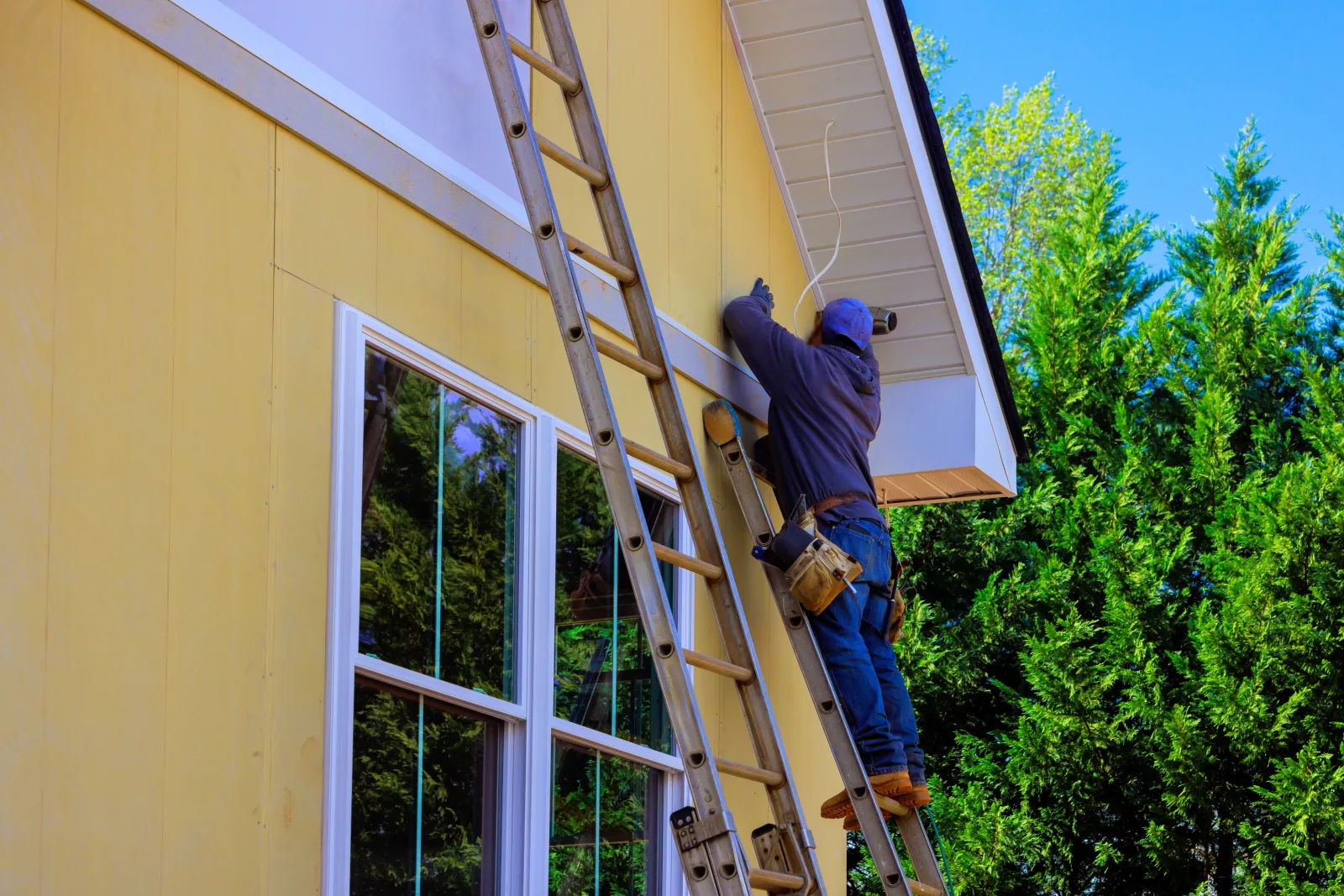
A winter rehab produces one loss whose outcome is settled before the cold arrives. Fire, theft, wind and water are all adjudicated afterward, from photographs and a sequence of events. Freezing is not. By the time a supply line lets go in an empty house, the sentence that decides the claim has already been satisfied or it has not, and nothing done in the days after the discovery moves it.
That makes the freezing provision the only passage in this part of the contract worth reading in October rather than in February.
The sentence that is graded before the loss, not after it
Maine’s Bureau of Insurance publishes the Homeowners 3 – Special Form in full, and the freezing language in it is short enough to read in a minute. On the dwelling side the form removes loss caused by freezing of a plumbing, heating, air conditioning or automatic fire protective sprinkler system or of a household appliance, and by discharge, leakage or overflow from within those caused by freezing. Then it adds the sentence that matters: “This provision does not apply if you have used reasonable care to: (a) Maintain heat in the building; or (b) Shut off the water supply and drain all systems and appliances of water.”
Notice the tense. You have used. The provision is written looking backward at a period that is already over, which is a different kind of clause from almost everything around it. The vacancy conditions describe what the building was. The neglect exclusion and the duties clause describe what you did at and after the loss. This one describes what you did in the weeks before it, and it is the only one of the group whose answer is fixed while the building is still dry.
The same condition, printed twice, doing two opposite jobs
Read the form all the way through and the reasonable-care sentence turns up a second time, in a place that changes its character completely.
On the dwelling and other structures, the form insures against direct physical loss and then subtracts what it does not want. Freezing appears there as a subtraction, and the care sentence is a carve-back — an exception that hands the cover back. The exclusion has to engage before the sentence has any work to do.
On the personal property side, which is written as a list of named causes rather than an open one, freezing is Peril Insured Against 14, and the form defines it this way: the peril means freezing of those same systems, “but only if you have used reasonable care to” — and then the identical two branches. Here the care is not an exception to anything. It is part of what the peril is. Fail it and there is no covered cause of loss to argue about, because the peril was never established.
Same house, same weekend, same drained or undrained pipe. On the building it is an exclusion you escape; on the boxes of flooring stacked in the dining room it is a peril you have to establish. The form is already comfortable judging the shell and the boxes inside it by opposite rules where water is concerned. It does the same thing here, quietly, and almost nobody reads far enough to find the second copy.
Two branches joined by or, and the one a shut-down site can perform
The branches are alternatives. Maintain heat, or shut off the supply and drain the systems and appliances. Satisfying either one is enough, and the form expresses no preference between them.
In practice a renovation rarely gets a free choice. Maintaining heat through a winter is a continuous claim about a building — every night, including the night the temporary power went down and the night the propane ran out — and it is proved by an absence of gaps rather than by a document. Draining is a task. It happens on a day, it is performed by somebody, and it produces paperwork whether or not anyone was thinking about insurance at the time.
That asymmetry is why the drain-down branch tends to be the durable one on a project that is genuinely shut down, and it is worth saying plainly that this is an evidentiary observation rather than a legal one. Both branches are written into the form as equals. Only one of them leaves something in a folder.
The sprinkler system that reverses the instruction
Then the form adds a proviso that inverts everything above, and it is the single most useful sentence in the provision for anyone rehabbing a building with fire protection in it.
“However, if the building is protected by an automatic fire protective sprinkler system, you must use reasonable care to continue the water supply and maintain heat in the building for coverage to apply.”
The two branches stop being alternatives. They become a pair joined by and, and the obligation flips: you are now required to keep the water on. The act that constitutes correct winterization on an unsprinklered building — shutting the supply and draining the lines — is the act that forfeits the carve-back on a sprinklered one, because the system the form is protecting is the one that needs water in it to work.
This proviso is printed in both places, against both copies of the condition. It is not an afterthought attached to one of them.
The practical consequence is that “winterize the building” is not a single instruction. It is two opposite instructions, and which one applies is decided by a question about the building that has nothing to do with the weather: what is in the pipes, and what are they for. A converted commercial space or a larger multi-unit building is far more likely to carry a wet system than a single-family house, and that is exactly the kind of building whose heat gets shut off first when the job pauses.
A number the form never prints
Ask what temperature a vacant house should be held at and the answer arrives quickly from a dozen directions. It does not arrive from this form. Search the freezing provision for a degree figure, a thermostat setting or a minimum and there is nothing there — not in the dwelling copy, not in the personal property copy, not in the proviso.
The absence is deliberate rather than an oversight, and the way to see that is to notice what the same document is perfectly willing to quantify. It writes “60 consecutive days” into its vacancy conditions, twice. It puts a percentage on its ordinance-or-law coverage and a percentage into its loss settlement condition. This is not a drafter who avoids numbers. It is a drafter who chose a conduct standard here on purpose, because the temperature that keeps one building’s pipes intact will not do it in another with different insulation, different pipe routing and a different exterior wall.
So the test is reasonable care to maintain heat, and it is answered with the story of how the building was kept rather than with a dial setting. Any specific figure you have been handed for this came from somewhere else — a lender, a management habit, a trade rule of thumb — and none of those are the sentence your claim will be read under.
It is worth seeing how much gets lost when the provision is summarized. Virginia’s State Corporation Commission publishes a its own consumer property guide that describes the special form as one that usually covers a building against all perils except a list — and on that list, flatly, is “damage resulting from freezing of an unoccupied building.” No branches, no reasonable care, no way back. That is a fair summary of where most unoccupied buildings end up, and it is not what the form says. The document itself is more generous than its own plain-language description, and the difference between the two is exactly the work the drain-down does.
Three water perils, and the one they all hand it to
There is one more structural detail worth knowing, because it explains why the freezing provision cannot be routed around.
On the named-causes side the form carries three separate perils that deal with water inside a building’s systems: accidental discharge or overflow, sudden and accidental tearing apart or bursting of a heating or sprinkler system, and freezing itself. The first two each expressly push freezing away. The discharge peril excludes loss “caused by or resulting from freezing except as provided in Peril Insured Against 14. Freezing”. The tearing-apart peril says flatly that it does not cover loss caused by or resulting from freezing.
Every road leads to the one peril that carries the reasonable-care condition. A burst line in a cold house cannot be argued into a neighboring peril that has no such condition, because the neighboring perils have already sent it back.
A second sixty-day count, sitting on a different layer
One more count is worth separating out, because it wears the same number as the vacancy conditions and does something else entirely.
The Texas Department of Insurance publishes a home insurance guide that lists the grounds on which a company may decline to renew a policy. Among them: the house is vacant for 60 days or more. The department adds that “Most companies stop your coverage if your house is vacant for that long,” and that they usually do not stop the liability coverage.
That is not a peril condition. It is an underwriting decision, made by a company between policy terms, and it is capable of ending the argument before any provision inside the contract gets to speak. The freezing condition decides a claim. This decides whether there is still a policy to bring the claim under. Both are counted in days, only one of them is in the form, and a rehab that runs long enough to meet the second has usually stopped thinking about the first.
What the sump and the downspout are doing in this sentence
Both copies close the same way: for the purpose of this provision, a plumbing system or household appliance does not include a sump, a sump pump or related equipment, or a roof drain, gutter, downspout or similar fixtures or equipment.
That is a scope line, and on a rehab it does real work. The frozen gutter that backs up and forces water behind the fascia is not inside this provision at all, and neither is a sump that freezes. They are decided somewhere else in the contract, under the water exclusion and its branches, where the routes water takes into an open building are sorted out. Doing the drain-down correctly does not buy anything on those, and the disappointment when a winter claim turns out to be a gutter claim is entirely avoidable by reading this one line in advance.
Which path carries the sentence at all
Everything above is read from a published residential form, and it is worth being exact about whose sentence it is.
The scope of work decides which placement a rehab belongs on, and the freezing condition travels differently down each of them. On a builders risk placement the wording is not a published residential form at all — some inland marine classes are non-filed, which is why builders risk wordings vary between one policy and the next and why the freezing terms in yours have to be read rather than assumed. On a dwelling placement with an endorsed dwelling form, the residential form family is the starting point and the sentence above is the shape to look for.
Neither path gets read off this page. The point of knowing the provision in the form that is published is that you know what question to put to the document that is not.
One weekend, and the file it leaves behind
A crew finishes rough plumbing on a vacant house in the first week of November and the job pauses while a permit is sorted out. Nobody makes a decision about the winter, because pausing is not a decision anybody writes down. The heat is off because the furnace is out for replacement. The water is on because the plumber needed it for testing and nobody told him the job was stopping.
A cold night arrives during the pause. A line lets go upstairs and runs until somebody notices, and the damage is not the pipe — it is the new subfloor, and the cabinetry that was delivered early and stacked in the dining room.
Now the file gets read. On the building, the question is whether reasonable care was used to maintain heat or to drain the systems; the answer is neither, and nobody involved intended that answer. On the cabinetry, the same care has to be established before the peril exists at all. And the fact that nobody ever decided to leave the water on is not a defense, because the provision does not ask what was intended. It asks what was done.
Had the plumber drained the system on his last day and left an invoice saying so, both halves of that claim are read under a different sentence — and the rest of the winter, permit or no permit, changes nothing.
The check to run before the first hard freeze
Find the freezing provision in your own policy, not in this one. Read whether it is written as an exclusion with a carve-back or as a peril with a condition inside it, because that tells you what you would have to establish. Look for the sprinkler proviso, and then go and find out what is actually in the building’s pipes, because that single fact decides whether draining down is the right act or the disqualifying one. Look for a temperature and expect not to find one. Then ask the only question that survives all of it: if the building froze next week, what is in the folder that shows which branch you were on.
And if the answer is that nobody is sure which branch the building is on, that is a placement question rather than a plumbing one — which is what fix and flip insurance and house flipping insurance are for, and what a quote conversation is meant to settle before the season does. A vacant building under active work is a recognized thing to insure, not an anomaly: Wisconsin’s insurance regulator, describing its own state plan in a consumer guide to home insurance, states plainly that the plan can insure vacant property while it is undergoing active renovation.
If the building is going to stand empty long enough for this to matter, the separate question of what vacant means on a policy and the reasons a standard dwelling policy struggles during renovation are both worth an hour before the season turns. State by state the exposure reads differently — Texas sees freeze losses in housing stock built for heat, Wisconsin treats the unfinished-house problem as routine, and Arizona is a reminder that a warm state still has cold nights and buildings nobody prepared for them.
The bottom line
Freezing is the one loss on a winter rehab whose outcome is decided before the cold arrives rather than after it: the published example form conditions the whole thing on whether you used reasonable care to maintain heat or to shut off the supply and drain the systems, prints that condition in two structurally opposite places so that the building and the contents reach it from different directions, names no temperature anywhere, and reverses the instruction outright on any building carrying an automatic fire protective sprinkler system, where draining down is the one act that forfeits the cover.
Frequently asked questions
How do you winterize a vacant house without heat?
The published example form writes that exact situation into its second branch. It withdraws the freezing exclusion where you used reasonable care to shut off the water supply and drain all systems and appliances of water — an alternative to maintaining heat, not an inferior version of it. On a building nobody is heating, that branch is the one available, and the reason it is the workable one is that it leaves evidence behind: a dated invoice, a drained manifold, a note on the schedule. Heat maintained is a claim about every hour of a season. A drain-down is a task with a date on it.
What temperature should a vacant house be kept at?
The published example form does not name one. Read the freezing provision and there is no degree figure, no thermostat setting and no minimum anywhere in it — the same document that is perfectly willing to write “60 consecutive days” into its vacancy conditions declines to put a number on heat. The test it writes instead is reasonable care to maintain heat in the building, which is a question about conduct rather than a threshold you can satisfy by reading a dial. Any specific figure you have been given came from somewhere other than that form.
The building has a fire sprinkler system. Does draining it down still count?
No, and this is the reversal worth knowing before November. The published form adds that where the building is protected by an automatic fire protective sprinkler system, you must use reasonable care to continue the water supply and maintain heat in the building for coverage to apply. The branches stop being alternatives and become a pair joined by and, and the drain-down that is correct winterization on the building next door is the act that forfeits the carve-back on this one.
How long can a house be vacant before the policy stops responding?
That is a different sentence from this one, and confusing the two is common. The vacancy conditions in the published form attach a 60-consecutive-day count to named causes rather than to the contract as a whole, and the freezing provision carries no day count at all. A building can be empty all winter and the freezing question is still decided entirely by what was done to the plumbing. What the vacancy word actually reaches is worked through separately in the piece on what vacant means on a policy.
Is a burst pipe covered if nobody had been to the property in weeks?
The form does not ask how recently somebody visited. It asks whether reasonable care was used to do one of two specific things, and both are states you can put a building into and leave it in. Attendance is not the test and neither is occupancy — which is why a drained building nobody has walked through since October is in a stronger position on this provision than a building somebody checks weekly with the water on and the heat off.
Does the same rule apply to the materials sitting inside the house?
It reaches them through a different door, and the wording changes shape on the way. On the dwelling side freezing is an exclusion the form withdraws where reasonable care was used. On the personal property side the form makes the same care a part of what the peril means in the first place, writing that the peril means freezing of those systems but only if you used it. Same two branches either way; a different thing to establish depending on what got wet.
About the author

Nate Jones, CPCU, is the founder of Wexford Insurance and Fix and Flip Guard Insurance, a specialty agency placing fix-and-flip real estate investment coverage in 48 states across 10+ carrier markets. Nate has read enough winter files to know the freezing question is almost never argued about the pipe — it is argued about a weekend in November nobody wrote down, which is why he treats the drain-down invoice as a policy document rather than a plumbing one. Reach him through the Fix and Flip Guard Insurance quote form or call 888-346-2414.