
Tools and Equipment: Floater, Builders Risk, or Neither
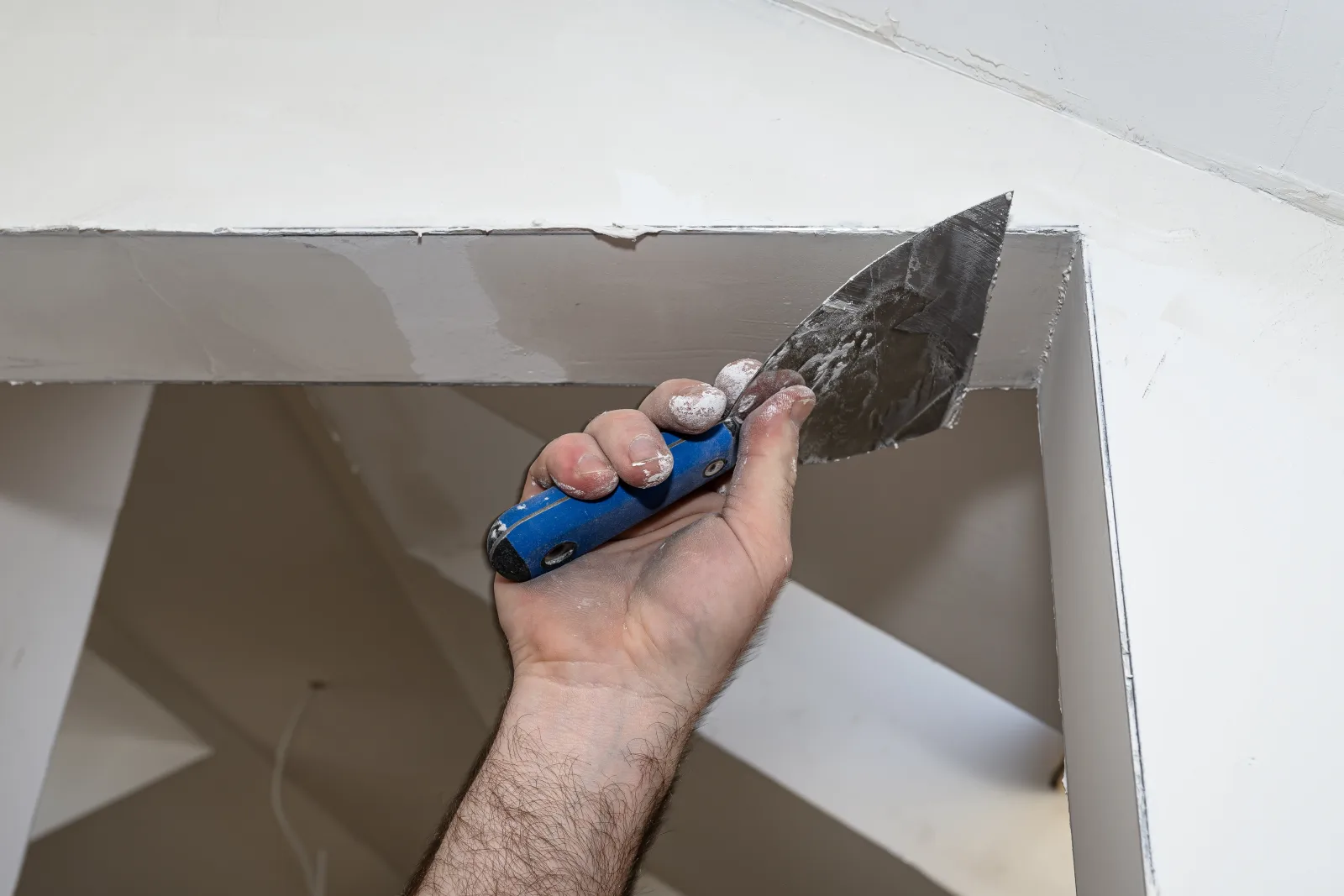
Tools and equipment are not one question on a rehab. They are three, separated by ownership: material you bought, tools the trades own, and plant hired in from a yard. A different instrument follows each one off the site, and the policy on the house was written to reach at most the first of them.
Three owners standing in one driveway
Walk onto an active site on a Wednesday and almost nothing loose belongs to the same person. The pallet of tile, the boxed vanity and the condenser waiting on the mechanical rough-in are yours — bought, delivered and on their way to becoming part of the building. The nail guns, the compressor, the miter saw and the laser level are the trades’; they arrive at seven and leave in a van at four. The mini-excavator sitting in the mud by the garage belongs to a rental yard on the other side of town and is with you on a hire agreement.
That division is not bookkeeping. Property insurance attaches to an interest in property, so the answer to “is it covered” begins with whose thing it is and who has custody of it, and only then asks where it was standing. Which contract a rehab belongs on at all is settled by the scope of work, and that is a separate decision from this one. This page is about everything on the lot that is not the structure.
The house has an address; a compressor does not
New York’s Department of Financial Services, in its circular on marine and inland marine insurance, describes the line as “the insuring of property which is mobile by nature and for which there is no fixed situs”, alongside property in transit over land and the instruments of transportation and communication.
Situs is the whole of it. A house is the most fixed object anybody insures; the hammer drill in the back of a van has no situs at all, because it is at your address today and at somebody else’s tomorrow. Two objects that differ that completely in their relation to a place do not end up in the same classification, and they do not end up on the same piece of paper. The same circular puts builders risk in that mobile family too, which is how a construction placement comes to contemplate property that is not yet part of the building at all.
Two words in the contents clause, and the toolbox they leave outside
The residential special form HO 00 03 05 11, published in full by Maine’s Bureau of Insurance, opens its personal property section with a sentence worth reading slowly: “We cover personal property owned or used by an ‘insured’ while it is anywhere in the world.” Owned or used by an insured. A framer’s compressor is neither, and no amount of it being at your address for eleven weeks changes that.
The form does make room for other people’s belongings, and the conditions on that room are the finding. It continues: “After a loss and at your request, we will cover personal property owned by … Others while the property is on the part of the ‘residence premises’ occupied by an ‘insured’.” Three conditions in one sentence — after a loss, at your request, and on a part of the premises an insured occupies. A house in week six of a rehab is occupied by nobody, which is a condition the dwelling-form piece takes up on its own terms. Named here as a published example rather than as your policy: a light rehab is placed on an endorsed dwelling form, which is a class of document rather than one, and the cosmetic repair endorsement page says what that class is sold to do.
What you bought is building, and the theft sentence was written for it
Your own material is in a different position entirely, because the same form does not treat it as contents. Coverage A reaches the dwelling and “materials and supplies located on or next to the ‘residence premises’ used to construct, alter or repair the dwelling or other structures on the ‘residence premises’.” The tile is not stuff in the house. For this form it is part of the house being built.
Then read what the perils section does with it. Among the losses the form does not insure on the building side is “Theft in or to a dwelling under construction, or of materials and supplies for use in the construction until the dwelling is finished and occupied” — and the theft peril on the contents side carries the same carve-out in the same words. Two provisions of one document, pointing the same way: material you own is covered property, and the loss it is most likely to suffer is subtracted for exactly the period your crew is on site. Finished and occupied is the switch, and a flip reaches finished long before anybody is occupying anything.
Hired plant answers to the yard it came from
The rented machine is the one investors reason about least and sign for most. It is somebody else’s asset, in your custody, under a contract that says what happens if it is damaged or taken — and that contract, not the policy on the house, is where your exposure to it was created.
The classification side agrees. Pennsylvania’s insurance regulations (31 Pa. Code § 91.8) treat leased property as its own inland marine class and state that such a policy “shall not extend beyond the termination of the seller’s or lessor’s interest”. Whatever the yard carries is tied to the yard’s interest in its own machine. It is not tied to your project, and it was never written with your project in mind. Read the hire agreement’s damage and loss clause before the machine is delivered rather than after it is gone.
Whose account the policy is written for, in the regulator’s own words
There is a place where all of this is set out as classification rather than as sales copy. Pennsylvania adopted the Nation-Wide Definition of marine insurance that the National Association of Insurance Commissioners settled on, subject to its own modifications, and the chapter that results is unusually direct about ownership.
Two of its commercial classes matter here. Builders risks and installation risks are described as covering the “interest of owner, seller, or contractor” against loss to machinery, equipment, building materials or supplies used during the course of installation, building, renovating or repairing — and the class then ends the cover differently depending on whose account it was written for: written for the owner, it “shall cease upon completion and acceptance”, while written for a seller or contractor it terminates “when the interest of the seller or contractor ceases”. The other class is the floater proper, described as covering property of a mobile nature “which has come into the custody or control of parties who intend to use such property for the purpose for which it was manufactured or created”.
Read those two descriptions next to each other and the mechanic is explicit. One instrument is organized around an interest in a project and stops when that interest does. The other is organized around custody of a movable thing and travels with whoever holds it. Neither is organized around an address.
One caution, because the chapter says so itself: it describes the kinds of risks that may be identified as inland marine, and expressly does not claim to cover every kind, or to mean that any of them is inland marine in all instances. A class name is a filing question, not a coverage grant. It tells you which family a wording belongs to and it never tells you what the wording in your hand actually reaches.
Real-World Scenario: An investor books a weekend of grading and hires a mini-excavator on the Friday, and the same weekend the electrician leaves his tools in the locked garage rather than reloading the van. By Monday the garage is open, the tools and a pallet of porcelain are gone, and the excavator has been sitting in standing water at the low end of the lot. The owner reports all three to one agent as one site loss, and three answers come back. The electrician’s tools are the electrician’s claim on the electrician’s cover. The porcelain is the owner’s material, covered property under the building side and then subtracted from it by the theft carve-out because the dwelling is neither finished nor occupied. The excavator is the rental yard’s asset, and the hire agreement signed on Friday is what decides who pays for the water. Nothing went wrong at the house that anybody could have prevented that weekend. What was already decided was who owned each of the three things.
A certificate proves your contractor bought something, not what
The paper in the folder feels like an answer to this and is not. Requirements to carry cover are common on the licensing side: Rhode Island’s Contractors’ Registration and Licensing Board states that a registrant must carry a certificate of liability insurance naming the board as certificate holder, and workers’ compensation on the same terms where the registrant has employees, with more on how that register works on the Rhode Island page and the credential picture for each state we write in on the state pages.
What that certificate evidences is liability cover — the contractor’s answer for harm he does to other people and their property, which is the subject of the general liability page. It says nothing about whether his own saw is insured, and it says nothing about your material. Liability paper and property paper answer different questions, and a registration requirement that produces the first has no opinion about the second.
Reading the ownership question off documents you already hold
Every one of these answers is already written down somewhere in the file. Look for four things, in this order.
On the declarations page and the forms list of whatever the house is placed on: whether the contract describes a dwelling or a project, and if it names a class, whether that class is builders risk, installation risk, or a mobile articles, machinery and equipment floater. Those are the regulator’s own class names and an agent will recognize all three.
In the construction placement itself: whose account it is written for. That single fact moves both the reach and the termination, and on a rehab where the general carries the placement, the answer may not be you. The mechanics of which instrument a job belongs on sit on the fix and flip and house flipping pages, with the drivers behind what it costs treated separately.
In the hire agreement for anything rented: the damage and loss clause, before delivery.
And in the subcontractor folder: read each certificate for what it is evidence of rather than as a blanket. When you know who owns each thing on the lot, send us the list with the scope, and the instruments sort themselves out.
The bottom line
Nothing on a rehab site is insured because it is standing on the rehab site: the material you bought is treated as part of the building and is then carved out of that form’s theft cover until the house is finished and occupied, a trade’s tools belong to the trade and leave in a van every evening, and a hired machine answers to the yard that owns it and to the contract you signed for it — so the useful question at binding is never what is on the lot, it is who owns each thing and who has custody of it.
Frequently asked questions
A trade left tools in the house overnight and they were taken. Is that mine to claim?
Almost certainly not, and the reason is ownership rather than fault. A residential form’s contents coverage is written around personal property owned or used by an insured, and a subcontractor’s tools are neither. The form does make room for property owned by others, but only after a loss, only at your request, and only on the part of the premises an insured occupies — which an empty rehab is not. His tools are his loss to present.
We bought the tile and it disappeared before the installer arrived. Which side of the policy is that?
The building side, not the contents side. The published residential form counts materials and supplies located on or next to the premises and used to construct, alter or repair the dwelling as part of Coverage A. That is the good news and it is short-lived: the same form excludes theft in or to a dwelling under construction, and theft of materials and supplies for use in the construction, until the dwelling is finished and occupied.
Does naming my contractor on the policy bring his equipment along with him?
No. Naming an interest on a policy describes who is protected by the cover that policy already grants; it does not widen the property the policy describes. If the contract does not reach equipment owned by somebody else and held in his custody, adding his name changes nothing about the saw. What his name can do is settle who is paid on a covered loss, which is a different question worth settling.
The excavator is rented and it is sitting in the mud at my house. Who insures it?
Start with the hire agreement, because that is where your responsibility for the machine was written and it usually runs while the machine is in your custody. The rental company owns it. A state code that classifies leased property notes that such cover does not extend beyond the end of the lessor’s interest, so the yard’s own arrangement is tied to the yard, not to your project.
Is an equipment floater something I buy, or something the crew buys?
Ordinarily the crew, because the class follows custody and use rather than a site. The regulatory description of a mobile articles, machinery and equipment floater is property of a mobile nature that has come into the custody or control of parties who intend to use it for the purpose it was made for. That describes the trade who owns and carries the equipment, which is why asking your own agent to insure somebody else’s tools rarely goes anywhere.
If I own every tool on the job myself, does the question get simpler?
It gets shorter, not simpler. You have removed two of the three owners, so there is one interest to insure instead of three — but a form written around a building and its contents still has to be asked, in writing, whether it reaches equipment you carry from job to job. Property with no fixed situs is classified separately for a reason, and owning it does not move it back onto the house.
About the author

Nate Jones, CPCU, is the founder of Wexford Insurance and Fix and Flip Guard Insurance, a specialty agency placing fix-and-flip real estate investment coverage in 48 states across 10+ carrier markets. Nate has watched the argument after a site theft go the same way every time: nobody disputes what was taken or when, and everybody disputes whose interest the missing item represented, which is a question the paperwork settled months earlier and nobody read. Reach him through the Fix and Flip Guard Insurance quote form or call 888-346-2414.