
How Much Does Fix and Flip Insurance Cost in South Carolina?
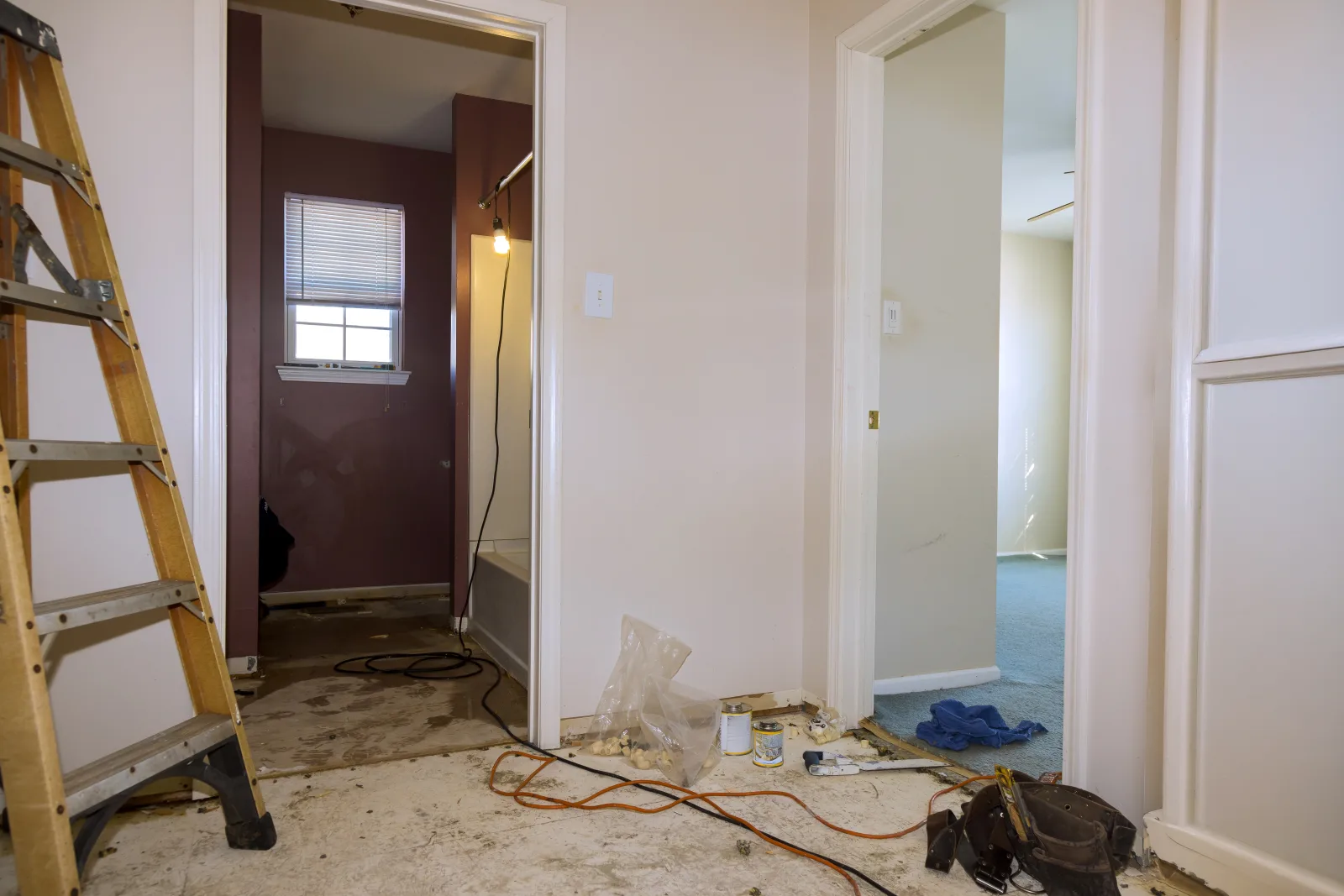
South Carolina gets no premium on this page either, and the reason is the same everywhere: a renovation is priced from one building, one scope of work and one set of credentials. What the state adds at the top is a published retrofit list with an ownership test attached that an investor cannot pass.
A punch list the department publishes, and the applicant it is written for
The SC Safe Home mitigation grant program is run by the South Carolina Department of Insurance, and its list of qualifying retrofits reads like a page lifted out of a rehab specification. Strengthening roof deck attachment. Installing a secondary water barrier to reduce water intrusion. A high wind-rated roof covering. Bracing gable ends. Reinforcing roof-to-wall connections. Code-approved protection for exterior openings, including impact-rated or wind-rated windows, doors and garage doors.
Any rehabber working within reach of the coast has written most of that into a scope at some point. What the same page adds is the part deciding whether the program is available to the person writing it. The applicant has to reside in a designated coastal county, own and occupy the home as a primary residence, hold an active policy on it, not have used a Safe Home grant before, and have no prior storm-related damage or claim payouts on the house. The page is equally direct about what the money is not for: regular home repairs, remodeling, and building new rooms are all outside it.
Set those two lists side by side and the finding is clean. The work qualifies. The flipper does not. Occupancy is the first condition and a resale project fails it before the others are reached, so the retrofit this state most obviously wants done on a coastal house is one an investor funds privately.
None of that argues for skipping the work. It argues for being clear, in week one, about who is paying for it. Install a wind-rated covering and reinforce the connections under it, and the building keeps that improvement long after the crew has packed up and the sale has closed — something to build in for the next owner rather than bill back to the state. The decision belongs with the rest of the structural rehab scope, because it is made before the roofer starts.
The department’s own words for what the wind pool is for
The department’s wind pool questions page describes a territory in which the South Carolina Wind and Hail Underwriting Association may provide wind and hail insurance coverage — coverage, in its own phrasing, that protects property from losses due to hurricane, tornadoes, severe thunderstorms, other catastrophic wind and hail.
Carry the modality across as written. Along the coast, wind and hail may be stripped out of the residential property contract and written separately through that association. May, not must. A quote that keeps the storm causes inside one contract and a quote that splits them across two are both things this state produces, and which one an address gets is a question with an answer rather than an assumption.
The same page is unusually blunt about how the association should be approached. It says the wind pool was not created to be the low cost provider of wind and hail insurance, and that it is extremely important to shop around and try to secure coverage through a standard insurer before going to the wind pool, which exists to provide coverage for consumers who cannot find that coverage in the standard market. That is a sequence instruction, and it belongs early in a schedule rather than late in one.
One line on that page lands harder on a renovation than on anything else it was written for: proper maintenance of the property one is seeking to insure is named as one of the criteria required for coverage. A half-finished, unoccupied house is exactly the building that sentence is hardest to answer for, and it is worth reading before the covering comes off rather than after. The rest of the state-level detail — the department, the association, the metro markets — sits on the South Carolina fix and flip insurance page.
Three things a standard contract will not pay for, and a page that stops there
The department’s consumer page on basic residential property cover says the policy should pay to repair or rebuild the home if it is damaged or destroyed by fire, hurricane, hail, lightning, or other disasters listed in the policy. Note the verb. It is should pay, conditioned on the policy’s own list, not a flat promise that it does.
Then the page names the edges, and there are three of them rather than two: a standard policy will not pay for damage caused by a flood, earthquake, or routine wear and tear. The first two are perils that would have to be arranged somewhere else. The third is not a peril at all — it is a condition of the building, and on a house standing open while a schedule slips, it is the one most likely to be argued over a claim.
The part worth saying out loud is what that page does not do. It states what falls outside the contract and then stops: no market is named for flood, and none for earth movement. This guide is not going to invent a route the department did not print, so what you get is the shape of the gap rather than a map out of it — two placements that are not endorsements, that carry their own underwriting and effective dates, and that a project meeting them in the week a loan funds will find slow. The main renovation contract, typically builders risk where the structure is open, absorbs neither.
The retrofit leads here, and the grant behind it is not yours
South Carolina puts a retrofit at the head of this column because the department publishes the exact scopes it will pay for — deck attachment, a secondary water barrier, a wind-rated covering, braced gable ends, roof-to-wall connections and protected openings — and then closes the program to anybody who is not living in the house. Beneath it sit the storm cover that may be written on a second document, the causes the department says the contract will not answer for, the commission that credentials the builder and the systems trades alike, the council whose stated function is adoption rather than enforcement, the stretch with nobody inside, and the statement a seller signs at the far end. Where a row sits is the claim being made; there is no arithmetic anywhere in the column.
- A grant list that reads like a scope, closed to an investor The department funds these scopes for an owner living in the house, so a resale project builds them and pays for them.
- Wind and hail that may be lifted out, and where they land Along the coast the storm half may leave the contract and be written through the state association, on its own document.
- Flood, earthquake and wear, and a page that names no market The department states what the contract will not pay for and stops, leaving two placements to arrange somewhere else.
- One commission for the builder, and a ceiling on its reach The credential reaches residential buildings under a stated height and unit count, and no further than that.
- Systems trades credentialed where the builder was credentialed Electrician, plumber and heating installer sit on the same commission’s list, so verification is one lookup, not three.
- Adoption is the stated function, and permitting is not The council adopts the codes and registers the officers; the counter issuing the permit is a local one.
- Nobody inside at either end, and a loss history already made The building stands empty through the work and again through the listing, and the record behind you cannot be revised.
- A condition statement, and the exemptions document beside it The real estate commission publishes both, and the house being described is the one your own crew just produced.
One commission for the builder, and the ceiling on its jurisdiction
The South Carolina Residential Builders Commission, which sits inside the Department of Labor, Licensing and Regulation, licenses or registers individuals qualified by experience to perform residential building, residential specialty contracting and home inspecting. It also issues residential business certificates of authorization to qualified firms, and investigates complaints against those who violate the residential building licensing and registration laws.
The enabling sentence carries a boundary most state credentials leave implicit, and it is described in terms of the buildings themselves: residential buildings or structures not over three floors in height, and not more than sixteen units in any single multi-unit residential building. A single-family resale project sits inside both limits. A project climbing past either one is a project where that credential has stopped answering for the work, which is a question to settle before signature rather than during an inspection.
For a submission, the useful consequence is that “licensed” is a checkable word here. There is a named commission, a named license type and a lookup behind it, which lets one short sentence do work that elsewhere takes a paragraph of hedging.
The systems trades answer to the same desk as the builder
Most states scatter the systems credentials across separate examining boards — one for wire, another for pipe, a third for heating and cooling. This one does not. The same commission’s licensure list carries the Residential Electrician license, the Residential Plumber license and the HVAC Installer and Repairer license alongside the Residential Builder license, the specialty contractor registration, the home inspector license and the certificate of authorization.
That is unusual, and it is not a transcription slip: the Commission’s own description of its work covers residential specialty contracting, and those licenses sit on its own page. The practical effect on diligence is that the verification is one lookup rather than three, done against one authority, and a file can name that authority once instead of three times.
It does not do the other half of the job. A credential says a person may lawfully perform the work; it says nothing about whether the firm carries its own general liability cover, and a certificate collected and never read is a certificate that has not been checked. Both belong in the file, and the second is the one that gets skipped.
Adoption is the stated function, and permitting is not on the list
The South Carolina Building Codes Council states its primary function in one sentence: to adopt or modify model building codes for South Carolina, and to regulate the registration of building codes officers, special inspectors and the modular building program.
Read that sentence for what is absent from it. Issuing a permit is not there. Scheduling an inspection is not there. Signing off completed work is not there. The council sets the standard; it does not run the counter. Permits and inspections come from the local building department, working through the registered building codes enforcement officers and special inspectors whose registration the council regulates.
What that decides is duration. A renovation term has to reach the end of a review and inspection calendar set where the house is, and nobody in Columbia publishes it. Lengthening a term that has not yet expired is paperwork. Replacing one that has expired over an opened building is a fresh submission, made at the moment the building is least attractive to describe.
The weeks before the crew and the weeks after the crew
Nobody lives in a resale project. That is the ordinary condition, and it is priced, and the half investors most reliably leave out of the estimate is the stretch at the back end — the finished house sitting through a listing, a contract and a closing with the keys in a lockbox.
The other input on this row cannot be improved at all. Whatever the loss record behind the applicant says, it says before the submission is written, and the only preparation available is to pull it early so nothing in it surprises the person presenting it. It pairs badly with the maintenance criterion the wind pool page names, because an empty half-finished house and a thin claims history are read together.
Real-World Scenario: A Myrtle Beach cottage is scoped with braced gable ends, a secondary water barrier and a wind-rated covering, because somebody read the state’s list of qualifying retrofits first and the eligibility conditions second. The work is specified, quoted and booked on the assumption that part of it comes back. It does not: the house is held for resale, nobody occupies it, and occupancy is the first condition on the page. The retrofit still gets built, now entirely out of the renovation budget, and the schedule that absorbed the change order runs long. When the final inspection finally clears, the term is near its end date over a finished, empty house, and the two facts weighed most heavily in the conversation that follows — the count of months without an occupant, and a claims record that was fixed before the file was ever opened — are both closed questions. Neither cost anything to raise in week one.
What the real estate commission publishes, and the list beside it
At the far end of a flip there is a form with your name on it. The Real Estate Commission’s forms and resources page publishes the SC Residential Property Condition Disclosure Statement, and directly beside it a separate document setting out disclosure exemptions.
Two things follow. The statement describes a house your own crew produced — its systems, its roof, its structure — which puts the resale paperwork downstream of construction decisions made months earlier. And the exemptions document is its own read: which transfers fall under it is a closing question rather than a scope question, and it is not answered on that page.
What the job controls is the record. Permits pulled, inspections signed off, credentials verified against the commission, scope changes documented as they happened. That record is generated anyway on a project that opens the structure and belongs on builders risk; it is generated just as usefully on a lighter surfaces-and-fittings refresh riding on a dwelling contract with a cosmetic repair endorsement. Either way it costs nothing to keep and is expensive to reconstruct.
The rest of the South Carolina material, and the next step
The material that sits outside the cost question — the regulator, the coastal association, the metro markets and the licensing picture in full — is laid out on the South Carolina page, indexed beside every state this agency is licensed in. The national ordering of these same inputs opens on something else entirely, which is the point of reading a state version at all.
And where the covering and the opening protection on a coastal house are still open decisions, a phone call in that week is worth more than a paragraph in this one. Put the job in front of us — where it sits, what the retrofit specification actually says, and who is on title while the crew works — or find out who is at the other end.
This guide covers what drives the cost of a South Carolina rehab. The state page covers who licenses the trades, who issues the permit and how a project there is placed: fix and flip insurance in South Carolina.
The bottom line
South Carolina publishes a rehab punch list and then attaches an ownership test to it — SC Safe Home pays for deck attachment, a secondary water barrier, a wind-rated covering, braced gable ends, roof-to-wall connections and protected openings, but the applicant has to own and occupy the house, carry an active policy on it and have no prior storm damage or claim payout there. An investor can build every one of those scopes and fund none of them, which turns the retrofit into a handover argument rather than a line in the renovation budget. The storm placement, the one commission standing behind every credential on the job, and the condition statement waiting at resale are all read after that.
Frequently asked questions
If the grant is closed to me, is there any reason to build its scopes into the job anyway?
There is, and it is a resale reason rather than a budget one. The department publishes the qualifying retrofits by name — deck attachment, a secondary water barrier, a wind-rated covering, braced gable ends, roof-to-wall connections, protected openings — and those are permanent properties of the building once installed. The work stays with the house after you have gone. What does not travel to you is the money, because the eligibility conditions are written around an owner who lives there.
Is the wind pool something to plan around, or something to fall back on?
The department answers that on its own page. It says the association was not created to be the low cost provider of wind and hail insurance, and that it is extremely important to shop around and try to secure coverage through a standard insurer before going to the wind pool. Read that as an instruction about sequence. The association exists for consumers who cannot find that cover in the standard market, which places it at the far end of a market search, not the near end.
The department names what a policy will not pay for and stops there. Where does that leave flood on my file?
Outside the contract, and without a route printed on that page. The department states plainly that a standard policy will not pay for damage caused by a flood, earthquake, or routine wear and tear. It does not go on to name where either cover is bought, and this guide is not going to supply a market the department did not. Treat both as separate arrangements with their own timing, and raise them early rather than at funding.
Is a specialty credential from the builders commission the same thing as a trade license from a trade board?
In most states they are issued by different bodies. Here the Residential Builders Commission lists the Residential Electrician, Residential Plumber and HVAC Installer and Repairer licenses beside the Residential Builder license, the specialty contractor registration and the home inspector license. One commission stands behind the person coordinating the job and behind the systems trades under them, which shortens verification to a single authority and makes a submission easier to write plainly.
Nothing on the council’s page mentions issuing permits. Who am I actually waiting on?
The local building department. The Building Codes Council states that its primary function is to adopt or modify model building codes for South Carolina and to regulate the registration of building codes officers, special inspectors and the modular building program. Issuing permits and scheduling inspections are not among the functions it claims. So the calendar your policy term has to reach is set where the house sits, not in Columbia, and it has to be asked about locally.
The commission publishes an exemptions document alongside the disclosure form. Does a flip land on either one?
The honest answer is that both documents are published and neither is summarized here. The Real Estate Commission puts the SC Residential Property Condition Disclosure Statement and a separate disclosure exemptions document on the same resources page. Which one a particular transfer falls under is a closing question for the attorney handling it. What the renovation controls is the record behind whichever form gets signed, and that record is made while the walls are open.
About the author

Nate Jones, CPCU, is the founder of Wexford Insurance and Fix and Flip Guard Insurance, a specialty agency placing fix-and-flip real estate investment coverage in 48 states across 10+ carrier markets. A South Carolina file turns on the distance between what a scope of work may contain and what the state will help pay for: he reads a grant’s eligibility conditions against an investor’s ownership position, a commission’s enabling sentence against the crew actually standing on the job, and a coastal quote for whether the storm half sits inside the contract or beside it. Reach him through the Fix and Flip Guard Insurance quote form or call 888-346-2414.