
How Much Does Fix and Flip Insurance Cost in Louisiana?
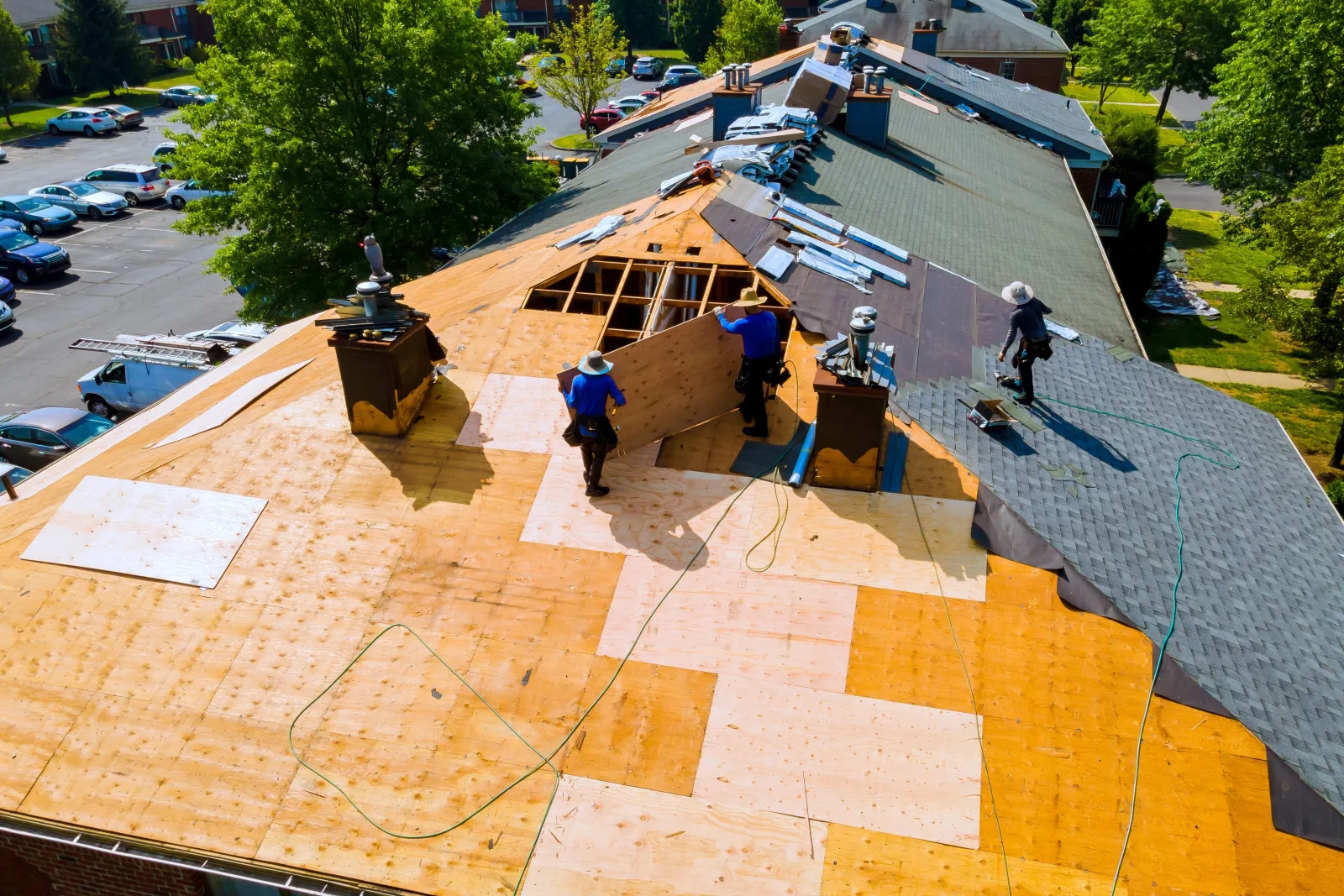
There is no Louisiana premium on this page. A renovation here is rated from a scope, a schedule and a loss record that belong to one project and to nobody else. What is unusual about this state is that the first of those can earn something the insurance department has written down, which is where the file opens.
The one insurance decision a Louisiana rehab can make with a hammer
Most of what an investor buys on a renovation is defensive. Louisiana publishes one move in the other direction, and the Department of Insurance sets it out in a consumer guide to the Wind Mitigation Survey: an owner may be eligible for a premium discount for voluntarily strengthening a building against storms and hurricanes in compliance with the Louisiana State Uniform Construction Code. The construction techniques the guide says may warrant a discount are roof bracing and roof-to-wall strength, roof deck attachment, secondary water barriers, opening protection, and wall-to-floor-to-foundation strength.
Set those items against a structural scope of work and the two documents are describing the same week on site. A gut rehab is already deciding most of those items; it is simply deciding them without reference to a document that says what they are worth.
Now the half that costs money to get wrong. The same guide states that admitted companies are mandated to offer actuarially justified premium discounts for wind mitigation, and that surplus lines insurers are not required to offer them. That is an asymmetry, not a technicality. A strengthened building written on admitted paper meets a mandate; the identical building written on surplus lines paper does not carry the mandate with it. Renovation risk frequently lands on non-admitted paper during the work, so the question worth asking before the specification is locked is which market the finished house is aimed at, not which market the builders risk term sits in.
The instrument has a schedule attached to it, too. It documents what is physically there rather than certifying what a building was designed to be, and it must be carried out by a building code enforcement officer, a registered architect or engineer, or an authorized third-party provider. Deck attachment and a secondary water barrier stop being observable the moment the covering goes back on.
A corporation the state runs, and requires to be the costlier answer
When the voluntary market will not take the building, there is a mechanism. Louisiana Citizens Property Insurance Corporation describes itself as the insurance of last resort and as state-mandated to be more costly than private property insurance companies, and as a nonprofit organization created to provide insurance products for residential and commercial property applicants who are in good faith entitled, but unable, to procure insurance through the voluntary insurance marketplace.
The planning point is in the corporation’s own sentence. It is not built to be competitive, and reaching it is an outcome rather than a strategy. On renovation files a decline usually traces to a thin description rather than to a bad building: an address and a budget give an underwriter nothing to work with, while a written scope, a dated schedule, the trades with what each of them holds and the permit position give the specialty market that handles structural rehabs something to answer.
What the department’s forms name, and the losses it puts outside all of them
The peril picture here is legible because the regulator published it. The department’s consumer guide to residential property cover describes the Basic Form as covering damage due to fire or lightning, windstorm or hail, vandalism or malicious mischief, theft, damage from vehicles and aircraft, and glass breakage. The Special and Comprehensive Forms are the ones written against all risks except certain specified exclusions, such as earthquakes.
On an open site that distinction is not academic. A named list answers for the causes somebody thought to name, and a building with its walls open produces causes nobody did. Two of the causes the Basic Form does name— theft, and vandalism or malicious mischief— are precisely the two an empty, staged, unlit building generates by itself.
The other side of the ledger is stated just as plainly. The guide records that damage due to floods is not covered, and that loss and damage caused by flood, surface water, water that backs up through sewers or drains, and earth movement are not covered either. It directs an owner toward a separate flood policy and names the National Flood Insurance Program as the route to ask about. So the count of instruments a project needs is decided by the address rather than by the budget, and a rehab that finishes a room below grade has met two of those exclusions at once.
What a Louisiana rehab settles while the covering is off
Louisiana puts a construction decision at the top of this file because the state has written down what that decision earns and who owes it. An owner may be eligible for a premium discount for voluntarily strengthening a building against storms and hurricanes, admitted companies are mandated to offer actuarially justified discounts for wind mitigation, and surplus lines insurers are not— so a roof detail is also a placement question, and it leads. Beneath it sit the corporation the state runs for property nobody else will write, the form families the insurance department describes together with the losses it says fall outside every one of them, and the separate storm retention the department reports insurers trending toward. Then the credential band and the permit counter, both settled by somebody other than the investor. The limit, the empty stretch and the choice of contract close the column, and the choice of contract closes it because by then the roof has already made most of that decision.
- Strengthening work that only one market is mandated to reward Admitted companies must offer actuarially justified wind mitigation discounts. Surplus lines insurers need not.
- A state corporation required by law to be the costlier answer It calls itself the insurance of last resort, state-mandated to be costlier than private property insurance companies.
- Named causes on one form, all risks less earthquake on another The department describes a named-cause basic form and all-risk forms subject to exclusions such as earthquake.
- A second retention that switches on when a storm is named The department reports a trend to apply a separate named-storm or hurricane deductible to residential coverage.
- One board, and which band the value of the project puts you in New home construction needs a Residential license; work on a standing house is sorted by what the project is worth.
- Codes from a commission, permits from a local authority The commission adopts the codes and licenses the inspectors; local government authorities issue the permits.
- Strengthening spend that sits inside the amount, not beside it A construction placement answers to the finished, strengthened building rather than to the acquisition price.
- Months with the keys in a lockbox, and the claims behind them Nobody sleeps in a flip, and the claim record is the row nobody can rewrite at submission.
- Whether the deck comes off, which is what picks the contract Surfaces and fixtures sit on an endorsed dwelling form; opening the structure moves the job to builders risk.
One declarations page, two retentions, and the name given to the storm
The same guide adds a sentence that reorders a renovation budget. It reports a trend among insurance companies in this state to apply a named-storm or hurricane deductible to residential property coverage, and it tells an owner to check with a producer whether one is written into the policy.
That means a declarations page here can carry two retentions: the ordinary one, and the one that switches on when a storm is given a name. For a finished house the difference is an arithmetic problem. For a building with the covering off it is a planning problem, because the months the structure spends open are the months the second retention is most likely to be the one that answers. A term that runs through storm season with an unprotected deck is a different purchase from the same term run in the other half of the year, and that is a scheduling decision as much as an underwriting one.
One board runs both bands, and the value of the project decides which
There is a state credential to ask for here, which is more than several states offer. The licensing board’s own FAQ states that a commercial license does not allow you to build a single residential home, and that a Residential license with the Residential Construction classification is required for new home construction.
Existing houses are handled in their own band. The board’s types of licenses page defines home improvement as the reconstruction, alteration, renovation, repair, modernization, conversion, improvement, removal or demolition of, or the construction of an addition to, a preexisting residential structure. Which band a particular rehab falls in is settled by statutory project-value thresholds, so the useful question to a contractor is not whether they are licensed but which band this job puts them in and whether their credential reaches it.
One distinction survives the whole job. A credential speaks to competence and a general liability policy speaks for whoever bought it, and neither of them insures the building you own or the material stacked inside it waiting on a trade.
The commission licenses the inspector, and a local counter issues the permit
Construction codes are set centrally by the body that names itself the Louisiana Uniform Construction Code Commission, which adopts the International Codes with Louisiana amendments and has approved language adopting current National Electrical Code and International Codes editions. It also licenses the public inspectors, private inspectors and private inspector companies who carry out code inspections. What it does not do is issue permits: those come from local government authorities, and the commission’s own announcement describes a per-permit fee it may collect on permits a local government authority issues.
Two consequences land on a renovation file. The person signing off the work is credentialed in one place and working to a counter in another, which is a reason to keep inspection results as documents rather than as recollections. And the construction term is written around a queue the project does not control. Asking for more time while the policy is still in force is an amendment; asking once it has lapsed means putting fresh cover on a half-finished building no underwriter has seen whole.
Real-World Scenario: The survey is booked for the last week of the job, which is how almost everybody books it. The covering goes on in month two, the openings are glazed in month three, and the surveyor arrives in month five to a finished house. Deck attachment and the secondary water barrier are now behind a roof, so they cannot be documented, and two of the techniques the state names drop off the report. The construction was done properly and the paperwork says less than the construction did. The resale conversation loses an argument it had already paid for, and nobody can get it back without opening the roof.
Deck attachment and opening protection belong inside the amount, not beside it
A construction placement is written to the building as it will stand at hand-over. Not the acquisition price, not the running total of the draw schedule, and not the half-open structure standing there now with the finishes on pallets. Those are three different amounts and only one of them describes what would have to be put back after a total loss.
Strengthening spend is the part that goes astray here, because it feels like an upgrade and it is actually structure. Bracing, deck attachment, a secondary water barrier and opening protection all end up inside the finished building, so they belong inside the figure from the moment the scope is written rather than arriving by endorsement when the invoice does. A scope that quietly grows by the cost of doing the roof properly is a scope worth restating out loud, and the national ordering of these inputs puts this question further up the list than Louisiana does for a reason.
Months with the keys in a lockbox, and a record nobody can rewrite
Two answers close the file and they are read together. The first is that nobody is living in the building, from the day the seller leaves to the day the buyer arrives, and the stretch after the crew has gone is the part investors leave thin. That is when the house is complete, staged with everything portable already installed, and visited by nobody. An ordinary dwelling contract assumes somebody is home; a renovation term has to be built on the opposite assumption at both ends.
The second is the loss record, which moves pricing further than anything else on this list and is the only input already fixed by the time a quote is asked for. A short record stated exactly beats a longer one stated loosely, because loose gets read as bad until something on the file says otherwise.
Which paper the scope ends up on, and why the question waits until now
Only now does the question a national cost guide opens with arrive. A refresh that leaves the framing, the deck and the mechanicals alone belongs on a dwelling contract, with the cosmetic repair endorsement doing the work of adapting an everyday form to an empty building under a crew— the finish-work half of this practice. Take the deck off, move something load-bearing or rework the openings and the house stops being a house until the last inspection clears, which is the exposure builders risk was written for.
It sits last here because in Louisiana the roof has already answered most of it. A scope with anything for a surveyor to look at is, by definition, a scope that opened the structure, so the fork that leads a national list is downstream of the decision this state puts first. A cosmetic project has almost nothing for an inspection to find; a structural one has all of it.
Assembling the file while the walls are still open
Send the scope of work first, written honestly enough to be dull, with the strengthening items named rather than implied. Then the calendar, counting the listing stretch as well as the build and saying where storm season falls inside it. Then the amount the finished building is insured to and how it was arrived at. Then the trades with what each of them holds and which licensing band the job sits in, the permit position with the local authority, whether a survey is scheduled and when, and whatever the loss record says.
Wanting the market picture instead of the pricing one— the regulator, the board, the disclosure waiting at resale— is a different errand, and it is answered on the Louisiana fix and flip insurance page. The list of states we write in sits next to it. Once the question is about one address rather than one state, send the project over or meet the person who reads it.
This guide covers what drives the cost of a Louisiana rehab. The state page covers who licenses the trades, who issues the permit and how a project there is placed: fix and flip insurance in Louisiana.
The bottom line
Louisiana wrote down what a strengthened building is worth and then drew a line around who has to honor it: an owner may be eligible for a premium discount for voluntarily strengthening a building against storms and hurricanes, admitted companies are mandated to offer actuarially justified discounts for wind mitigation, and surplus lines insurers are not— so the same specification is worth different things depending on which market the finished house is written in, and a rehab is the only stretch of a building’s life when the specification and the placement can still be settled together.
Frequently asked questions
The survey has to happen while the deck is still open. How do I stop that from stalling the trades?
Treat it as a trade in its own right and put it on the schedule with the others. The inspection documents what is physically present, so deck attachment and a secondary water barrier are readable before the covering goes on and invisible afterward. Book the surveyor against the dry-in date rather than against the closing, and tell the roofer the date exists.
Two markets, one mandate. Does that change what I should write into the specification?
It changes what the specification is buying. The department’s guide says admitted companies are mandated to offer actuarially justified discounts for wind mitigation and that surplus lines insurers are not, so identical construction is treated differently depending on where the finished house is written. Decide early which market the resale is aimed at, because the detailing costs the same either way and only one route has a mandate behind it.
Our quote came back with two deductibles on it. Which one answers for a storm that reaches an open roof?
That depends on what the storm is called, which is why the department raises it at all. It reports a trend among insurers in this state to apply a separate named-storm or hurricane deductible to residential property coverage, so one retention answers for ordinary losses and another answers once a storm carries a name. On an open building the second is the one worth modeling first.
The house is standing and the job is large. Which credential should the person running it hold?
Ask the board, not the contractor. The licensing board states that a commercial license does not allow someone to build a single residential home and that a Residential license with the Residential Construction classification is required for new home construction, and it runs a separate home improvement band for work on a preexisting residence. Which band a job sits in turns on statutory project-value thresholds, so establish the band before you compare quotes.
The inspector is licensed centrally and the permit comes from the local authority. Whose calendar am I buying a term against?
The local one. The commission adopts the codes and licenses the public inspectors, private inspectors and private inspector companies who carry out code inspections, but permits are issued by local government authorities. So the term has to survive a queue nobody on the project controls. Ask for the extension while the policy is still running; after it lapses you are placing fresh cover on a half-built building.
We are strengthening the roof and the openings. Does that spend sit inside the amount insured or beside it?
Inside it. A construction placement answers to the building as it will stand at hand-over, and bracing, deck attachment, a secondary water barrier and opening protection are all part of that finished structure. Money spent on them is money that would have to be spent again after a total loss. Put it in the figure when the scope is written rather than by endorsement when the invoice arrives.
About the author

Nate Jones, CPCU, is the founder of Wexford Insurance and Fix and Flip Guard Insurance, a specialty agency placing fix-and-flip real estate investment coverage in 48 states across 10+ carrier markets. The divide in this state runs between a construction specification and a market, because the mandate behind the wind mitigation discount reaches admitted companies and stops at the surplus lines line. Rehab files here get read with that second question asked early, while opening protection and deck attachment are still drawings rather than invoices. Reach him through the Fix and Flip Guard Insurance quote form or call 888-346-2414.