
How Much Does Fix and Flip Insurance Cost in Kansas?
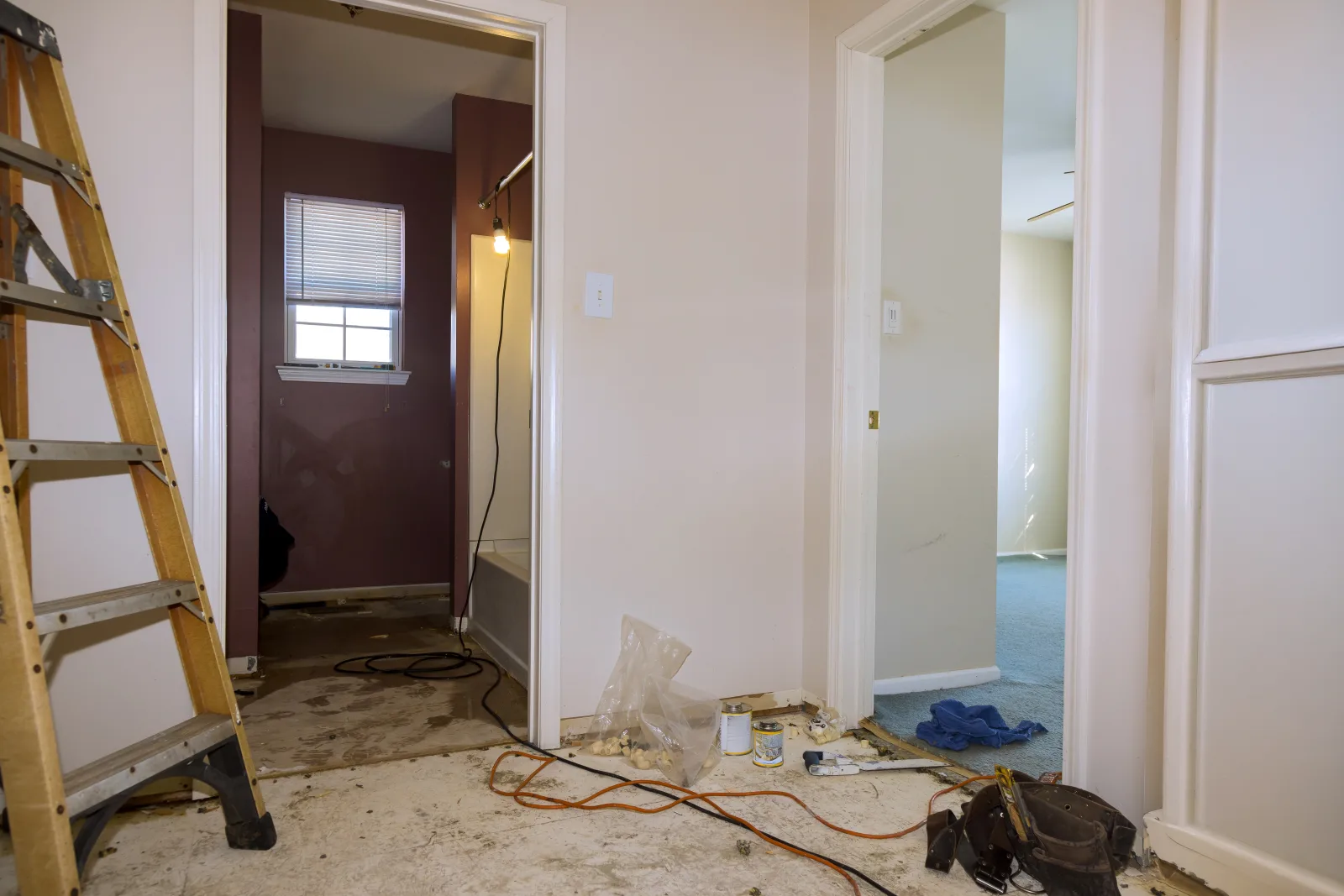
No price for a Kansas rehab appears on this page, and the first reason is jurisdictional. The state agency that inspects buildings says it does not reach one- and two-family dwellings, the one code duty the state describes for itself is handed to local jurisdictions, and construction licensing is set city by city. Three answers, three counters, one address.
Nobody from the state is coming to look at this house
Most states hand a renovation file at least one statewide handle to grip: a license register, a code office, an inspection authority whose name is the same in every county. A one- or two-family rehab here gets none of the three, and it is told so in writing rather than left to infer it from silence.
The Office of the State Fire Marshal publishes the boundary of its own authority, and the sentence is short: it has jurisdiction over all buildings other than one- and two-family dwellings. Read the exception rather than the rule. Schools, hospitals, care homes and detention facilities sit inside that jurisdiction and on an inspection cycle. The house somebody is about to gut sits outside it, by the agency’s own account of what it does.
The energy code sits the same way. The Kansas Corporation Commission’s energy office states that because this is a home rule state, the responsibility for adoption and enforcement of building energy codes lies with local jurisdictions — and that the national edition the state did adopt applies as the standard for new commercial and industrial structures. A house being renovated is in neither of those categories, so the one code layer the state describes for itself hands a house straight back to the jurisdiction it stands in. Note what that sentence is and is not: it is about energy codes specifically, and it is the state’s own word on where the duty sits. Put it beside the fire marshal’s carve-out and the portal’s answer on credentials and the pattern is consistent — on this record there is no state office standing between an investor and a one- or two-family rehab. What applies, and who signs it off, is established where the parcel is.
Two consequences land on the placement, and neither one is a rate. The term has to outlast whatever review calendar the jurisdiction holding the parcel keeps, and there is no statewide queue anybody can look up. And the documentation an underwriter eventually reads exists in whatever volume that particular jurisdiction happens to generate, which is not the volume the next one generates. That is why the national ordering of these inputs does not open where this page opens.
Three named forms, and the department’s own word for which one is usual
The insurance side of this state is unusually explicit about structure, and the structure arrives before any peril does. The Kansas Department of Insurance defines residential property coverage in three tiers — basic form, broad form and special form — and names special form as the most common of them. The dwelling, the detached structures and the contents are insured against the perils specified in the policy, and the tier is what decides how much specifying the policy does.
On a finished house with somebody living in it, that distinction stays quiet for years. On a building with the roof open and materials stacked in the front room, it is the first line worth reading on a quote, because a narrower tier enumerates fewer causes and an open building collects more of them. A quote accepted on price alone can be a quote accepted on a tier the project’s actual exposure sits outside of, and nobody discovers which until an adjuster is standing in the mud.
Underneath the tier sits the older question of which instrument carries the job at all. A scope that stops at surfaces, fixtures and finishes usually rests on a dwelling form with a cosmetic repair endorsement, the lighter of the two placements we write. Once the framing, the wire or the water is coming out, the address is a working construction site for the duration and builders risk is the instrument written for that condition — the heavier one. The tier question then gets asked underneath whichever of those two answered first.
The weighting a Kansas rehab file arrives with
Kansas begins this column at the municipal counter, because the state fire authority puts a one- or two-family dwelling outside its own jurisdiction and the energy-code duty sits with local jurisdictions under home rule. The department’s three named property forms come next, then the credential question the business portal hands to cities and counties, then the causes it says every policy in the state leaves out, then the fallback plan. The limit, the empty stretch and the claims record close the stack, as they do everywhere. The column ranks and never counts.
- No state inspector on the house, and a counter that varies Nothing statewide reaches the house, so the calendar and the sign-off belong to whichever jurisdiction holds it.
- Three named tiers, and the one the department calls most common The tier decides how much a policy has to specify when a loss reaches a building standing open.
- A requirement set at the city limit, with none above it Standing is proved from a local registration and a certificate somebody read, because no state roster exists.
- Rising water and ground movement, both placed outside the form The department puts each one beyond every property policy here, so each needs an arrangement of its own.
- The plan for structures an insurer’s own program will not take It is reached after refusals and an eligibility inspection, and the department says what it issues is narrower.
- A finished building nobody can walk through yet The amount answers to what the work produces, and the three figures on the file have to agree with each other.
- Weeks waiting on a buyer, and a claims file nobody can edit The empty count runs from one closing to the next, and prior losses arrive with the applicant rather than after.
No state number to ask for, and an examination that may be waiting anyway
The credential question here resolves to an affirmed negative rather than to a blank, and the difference matters. The Kansas Business Center One Stop, the state’s own business portal, places licensing for construction and contracting businesses with cities and counties. There is no state general contractor credential in existence, so nobody can produce one, and an underwriter who asks for one is asking for a document the state never printed.
That is emphatically not an absence of requirements. The same passage carries two details that decide how a file gets built. Some jurisdictions issue different licenses depending on whether the business works in commercial or residential construction, so a credential earned on one kind of job is not automatically good for the other. And applicants may be required to pass an examination to obtain or renew a license, which means the local bar can sit well above registering and paying a fee even though nothing statewide sits above it.
The systems trades do not escape the pattern either. Electrical, plumbing and HVAC are named among the trades for which specific licenses may also be required, inside the same passage that puts licensing with cities and counties. So on a gut rehab the wire, the water and the air are all verified at the counter that issued the permit — convenient in one way, since a single office can confirm all of it, and inconvenient in another, because a crew evidenced for one jurisdiction has to be evidenced again for the next one.
What an underwriter reads in place of a state number is the surrounding paper: the registration the jurisdiction itself demanded, a current certificate showing the trades carry their own general liability, and a record of finished work somebody kept while it was happening.
Real-World Scenario: Two houses go under contract in the same week, twenty minutes apart, on identical scopes — roof, panel, supply lines, kitchen, baths. One sits in a jurisdiction that licenses residential contractors, issues permits and books inspections on a published schedule. The other sits in a jurisdiction that does none of that. The buyer treats them as one project, orders one set of cover on one description of the work, and mobilizes the same crew across both. The first house generates a permit file, dated inspection sign-offs and a license number that can be checked. The second generates invoices and photographs, and nothing else, because no office was ever going to visit it. Months later, when a loss on the second house has to be described and a lender on the first wants proof the work was lawful, the two files are not comparable documents — and the difference was set at acquisition, by a question nobody asked about which counter each parcel reported to.
The two causes the department states are outside every policy here
The department is direct about what its own market does not answer for, and both items belong in a renovation budget as a second decision rather than as a footnote. It states that all residential property insurance sold in the state excludes damage from flood or rising water, and that flood cover is available instead through the National Flood Insurance Program — a program the department says it does not regulate. That is an instrument-count problem rather than a pricing one: a project exposed to rising water needs a second policy bound, and the first one cannot be asked to grow into it.
Ground movement is the second. A standard residential policy does not cover damage caused by earthquakes; the cover arrives by endorsement or as a separate policy, or it does not arrive. The department adds a qualification worth carrying into every renovation file in this state — that companies may distinguish between man-made and naturally occurring causes. On a building whose foundation is exposed and whose walls are open, that converts a cracked wall into an argument about what moved the ground, decided after the fact from whatever record somebody thought to keep.
The plan that exists for structures an insurer’s own program will not take
The same shoppers guide names the fallback, and it is worth understanding before it is needed rather than during a scramble. The Kansas FAIR Plan — Fair Access to Insurance Requirements — may permit property cover to be written on structures that do not qualify under an insurance company’s own property program. It is funded by the participation of the admitted companies that write property insurance in the state, it is applied for through a licensed agent, and it inspects the structure to decide eligibility. Approval is not guaranteed, and the department says plainly that what the plan issues is not as broad as a standard residential policy.
For a rehabber the useful reading is directional rather than numerical. A renovation that has drifted toward the plan is usually a renovation nobody has described well enough yet: specialty underwriters decline a thin scope far more often than they decline a building. Rewriting the submission — the jurisdiction, the crew, the sequence of work, the term — is almost always the better move than accepting a narrower instrument on a project that still has months to run.
The building the limit answers to has not been built yet
A construction placement is written around what the property will be worth once the work is finished, which is a number nobody can point at on the day it is bound. An investor is holding three of them: what was paid, what the scope says the work costs, and what the finished building should fetch. The underwriter reads the relationship between the three rather than any one on its own, and a gap nobody explained turns into questions that cost calendar.
The local wrinkle is that the scope itself is less settled here than it looks. What a reviewer decides the job requires gets answered at a counter after the parcel is already bought, and which counter that is changes with the address — so the scope can grow between acquisition and the first inspection, and the amount written at binding was written before that growth was known. A scope document that flags the parts most likely to move, and a term with room in it, is the cheapest protection available against having to re-argue the limit halfway through.
Weeks with the lights off, and what the claims file already says
Two answers close the submission, and only one of them can still be influenced.
The first is how long the building stands with nobody in it, which on a flip is the whole holding period rather than the construction weeks. It starts at one closing table and ends at the next, and the time a finished house spends waiting on a buyer sits inside it. Cover has to be in force on the day the deed moves, not on the day the punch list closes, and that gap is where a light-rehab placement most often runs short.
The second is the loss record, which cannot be improved between now and binding — only described accurately, early, by the person who actually knows what happened. What this state adds is an evidentiary point about everything else: since no state office was ever going to visit the house, the only proof that a thing was installed, inspected and closed out is the proof the owner assembled while the crew was still on site.
What a Kansas submission carries instead of a state license number
The jurisdiction first, named specifically, because it is what settles the credential question and the calendar together. Then the acquisition and budget figures with the finished value beside them; an honest scope, with the parts most likely to grow flagged as such; a term that counts the listing window; the registration each trade holds and the office that issued it; where the permit stands and what has been signed off; and whatever the loss runs say.
This page is about what moves a price. The Kansas fix and flip insurance page covers the other half — the markets, the supervising department, the mechanisms behind the file — and it sits inside the index of every state on our license. When the job has been written down rather than estimated, put it in front of us, or see who reads it.
This guide covers what drives the cost of a Kansas rehab. The state page covers who licenses the trades, who issues the permit and how a project there is placed: fix and flip insurance in Kansas.
The bottom line
Kansas answers the opening question on a renovation file by pointing away from itself — the fire authority names the one- and two-family dwelling as the exception to its own jurisdiction, the energy-code duty sits with local jurisdictions under home rule, and the business portal puts construction licensing with cities and counties. What an underwriter is left reading is therefore the tier the property form was written on and the paperwork one municipality happened to generate, and both of those are settled long before anybody discusses a rate.
Frequently asked questions
My crew is registered in the city where I did my last few projects. Does that registration travel to a house one county over?
Not on its own. The state business portal places licensing for construction and contracting businesses with cities and counties, so a registration is evidence about one jurisdiction and says nothing about another. Some jurisdictions also issue separate licenses for commercial and residential work. Check the requirement where the house actually sits before the crew mobilizes, because the counter that inspects the job is the counter that cares.
The portal says a jurisdiction may require an examination. Does passing one do anything on the insurance side?
It does not buy a discount, and it does change what your submission can assert. An examined, jurisdiction-issued license is a document an underwriter can name and date. Without one, the crew is described rather than evidenced, and descriptions collect questions. On a file where no statewide number exists to look up, every piece of local paper carries more weight than it would in a state with a register.
My quote does not say which form it was written on. Where does that show up, and does it matter before a loss?
It matters most before a loss, because afterwards it is settled. The department describes residential property coverage as defined in basic form, broad form and special form, and names special form as the most common. The narrower tiers enumerate fewer causes. A building standing open with materials inside collects exactly the causes a short list is least likely to name, so read the tier first and the rate second.
Flood is outside every policy in the state. Is ground movement the same kind of gap?
Similar in effect, different in route. The department states that every residential property policy here excludes flood or rising water, with the federal program as the separate placement. It also states that a standard policy does not cover earthquake damage, and that the cover comes by endorsement or as its own policy. It adds that companies may distinguish man-made from naturally occurring causes, which on an open foundation is a question about causation.
Every market has passed on the building and the FAIR Plan will look at it. Should I take that and start the work?
Take it only after you have tested whether the refusals were about the house. The plan exists for structures an insurer’s own property program will not write, it inspects before deciding, and the department says what it issues is not as broad as a standard residential policy. Most renovation declines trace to a thin description of the job, so rewriting the submission usually beats accepting a narrower instrument.
The house will sit finished and empty while it is listed. Does that stretch belong inside the term I am quoting?
Yes, and it is the part most often left out. The empty period starts at the closing table and ends at the next one, with the whole listing window inside it. Extending a construction placement while it is still in force is routine paperwork. Replacing one that lapsed over a finished, unsold house is a fresh submission on the least appealing version of the risk.
About the author

Nate Jones, CPCU, is the founder of Wexford Insurance and Fix and Flip Guard Insurance, a specialty agency placing fix-and-flip real estate investment coverage in 48 states across 10+ carrier markets. Kansas submissions land on his desk with no statewide license number to verify and no state inspector anywhere in the chain, so the work is reading a municipal permit record and the tier underneath a quote closely enough to describe the building to somebody who has never driven past it. Reach him through the Fix and Flip Guard Insurance quote form or call 888-346-2414.