
How Much Does Fix and Flip Insurance Cost in California?
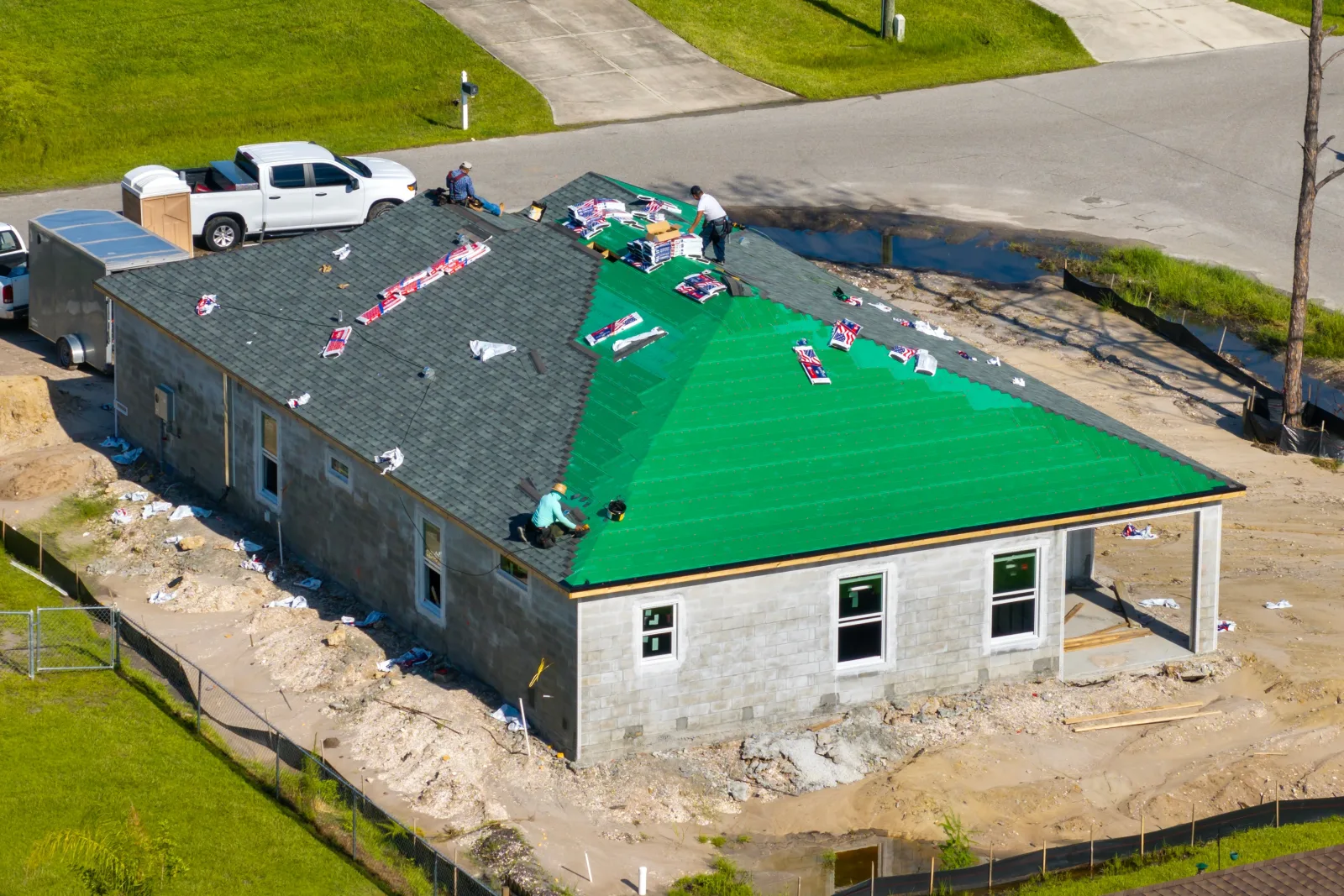
There is no California premium on this page. A renovation is quoted from the building, the work and the person doing it, and in this state one question runs ahead of all three: whether an admitted carrier will write the house at all. Everything below follows from the answer to that.
When the admitted market passes, what arrives is narrower than what it replaced
The fallback here is a named institution issuing a narrower contract. When a house cannot be placed in the admitted market, it goes to the California FAIR Plan Association. The plan describes itself as an insurer of last resort, established by statute to provide basic property insurance when no other option is reasonably available to a Californian — and what it issues is a basic fire policy rather than a full dwelling form.
That single distinction is the whole California cost story, because it changes the unit being priced. In most states the question is what one contract charges for a described risk. Here the first question is how many contracts the project ends up carrying, and what each of them has been asked to answer for. Wildfire exposure is what pushes a file down this road, and the fact worth holding onto is that this is an availability problem rather than a hole in anybody’s policy wording. The standard form is not defective. It is simply not on offer at this address.
For a rehab that matters more than it does for an occupied house, because an empty building meets precisely the losses a fire policy was never written to answer.
Nothing lands on the program unless somebody puts it there
Liability and the non-fire causes have to be added deliberately, and on a residual-market file that decision is the work. Both the plan’s own material and the state insurance department’s residential guide point an owner toward a Difference in Conditions policy or other supplemental coverage alongside the fire policy in order to reach something equivalent to full residential cover. The verb in both sources is considered, not included. Nothing attaches on its own.
Read as a cost driver, this is assembly rather than shopping. Somebody has to decide that general liability belongs on the program at all, that theft belongs on it, and that the limit chosen for the second instrument lines up with the limit on the first. The department’s guidance is blunt about the gap: the plan’s policy provides no liability coverage, and none for other causes such as burglary. On a house with people living in it those absences are serious. On a jobsite where trades come and go all day and new mechanical equipment sits in a room nobody locks, they are the two exposures the project is most likely to meet in person.
The practical consequence is calendar time. A stacked file takes longer to build than a single admitted placement, so it has to be started earlier — which is a real cost on a project whose money is borrowed by the month.
The California cost file, in the order it is settled
The row at the top is a fire-only contract standing where a full dwelling form would normally sit, and everything under it follows from that substitution. Wildfire exposure sends the house to the plan of last resort, so the next row asks what a second instrument has to be asked to carry: liability, theft, the causes the narrow first policy was never written for. Then the classification printed on the credential, the standards amended locally behind the permit, and the named causes with the earth-movement offer beside them. Lower down, the figure turns to decisions still in a buyer’s hands — which contract the described work selects, whether two sets of limits were set to agree, and the unoccupied stretch read against the loss run. Ranking is all the column does, and the assembly question is what sits at its head.
- A basic fire policy standing in for a full dwelling form Wildfire exposure pushes the house to the plan of last resort, and what that plan issues is narrower.
- What the second instrument is asked to carry Liability and the non-fire causes arrive only if somebody deliberately puts them on the program.
- A competency-tested credential, and the classes it covers One board examines the general and the systems trades here, so the question is which class was earned.
- Standards published statewide, amendments filed locally The permit comes from the building official where the house sits, and the text can change at a city line.
- The named causes, and the earthquake offer beside them Fire, theft and vandalism sit inside the form; earth movement does not, and an offer arrives instead.
- One scope of work, and the two contracts it chooses between A refresh and a job that opens the framing are not written on the same paper, and the work decides.
- Two contracts, and whether their limits were set to agree A stacked program can carry a gap between its halves that nobody sees until a loss arrives.
- Nobody sleeping there, and the loss run behind the submission Vacancy language narrows theft and vandalism first, and the prior record is read before anything else.
A license issued by classification, and two examinations behind it
California licenses the person running the job, and it licenses them by classification. The Contractors State License Board licenses and regulates the state’s construction industry that way, and the classifications a rehabber usually needs are (B) General Building Contractor or (B-2) Residential Remodeling Contractor.
What matters to a submission is what stands behind those letters. Licensure here is competency-tested rather than merely recorded: an applicant passes a law and business examination and a trade examination, with only a narrow waiver route around them. A license number in this state therefore stands for something an underwriter can reason about, which is more than a bare register entry offers in a state that only writes names down.
The systems trades run through the same board. C-10 Electrical Contractor, C-36 Plumbing Contractor and C-20 Warm-Air Heating, Ventilating and Air-Conditioning Contractor are all CSLB specialty classifications, so one authority answers for the general and for all three trades on a structural rehab. Where several other states send you to three separate boards, diligence here is a single sitting.
One wrinkle reaches the paperwork before it reaches the policy. Rebuilding a home after a declared disaster is treated by the board as home improvement work rather than as new construction, which puts the job under the contract and payment rules written for home improvement. That reshapes the draw schedule — and a draw schedule is a document the placement reads.
Title 24 is written once and amended locally
The state writes the standards and the city issues the permit, and both halves of that reach the schedule. The California Building Standards Commission develops, adopts, approves, publishes and oversees implementation of Title 24, the California Building Standards Code. No permit comes from the state, though: under that code, no building or structure may be erected, altered, repaired, moved, improved, removed, converted or demolished without a separate permit obtained from the building official.
A single rehab touches most of the actions that rule names — altering, repairing, improving, removing, and at the demolition end converting or demolishing — and there is no threshold in it that lets a modest scope out from underneath. Then add the second half of the arrangement: local jurisdictions may file their own amendments to the building standards, so what a scope is reviewed against varies city to city and county to county.
For pricing, that is a duration exposure rather than a coverage one. The term was quoted against a plan review and inspection calendar that a local official controls, and both the calendar and the text can change at a city line. A term extended while it still runs is an administrative step. A term that has already expired over an open building is a placement problem, and it arrives at the worst possible moment in the project.
The named causes, and the offer that arrives beside them
The standard residential form here answers for a long list of causes and sends two of them elsewhere. The department’s guide enumerates fire and lightning, storm, explosion, riot or civil commotion, aircraft and vehicle impact, smoke, vandalism and malicious mischief, theft, volcanic eruption, falling objects, the weight of ice, snow or sleet, sudden and accidental water damage, and broken glass.
Flood is generally not covered and is placed separately, through the National Flood Insurance Program or a private flood policy. Earthquake and earth movement are outside the standard form as well and get their own placement — and here the state adds a formal step. The department records an obligation that lands on a great many files: an insurer writing residential property coverage must offer earthquake cover for an additional premium, written directly, by a separate insurer, or through the California Earthquake Authority.
An offer is not a policy. Declining one is a legitimate decision and a common one, but it leaves that cause unplaced, and it belongs in writing at binding rather than in somebody’s memory afterward.
Three of the named causes behave differently on a flip than they do on a lived-in house. Theft, vandalism and malicious mischief are the first things an ordinary dwelling form starts restricting once a building has stood empty past the stretch the policy specifies — which on a renovation is most of the project. And on a file that stopped at basic fire cover, those three were never in the contract to begin with.
Real-World Scenario: An investor who has flipped houses in several other states buys a hillside house in a wildfire-exposed area and works the file the way it has always worked. The admitted submissions come back as declines. A broker places fire cover with the plan of last resort, the lender is satisfied, escrow closes, and the crew starts on schedule. Nobody arranges the supplemental half, because on every previous project there was no supplemental half to arrange. Months later, with the house finished and standing empty on the market, someone gets in through a rear door and strips the mechanical equipment and the appliances. The fire policy is intact, current, and entirely silent on theft — not because anything failed, but because that half of the program was never bought.
One scope of work, and the two contracts it chooses between
The work picks the paper, and it picks it before anybody discusses a figure. A project confined to paint, flooring, cabinets and fixtures, with the structure and the systems left where they were found, sits on a dwelling contract extended by a cosmetic repair endorsement — the finishes-and-fixtures side of the practice. A project that opens walls, moves something load-bearing, replaces framing or takes the wiring and the pipework back to bare studs is a building site for its duration, and building sites are written on builders risk.
On a California file already headed for the fallback market, the scope of work is doing two jobs at once. It is one of the things an admitted underwriter reads before deciding whether to write the house at all, and it is the outline the supplemental instrument above a fire policy gets drawn to. A thin scope on a single-contract file merely slows a quote down. A thin scope on a stacked one produces a program whose halves do not meet.
This is also the reason the cosmetic-or-structural question is worth settling early rather than at renewal. The work itself decides which side of it a project sits on — never the budget, and never which document happened to be easiest to bind before closing.
Two contracts, and the limits that have to agree with each other
Ask what number each contract is built around, then ask whether the two answers match. A construction placement answers to the completed building rather than to the acquisition figure, and that much is true in every state. What is particular here is the arithmetic a stack introduces: a basic fire policy and the supplemental coverage above it can be written to different limits, and the distance between them is visible on neither declarations page. It surfaces at a loss.
None of those figures are ours to publish. The acquisition, the renovation budget, the value at completion and the months of the hold belong to the person who owns the project. What an underwriter is reading is the relationship between them — and on a two-instrument file, the relationship between the two instruments as well.
A stack does not renew as one thing, either. Two contracts bound a couple of weeks apart come up for renewal a couple of weeks apart, and the half that lapses quietly first is usually the half nobody was tracking. Both dates belong on the same page as the construction schedule, next to the permit dates.
An empty building reads differently to a fire policy than to a full one
Nobody lives in a flip, and that single fact puts the vacancy language of whatever contract you bought under a lens. The empty stretch runs from the day the seller leaves to the day a buyer arrives, listing period included, and the listing period is the part investors most often assume is already over.
On an admitted placement, the causes that narrow first are theft, vandalism and malicious mischief — and a building under renovation looks abandoned long before it is finished. Boarded openings, a dumpster at the curb, no lights at night. On a basic fire policy those three causes were never present, so vacancy does not narrow them; there was nothing to narrow. Which of those two situations a project is in was settled by the first driver on this list rather than by this one, which is exactly why availability sits at the top of the stack.
The last thing in the file is the loss record, and it is the one input here that no amount of preparation changes. Pull it before the submission goes out anyway. Knowing what an underwriter is about to read is worth considerably more than hoping they read it generously.
Where the California facts sit, and where to send the project
Everything on the California side that is not about price — the department, the metro markets, the licensing board, the code and the disclosure a seller signs at the far end — is set out on the California fix and flip insurance page, with the states this agency is licensed in indexed from it. The national ordering of these drivers opens on a completely different one, and the gap between the two orderings is the reason this page exists at all.
If you would rather have an answer than a list, send the project through — the address, the scope of work, the schedule, and who is holding the tools — or see who picks it up.
This guide covers what drives the cost of a California rehab. The state page covers who licenses the trades, who issues the permit and how a project there is placed: fix and flip insurance in California.
The bottom line
In California the cost question starts a step earlier than it does elsewhere — not what a policy charges, but whether the admitted market will write the house at all. When it will not, the fallback issues basic fire cover, and the liability, the theft cover and the other non-fire causes have to be assembled on top of it. That assembly, rather than any rate, is what an underwriter is reading first.
Frequently asked questions
My last flip ran on one policy. Why would a California file need two?
Because the fallback here is not the same instrument the admitted market issues. The California FAIR Plan Association is an insurer of last resort writing basic fire cover, and both its own material and the state insurance guide say a Difference in Conditions policy or other supplemental coverage should be considered beside it. Liability and the non-fire causes are not in the first contract. That is what the second one is for.
Does going to the fallback market change what a project costs, or what it is made of?
What it is made of, and the cost conversation follows from that. Instead of one contract answering for a described risk, the file becomes a program: basic fire cover plus whatever is deliberately stacked above it to reach liability, theft and the other non-fire causes. No figure appears on this page either way, but the number of instruments is a different question from the terms on any one of them.
Why would an underwriter care which letter is printed on my contractor’s license?
Because the letter says what the license was tested against. The Contractors State License Board issues by classification — (B) General Building Contractor and (B-2) Residential Remodeling Contractor are the usual pair on a rehab — and licensure is competency-tested, with a law and business examination and a trade examination behind it. A classification that does not reach the scope is a gap an underwriter reads as an experience question.
Nobody has quoted me the plan review time. Why does that belong in a cost conversation?
Because duration is a priced input on every renovation placement, and here the review calendar is not set at state level. The Building Standards Commission publishes Title 24, but the permit itself comes from the local building official, and jurisdictions may file their own amendments. Two identical scopes a county apart can run on different calendars, and a longer calendar is a longer term to buy.
How many separate placements can one California renovation end up carrying?
More than most investors expect. The property side may itself be two contracts once a house has gone to the fallback market. Flood is generally outside the standard form and is arranged through the federal program or a private policy. Earth movement sits outside it as well, with a placement of its own. Liability is another contract again. None of that is a price; it is a count of documents somebody has to keep aligned.
On a stacked program, do the two policies expire on the same day?
Only if somebody made them. They are separate contracts bought at separate moments, so they come up for renewal at separate moments, and the half that lapses quietly first is usually the one nobody set a reminder for. On a renovation that runs long, the real risk is discovering mid-project that the program has narrowed to whatever the fire policy alone answers for. Diary both dates against the construction schedule.
About the author

Nate Jones, CPCU, is the founder of Wexford Insurance and Fix and Flip Guard Insurance, a specialty agency placing fix-and-flip real estate investment coverage in 48 states across 10+ carrier markets. He places renovation risk on California files the admitted market has already turned down, where the work is deciding what the second instrument carries and getting two sets of limits to agree with each other before anybody signs anything. Reach him through the Fix and Flip Guard Insurance quote form or call 888-346-2414.