
How Much Does Fix and Flip Insurance Cost in Arizona?
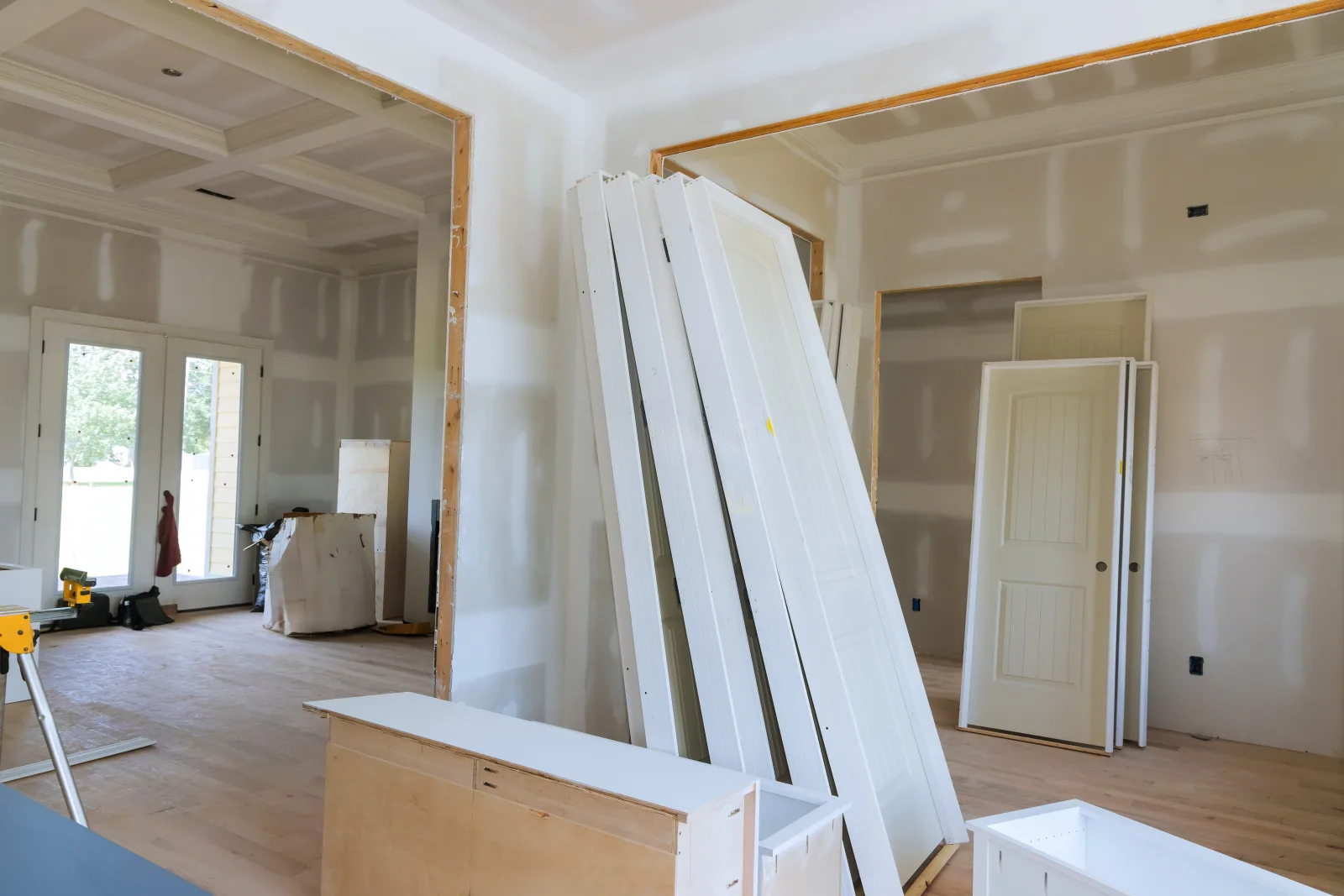
There is no Arizona premium on this page. What there is instead is the order the file gets read in, and this state moves one question to the front that most states leave somewhere in the middle: whether the person planning to do the work is permitted to be doing it at all. Everything else follows from the answer.
The first Arizona input is a legal one, not a financial one
A renovation quote is assembled from a description of the job, and here the description has to settle something a budget usually hides. Before anyone asks which contract the work belongs on, this state asks who may lawfully perform it — and for a house acquired in order to be sold, the answer deletes the cheapest line most first budgets carry.
That is why two projects with the same square footage, the same finish schedule and the same timeline can produce files that read differently. The rules that matter are reading the scope of work rather than the floor plan, and they respond to sentences about systems rather than to sentences about rooms. The national version of this list opens on the choice of policy form. Here two questions about who is holding a license get answered first, and the form question inherits whatever they decide.
The self-performed route, and the clause that closes it to a reseller
The Registrar of Contractors sets out what an owner may do without a license, and the conditions are the whole of it: the work has to be intended for occupancy solely by the owner, and the structure must not be intended for sale or rent for a period measured from completion or from the issuance of a certificate of occupancy. A project bought in order to be resold fails both halves at once, so the exemption is not narrowed for a flip — it is unavailable to one.
What that does to the file is remove a variable rather than add a cost. The labor model is fixed before the first quote goes out, everyone arriving to work carries their own liability coverage, and the names on the job answer to a register instead of to a reference. An underwriter looking at a structural rehab placement in this state is reading entities that can be looked up, which is a different exercise from reading assurances.
It also means a cost this page will not quantify but will name: the labor line in an Arizona flip budget is a contracted line. Investors arriving from states where an owner may wire a bedroom or reset a fixture find that the first correction to their spreadsheet is larger than any insurance figure on it.
What an Arizona renovation file is weighed on, in order
The top row asks who may lawfully hold the work, and on a resale here that is answered by the exemption itself, before a house has even been chosen. Under it sits the property form and the rainfall it sends elsewhere. Third comes the systems work the residential classifications will not let a general keep, which leaves the job as separately licensed subcontracts. Fourth is the permit, and whose name ends up on it. The last three are the ones an investor can still move, which is exactly why they sit where they do: the value the finished house has to be insured to, the contract that the described work selects, and the long unoccupied stretch running alongside a claim history that closed before the file was opened. Weight is the only thing the placement encodes. No row holds a number, and none was meant to.
- An exemption drafted so a resale cannot reach it Owner-performed work is conditioned on the owner occupying the result, which fixes the labor model.
- An all-risk form, and the water it sends somewhere else Rainfall the ground refuses to absorb reaches the house as an excluded cause, needing its own placement.
- Systems work the classification pushes out to somebody else Electrical, plumbing and conditioned air leave the general and arrive as separate licensed subcontracts.
- Permits that belong to the owner unless the contract moves them The contractor regulator puts the permit on the owner, so the calendar is nobody else’s by default.
- A completed figure the subcontracts have to support The amount answers to the finished building, and each added system arrives at a stated contract value.
- Whether the scope names a system or stops short of one Surface work and work that opens the framing are two different purchases entirely.
- Seasons spent empty, and a claim history already closed The building is unoccupied through the work and the sale, and the prior record arrives fixed.
An all-risk form, and the desert ground that turns rainfall into flood
The property side starts wide. The standard residential form here is written on an all-risk basis rather than as a list of named causes, so it reaches fire, windstorm, smoke, freezing, collapse, hail and theft among many others, subject to what the policy excludes. On a finished house with somebody living in it, that is a generous starting position. On an open rehab, the exclusions are the only part of it worth discussing.
The first exclusion is the one that catches people who read the sky rather than the policy. The state department defines flood for insurance purposes as water outside the home that flows inside at ground level, and explains that the hard desert ground does not soak up water easily, so rain pools on the surface during a monsoon storm; when that pooled water runs into the house, it is flooding and it is strictly excluded. A crew standing in a dry driveway in June would not call that a flood. The form does, and placing it means a second instrument through the National Flood Insurance Program.
Earthquake is excluded from the standard form as well and has to be bought as a specific endorsement or as a policy of its own — a decision rather than a default, and one with a deadline on a renovation, because the structure is open now.
Wildfire behaves differently again, because it shapes what can be written rather than sitting inside an exclusion. The department fronts wildfire preparation on its own home page alongside its licensing and complaint functions, which is a fair indication of where the pressure in this market sits. And the exposure outlasts the fire: burn scars are described as highly susceptible to flash flooding and mudflows for years afterward, so ground that burned before you owned it is read as a water question as much as a fire one.
One register for every trade, and the work no general may self-perform
Hiring a licensed general does not put the whole job under one license. The classifications carry their own internal limits, and the two a rehabber usually meets are explicit about it. The B General Residential Contractor scope covers constructing and repairing all or any part of a residential structure, and requires work related to electrical, plumbing, air conditioning systems, boilers, swimming pools, spas and water wells to be subcontracted to an appropriately licensed contractor. The B-3 General Remodeling and Repair scope covers remodeling and repairing an existing residential structure with the same carve-out, written as electrical, plumbing, mechanical, boilers, swimming pools, spas and water wells.
The two lists are not word-for-word identical — the general residential scope names air conditioning systems where the remodeling scope names mechanical work — but they land a rehabber in the same place. The systems side of the job leaves the general and arrives as somebody else’s license, whatever the two of you would have preferred.
The compensating advantage is that none of those trades scatter. Electrical, plumbing and air conditioning all answer to the same agency under its own residential classifications, so verifying every credential on a gut rehab is one lookup rather than three agencies and three formats. For a submission that matters more than it sounds: the certificate log is longer here than the same project would generate elsewhere, but every entry on it is checkable in one place, and each of those parties brings their own liability position rather than sheltering under the general’s.
The permit is the owner’s to pull unless the contract says otherwise
The same regulator that closes the exemption is unusually direct about permits. It states that permits are the responsibility of the property owner, notes that many contractors include the cost of obtaining them and the fees in the contract, and tells owners to make sure the responsibility for obtaining building permits is spelled out in writing before anything is signed. The same page adds that an owner working under the exemption remains subject to compliance with local permit and building code requirements — academic on a resale, since the exemption is closed to one, but it is the Registrar saying plainly that the permit and code obligations reach the owner and not only the crew.
The consequence for a renovation placement is about who receives the mail. Whoever holds the permit is the party a building official corresponds with about corrections and reinspections, and a construction term is a purchase of time. If that correspondence is arriving at your address because nobody moved the obligation in the contract, then the schedule is not delegated either, and neither is the record of what was inspected and closed.
That record earns its keep twice on this job. Because the classification rules split the work across several licensed parties, the permit and inspection history is the only document that puts all of them on one timeline — which is exactly the chronology an adjuster asks for when a loss lands on work that was closed up months earlier.
Real-World Scenario: The scope on a Tucson house is written as a refresh — flooring, paint, cabinets, two bathrooms reset in place — and the labor budget assumes the investor will handle the panel swap and the new kitchen circuits himself across a few weekends, the way he has on three houses in another state. The general he hires holds a B-3 and points out that he cannot self-perform that work either. The circuits go out to a licensed electrician, the relocated sink goes out to a licensed plumber, and a refresh that was quoted as surface work is now a job that opens walls and reroutes systems. The build absorbs the change in a fortnight. The placement does not, because it was bought against a description that no longer matches the house, and the time to say so was while the term was still running.
The completed figure, and the subcontracts standing behind it
A construction placement is written to the building that exists when the last trade leaves — not the price on the closing statement, and not the half-finished shell standing there this week. Because that amount is a projection rather than a fact, it gets tested against the acquisition and the budget instead of taken as given.
Arizona adds an unusual discipline to the projection. Since the systems work cannot stay in-house, a change on that side of the job does not arrive as an internal decision somebody makes on site; it arrives as a new contract with a party and a value attached. The scope growth is visible and dated. The failure mode is correspondingly specific: a figure set at bind and never revisited while two or three of those contracts were added underneath it. Nobody argues about the shortfall until the only day it cannot be fixed.
The placement follows the systems list, not the square footage
Only now does the question most cost guides open on arrive. Work that never gets behind a wall — flooring, paint, cabinets, fixtures swapped where they stand — generally stays with the cosmetic repair endorsement sitting on a dwelling policy, and that is the territory house flipping insurance describes. Once the scope names a system or opens the framing, the house is a working site for the duration and the answer is builders risk.
In most states that seam is found by reading the scope for depth. Here it can also be counted. If the job has required a second license to be brought onto it, the work has almost certainly stopped being surface work, which makes the subcontractor list a usable proxy for the question an underwriter is actually asking. It is one of the few places where a licensing rule written for consumer protection happens to produce a cleaner insurance file.
What the calendar does to an Arizona rehab after the crew leaves
Two inputs on this list are settled before a submission is written, which is why they sit at the bottom of the stack rather than the top.
The first is that nobody is in the building and nobody is meant to be. Vacancy provisions in an unmodified dwelling form were drafted around a house with somebody living in it, and they get measured against a building that is unoccupied from the day the keys change hands until a buyer takes them. The stretch after the crew has gone and before anything is signed is the one most often left off a term, and in this state it can run straight through the season when the ground is shedding water and the season when availability questions are live. The Arizona fix and flip insurance page sets out how those two seasons read on the property side.
The second is the claim record. Every other item above can still be changed before binding — the scope, the crew, the permit position, the term, the amount. That one arrives already written. What remains to be done with it is to describe it plainly rather than let an underwriter meet it cold.
Assembling an Arizona submission from documents the job already produced
The useful thing about this state is that a complete submission is mostly a photocopying exercise. The licensing regime has already forced the documents into existence: the written scope with the systems work named, the general’s classification and license number, a subcontract for each trade the classification pushed out, the certificate behind each of those subcontracts, and the permit position with the name of whoever is on it. Add the acquisition and budget figures, the schedule with the listing window included, and whatever is on the loss record.
Send the scope first, because the sentence that names a system is the sentence that settles the contract, the crew and the certificate count in one move. When the job is described well enough for somebody to price it, put it in front of us — or see who reads it before you do.
This guide covers what drives the cost of a Arizona rehab. The state page covers who licenses the trades, who issues the permit and how a project there is placed: fix and flip insurance in Arizona.
The bottom line
Arizona settles the labor question before it settles the insurance one — the owner-builder route is written so a resale cannot reach it, and the residential classifications push electrical, plumbing and conditioned-air work out to separately licensed contractors — so a rehab here arrives at an underwriter as a coordinated set of credentialed subcontracts, and the file that comes back priced is the one that can produce them.
Frequently asked questions
The first driver on this list is settled before I buy anything. Does that mean the order is the same for every Arizona project?
The first position is, because the exemption is closed to resale work regardless of the house. Everything below it moves. A surface refresh and a job that reruns the panel produce different placements, different subcontract counts and different terms, so the second through seventh positions reorder project by project. What is fixed here is the labor model, not the weighting of everything that follows it.
Four subcontractors means four sets of certificates. Is that only paperwork, or does an underwriter actually use it?
It is used, and it is the one advantage this licensing regime hands an investor. A certificate names an entity, a classification and a coverage position that can be checked rather than described, so a submission carrying four of them answers the who-is-on-site question before it is asked. Files that stall usually stall on that question. Collect them as each subcontract is signed rather than reconstructing the set later.
Nobody wrote the permits into the contract, so they are in my name. Does that reach the insurance side of the file?
It reaches the calendar, which is the part that gets priced. Whoever holds the permit is the party the building official corresponds with about inspections, corrections and reinspections, and a construction term is bought for a length of time. If that correspondence is coming to you, the schedule is yours to manage and yours to report accurately when the term needs extending.
Our subcontract values add up to less than the finished figure we are insuring to. Is that a problem on the file?
Not by itself, because the amount answers to what the building will be worth complete rather than to what the work costs. The two figures are related and they are not the same. What does become a problem is a figure fixed at the start and never revisited while systems work was added underneath it, since each of those additions arrives as its own contract at its own stated value.
Nothing on this parcel is near a wash or a river. Is flood still a question an Arizona rehab has to answer?
Yes, because the definition here follows the water rather than the map. The state department describes flood for insurance purposes as water outside the house that flows in at ground level, and notes that hard desert ground sheds rainfall that then pools and moves. An open envelope in that season is exposed to a cause the property form excludes outright, wherever the parcel sits.
I pull my own permits and run my own circuits in another state. What actually changes when I run the same project here?
Both halves of that habit. The owner-builder route is conditioned on occupying the result, so a resale plan cannot use it, and the residential classifications require the systems work to go to separately licensed contractors even when a licensed general is running the job. The practical change is a longer list of parties, more certificates, and a labor budget built around subcontracts rather than around weekends.
About the author

Nate Jones, CPCU, is the founder of Wexford Insurance and Fix and Flip Guard Insurance, a specialty agency placing fix-and-flip real estate investment coverage in 48 states across 10+ carrier markets. Arizona is the state where the labor plan and the insurance plan turn out to be one decision, and that is where his work sits: reading a scope of work for the moment it names a system, because that is the moment the job acquires another licensed subcontractor and another certificate somebody is going to ask for. Reach him through the Fix and Flip Guard Insurance quote form or call 888-346-2414.