
House Flipper Liability Insurance: Who Gets Hurt on Site
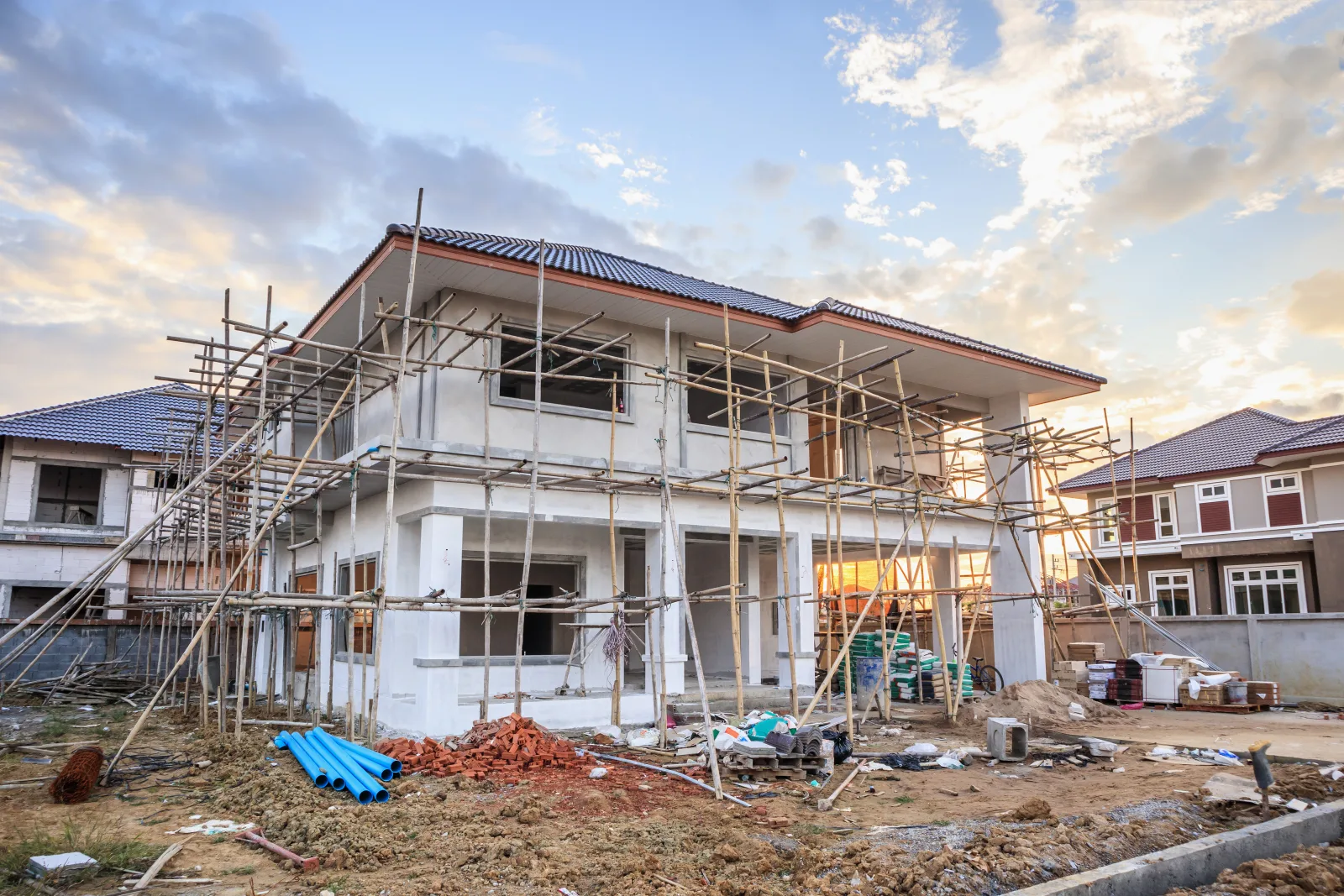
The people hurt on a flip are not only the crew. Agents, appraisers, inspectors, prospective buyers, delivery drivers and neighbors all come to a house under repair, and an injury to any of them is a question for a liability policy, not for the policy that insures the building. Builders risk and a dwelling policy answer for the structure. A separate liability cover is built around people on the premises and around the work done there. This post walks the site from the front door to the back lot and says which question belongs where.
The front walk is open to people who never signed anything
Start at the street. Before anyone from the crew arrives, the front walk has already had visitors. A listing agent comes to preview the house. An appraiser measures rooms for the lender. A building inspector or a buyer’s inspector looks over the roof, the panel and the crawlspace, and the permits and inspections schedule puts municipal inspectors on the same walk. A neighbor stops at the fence to ask when the dumpster is leaving.
None of these people works for the flipper, and none of them appears on the draw schedule. Each has a reason to be near a house where the floors may be open and the stairs may have no rail. The flipper does not always control the order in which they arrive or how long they stay.
Write that down as the first fact. A house under repair is a place that people other than the crew enter. The second fact follows from it. While the work goes on, the house is not only a building to protect. It is also premises with operations on it, and that phrase, which insurers use for liability, is the thread through the rest of this post. Keep the two descriptions apart: the building is one subject, and the people on it are another.
A property policy insures the building, and a visitor is not the building
Take the policy on the house first. Builders risk, described on the builders risk coverage page, is written around the structure under construction and the materials that go into it. A dwelling policy with a cosmetic repair endorsement, described on the cosmetic repair endorsement page, is a property form that has been adjusted for finish work. Both answer a question about a broken building: fire, water, wind, a stolen pallet.
Neither is built around the question of who was hurt. The North Carolina Department of Insurance, on its dwelling policies page, says dwelling policies tend not to provide liability coverage. That sentence is about the form class, not about yours, so read your own policy for any liability part before assuming it exists.
There is a second reason a property form stays quiet here. The reasoning in why a standard dwelling policy excludes losses during renovation is about the building and what the form assumes of it. Nothing in that reasoning reaches an appraiser on the staircase. A visitor’s injury needs a document that was written for visitors.
What the liability cover is built around: the premises and the work
The NAIC glossary gives the vocabulary. Its entry for premises and operations describes the liability of an insured to people injured on the insured’s premises during normal operations or routine maintenance, or from the insured’s operations on or off the premises. Two halves sit in that definition: where the person was, and what the insured was doing.
The Virginia State Corporation Commission puts the same idea in consumer terms. In its commercial insurance guide, premises and operations coverage pays bodily injury and property damage claims made by members of the public from an accident on your premises or arising out of your operations. Notice both nouns. Bodily injury is a person hurt. Property damage is somebody else’s thing broken, such as a neighbor’s fence or a delivery truck’s paint.
For a flipper, that reads as follows. The house under repair is the premises, and the demolition, framing, painting and hauling are the operations. The page on general liability for real estate investors takes up how that cover is arranged for an investor. This post stays at the level of the question: who is on the site, and which document describes an injury to them.
Showings put the public in a house nobody lives in
The buyer’s walk-through is where the premises half of the definition matters most. A prospective buyer is a member of the public in the plainest sense. The buyer has no connection to the crew, has not been briefed on the site and may be looking at the ceiling rather than the floor.
Real-World Scenario: An investor finishes the kitchen and listens to the listing agent, who wants a weekend showing before the paint on the porch has fully cured. The crew leaves a ladder on the side lawn and a stack of trim in the hall. The agent brings a couple who have never seen the house. One of them steps back to look at the ceiling and catches a heel on a threshold strip that has not been fastened. Nobody on the project asked who would be answering for the visitor. The investor only learns, afterward, that the policy on the building does not describe the person who fell, and the liability question has to be put to someone who can read the policy.
The scenario is ordinary because nothing in it is dramatic. The house was insured, the crew was careful, and the gap was between the document that describes the building and the question about the person. The material on selling a flip while it is still insured covers how showings change what is in force. Before the listing goes live, ask a licensed agent whether your liability cover is in force for showings and what it expects the house to look like when strangers walk through.
The same holds for the quieter visits. An agent who stops by alone to show a colleague the layout, or an appraiser who returns for a second look at the basement, is a visitor under the same description as the buyer. The question does not change with the length of the stay, and it does not wait for a scheduled event. It is a standing condition of owning a house that other people enter while it is under repair.
The side yard and driveway belong to drivers and neighbors
Move to the side of the house. Roll-off dumpsters arrive on a truck, lumber arrives on another, and a concrete mixer backs onto the lot. Each driver is a person who is on the premises because of the work, and each vehicle is a way for property damage to happen to someone else. The neighbor’s fence, the shared driveway, the street in front of the house: these sit at the boundary of the lot.
The Virginia guide’s language covers both halves. Premises and operations coverage pays bodily injury and property damage claims by members of the public. A driver slipping on a muddy ramp is a bodily injury question. A dumpster that scrapes a neighbor’s mailbox is a property damage question. Neither is a question about the house.
Two things belong on the list for this stretch of the site. Where do deliveries land, and who is told? And what is within reach of the lot line, so that a mistake lands on someone else’s property? Deliveries of material also raise a separate property issue, covered in theft of building materials and which policy answers, but that is about the pallet and not about the driver.
Who is on the site and what answers for each
The people who enter a flip under repair and the cover or question that answers for each, laid out as rows with the most heavily weighted visitor at the head.
- Prospective buyers at showings Members of the public in an unoccupied house; premises cover is the question.
- Agents, appraisers and inspectors Professional visitors who arrive on a schedule you may not control.
- Delivery drivers and haulers Their trips onto the lot are part of the work the site invites.
- Neighbors and passersby Damage or injury beyond the lot line is a liability question.
- Crew and subcontractors A separate question, to be put to a licensed agent before work starts.
Questions an underwriter may ask about site access and security
Reaching the back lot means reaching the part of the site where access is hardest to explain on paper. Who can get onto the site is a subject a liability submission has to address, and the useful way to prepare is with questions, not rules. No set of answers is required here. These are the questions to be able to answer.
- Is the lot fenced or open to the street, and who holds the keys?
- Is there a lockbox on the door, and who has the code?
- Who is allowed on the site when the crew is absent, and how is the house secured at night?
- Are showings planned, who attends them, and who walks the house before a buyer does?
- Are open hazards such as missing rails, open stairwells or exposed openings marked or covered?
- Where do deliveries go, and does anyone confirm the site is ready to receive them?
- What is stored in the yard, and is any of it a hazard to a passerby?
Bring the answers, in writing, to the conversation with the licensed agent, together with the scope of work. If an answer is unknown, do not guess in the submission. Say that it is unknown, and then settle it before work begins, so the answer on paper matches the one on the lot.
An injured worker is a different question, and it belongs to an agent
Everything above concerned people who are not on the crew. A worker injured on the job is a separate question, and this post does not answer it. It makes no claim about who is liable for a worker’s injury, about what a contractor’s paper covers, or about what any law requires.
What it can say is where to take the question. Put it to a licensed agent before work starts, with the names of the firms on site and a plain description of who employs whom. The material on vetting contractors and the certificates to demand covers what to ask a contractor to show you, and what a document does and does not prove. A visitor’s injury and a worker’s injury can land on the same afternoon, and they should not be assumed to share an answer.
The dates on the declarations decide when an injury counts
A liability policy is tied to time. The NAIC glossary defines the policy period as the time during which coverage is in effect. The New York Department of Financial Services, on its basic coverage page, lists the policy period among the things shown on a declarations page, along with the address of the insured premises and the coverage types and limits.
Read the declarations against the calendar of the project. If the policy period begins after the first visitor arrives, there is a stretch where people are on the site and the document is not yet in effect. The same applies at the end: a policy that runs out before the last showing leaves that showing outside it. The essays on when cover attaches on a rehab and on occupancy and completion triggers cover the property side of those dates. Liability has its own dates, and the declarations show them.
A lender or a contractor may ask to be shown on the certificate
At some point someone will ask for paper. A lender may want to see evidence of the cover. A contractor working on the house may want to be shown on the certificate, and the investor may ask the same of the contractor. The quote you receive is worth reading with that request in mind, and how to read an insurance quote on a rehab shows where the relevant blocks sit.
Know what a certificate can and cannot do. The Texas Department of Insurance, in its certificate of insurance FAQ, says a certificate may not name the holder as an additional insured when the policy contains only a blanket additional insured endorsement, though the certificate can state that the policy contains that endorsement. A line on a certificate is not the same as status on the policy. The post on additional insured and what a certificate does not do takes that distinction apart in detail.
When the request comes, send it to the licensed agent early and ask what the policy actually grants. Then you can start a quote with the site, the visitors and the paper requests laid out together, and the answers on the certificate will match what the policy says. The structural and finish-work paths are laid out under fix and flip insurance and house flipping insurance.
The bottom line
The policy that insures the building does not answer for a visitor who is hurt inside it. Liability cover is a separate document, built around the premises and the work, and an injured worker is a separate question again, to be put to a licensed agent.
Frequently asked questions
An appraiser trips on a missing stair tread. Is that a claim on the builders risk policy?
Builders risk is written around loss to the building and materials in the course of construction, so a person’s injury is not what it describes. The injury is a bodily injury question, and bodily injury is what liability cover is built to address. Read your own documents with a licensed agent, because the wording that applies is the wording on your policy.
Does a dwelling policy with a cosmetic repair endorsement include liability for visitors?
The North Carolina Department of Insurance says dwelling policies tend not to provide liability coverage. Whether yours carries any liability part, and what it says about a house under repair, is something to read on the policy itself. Do not assume it from the name of the form.
Our listing agent holds a showing while the crew is away. Who is responsible if a buyer is injured?
That is a legal question, and this site does not answer legal questions. What can be said is that a showing puts a member of the public inside a house under repair, which is the situation premises coverage is described around. Ask a licensed agent whether your liability cover is in force for showings and what it expects of the site.
A neighbor’s fence is damaged when a dumpster is dropped. Is that the same cover as an injury?
The Virginia guide describes premises and operations coverage as paying both bodily injury and property damage claims to members of the public. Damage to a neighbor’s fence is a property damage claim, so it sits on the liability side, not on the policy that insures your own house. How a particular policy treats it depends on its wording.
Can my crew member’s injury be handled the same way as a visitor’s?
Not safely. An injured worker is a separate question with its own rules, and it is one to put to a licensed agent before work starts. This post does not make any claim about who is liable for a worker’s injury.
If I sell the flip, does liability for a visitor’s injury end at closing?
A policy covers the time it is in effect, so the dates on the declarations matter. The Virginia guide also describes cover for claims that arise away from your premises out of operations that are completed or abandoned. Ask a licensed agent what applies to your policy after the sale date.
About the author

Nate Jones, CPCU, is the founder of Wexford Insurance and Fix and Flip Guard Insurance, a specialty agency placing fix-and-flip real estate investment coverage in 48 states across 10+ carrier markets. Nate walks a flip from the front walk to the back lot with the investor before a quote is requested, because the list of people who will set foot on the site decides which liability questions need written answers. Reach him through the Fix and Flip Guard Insurance quote form or call 888-346-2414.